

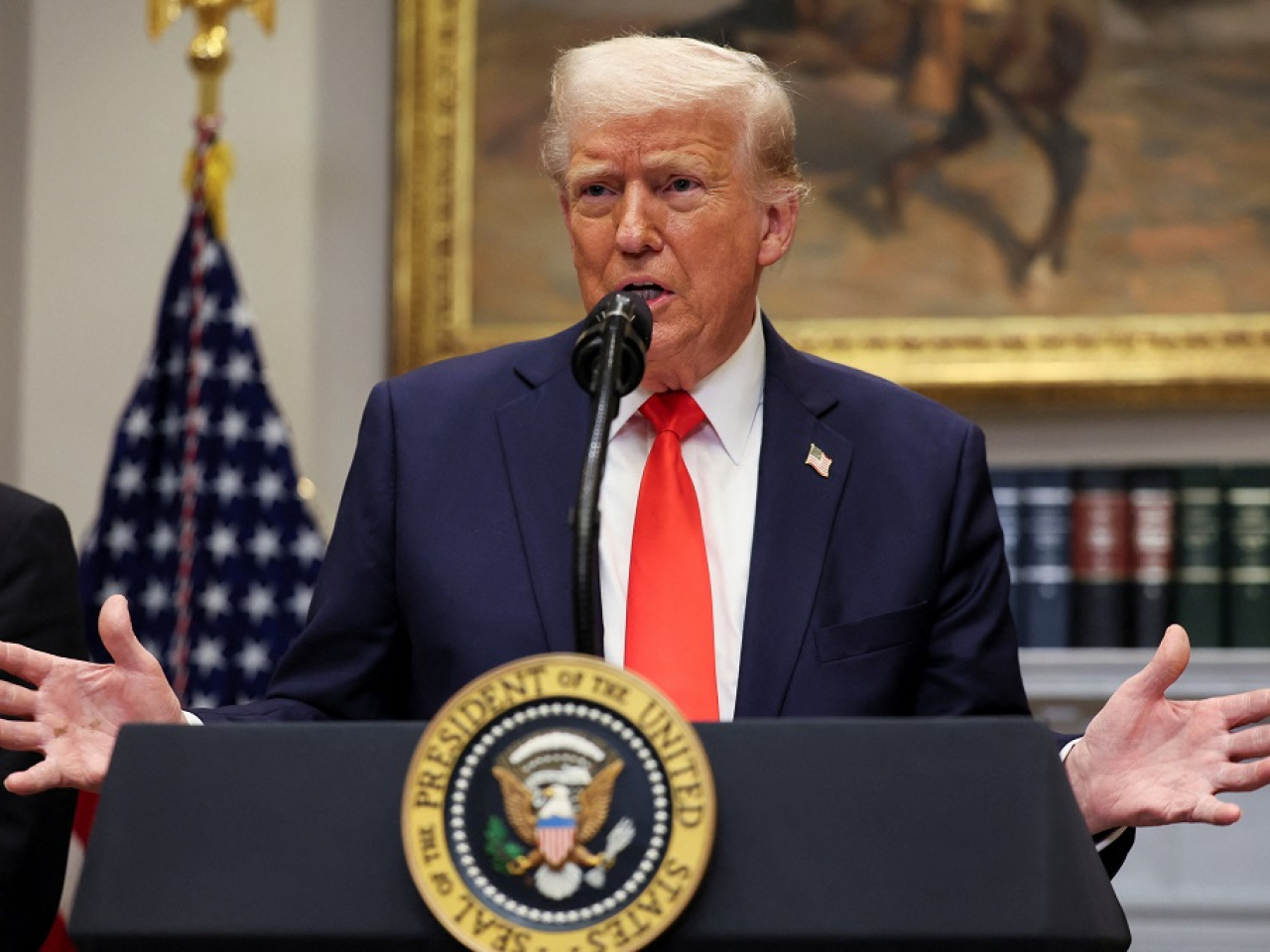
On a state visit to Saudi Arabia primarily aimed at securing billions of dollars of investment, the billionaire president took aim both at the US left and right who he said had intervened in the region in the guise of “nation builders” but “wrecked far more nations than they built”.
Trump renewed his offer for a better US relationship with longtime nemesis Iran, although he warned the nation’s rulers of consequences if ongoing talks with his administration failed.
In his most significant announcement, Trump said he would end sweeping US sanctions on Syria, in place for decades and ramped up dramatically during the iron-fisted rule of Assad, who was overthrown by Islamist-led forces in December.
“I will be ordering the cessation of sanctions against Syria in order to give them a chance at greatness,” Trump said in a speech in Riyadh.
“The sanctions were brutal and crippling,” he said. “But now it’s their time to shine.”
Trump will at least “say hello” to Syria’s interim president, Ahmed al-Sharaa, in Riyadh on Wednesday, a US official said.
Secretary of State Marco Rubio will hold more extensive talks in Turkey this week with Syria’s foreign minister, Asaad al-Shaibani, Trump said.
Shaibani welcomed the lifting of sanctions, telling state news agency SANA it was a “pivotal turning point for the Syrian people”.
– Listening to Saudi appeals –
In announcing the move, Trump said he was listening to the appeals of Saudi Arabia’s de facto ruler, Crown Prince Mohammed bin Salman — who joined the crowd in cheering the announcement — as well as President Recep Tayyip Erdogan of Turkey, the longtime patron of the triumphant Syrian Islamists.
United Nations spokesman Stephane Dujarric welcomed the easing of US sanctions, saying it would “help the Syrian people recover from more than a decade of conflict”.
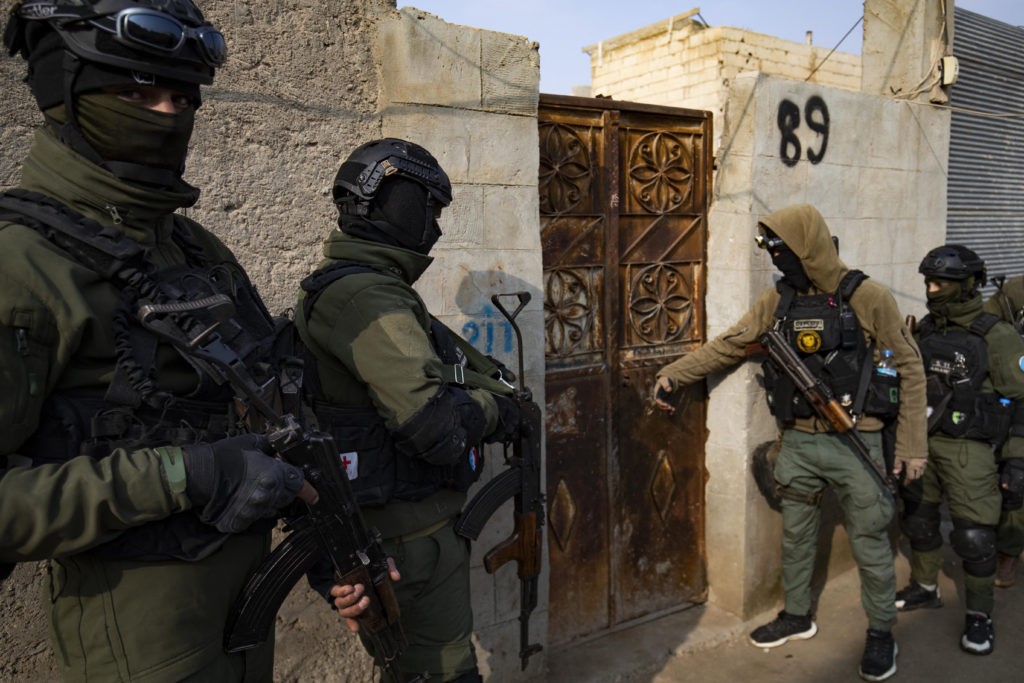
Syrian Kurdish Asayish security forces knock on the door of a house during a raid against suspected Islamic State group fighters in Raqa, the jihadist group’s former defacto capital in Syria, on January 29, 2023. After the jihadists lost their last scraps of territory following a military onslaught backed by the coalition in March 2019, IS remnants in Syria mostly retreated into desert hideouts in the country’s east. They have since used such hideouts to ambush Kurdish-led forces and Syrian government troops while continuing to mount attacks in Iraq. (Photo by Delil SOULEIMAN / AFP)
The European Union, Britain and Canada had already eased sanctions that had intensified during Syria’s decade and a half of brutal civil war.
But the United States had held out on maintaining sanctions, which have impeded investment for the reconstruction of Syria whose economy was devastated by the war.
After Assad’s fall, Washington, then under president Joe Biden, lay down conditions for sanctions removal including protection of minorities.
In recent weeks, there have been a series of deadly attacks on the Alawite and Druze minorities.
Breaking with Israel
The last US president to meet a Syrian leader was Bill Clinton, who in 2000 unsuccessfully tried to persuade Bashar’s father Hafez al-Assad to make peace with Israel.
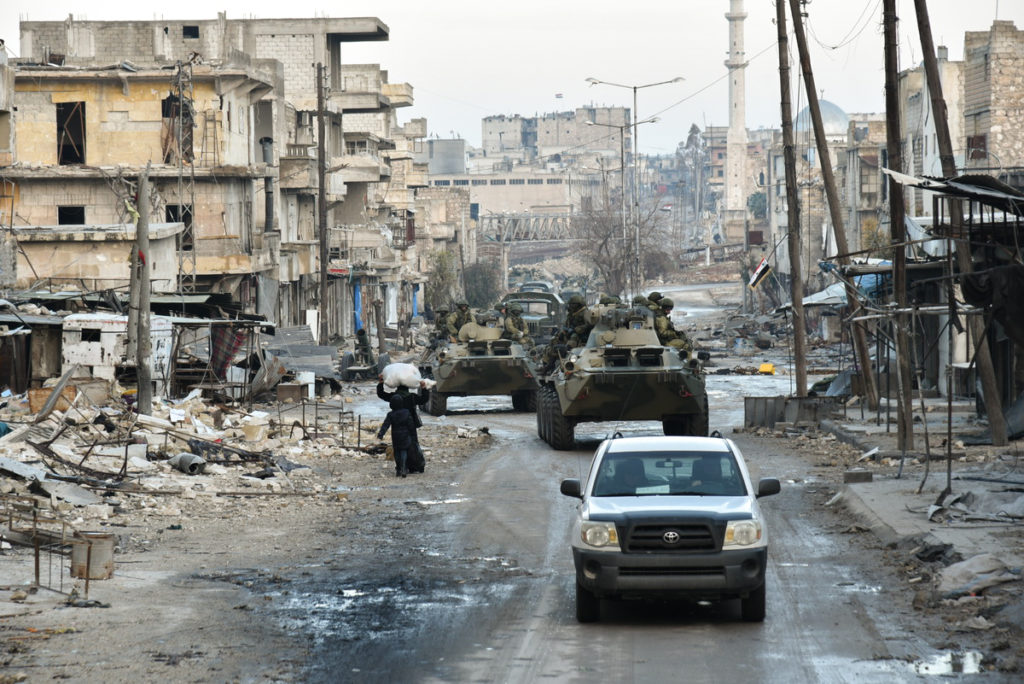
On both Syria and Iran, Trump is moving in directions that put him at odds with Israel, which he has long supported.
Israeli Prime Minister Benjamin Netanyahu has repeatedly ordered strikes on Syria, demanded the demilitarisation of its south, and pushed for action against Iran’s contested nuclear programme.
The Trump administration has held four rounds of talks with Iran on reaching a nuclear accord to avoid war.
Trump, who himself pulled out of an earlier nuclear agreement with Tehran in his first term, sharply criticised Iran’s leaders, saying they had “focused on stealing their people’s wealth to fund terror and bloodshed abroad” and “dragged down an entire region with them.”
But he added: “I’m here today not merely to condemn the past chaos of Iran’s leaders, but to offer them a new path — and a much better path — toward a far better and more hopeful future”.
If the talks fail, however, Trump said he would “have no choice but to inflict massive maximum pressure,” including using sanctions to curtail all Tehran’s oil exports.
Trump’s speech took on much of the tone of his domestic rhetoric.
He lashed out at US rivals and even brought the Saudi crown prince on stage to the sound of the Village People’s “YMCA”, a gay anthem turned Trump campaign song.
But the US president, whose second term has included slashing most foreign assistance and aggressively deporting migrants, said that he still saw himself as a “peacemaker”.
“In the case of Iran, I have never believed in having permanent enemies. I am different than a lot of people think,” Trump said.
