

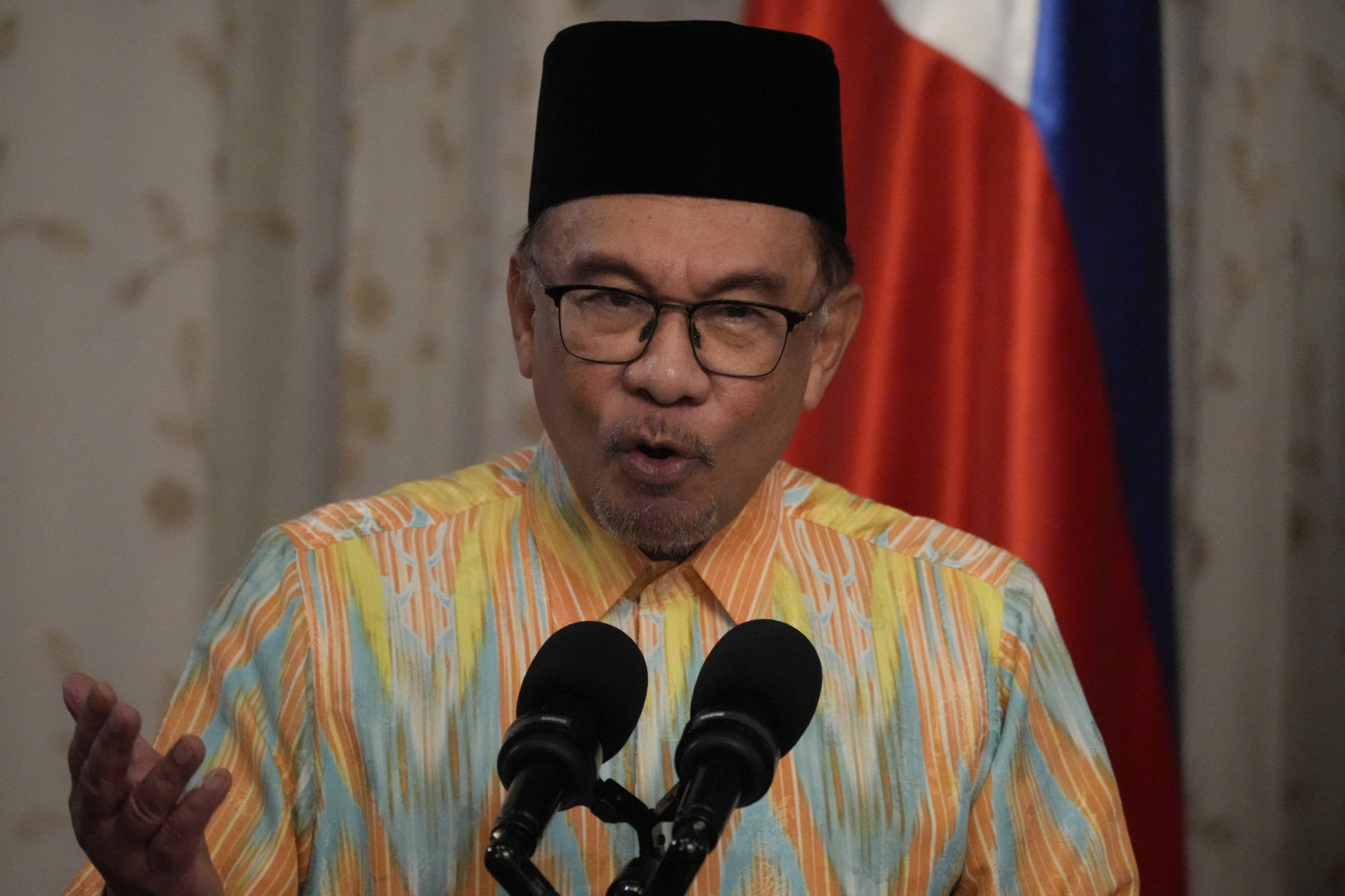
Malaysian Prime Minister Anwar Ibrahim said today that China is open to his initiative to form an “Asian Monetary Fund”, aimed at countering the global dominance of the US dollar and the International Monetary Fund (IMF).
In a speech at the Malaysian parliament, Anwar revealed that “in business between Malaysia and other countries, the respective national currencies must be used”, according to statements collected by the state news agency Bernama.
The Malaysian prime minister defended the idea of setting up an Asian fund during a meeting in Beijing last Friday with Chinese president Xi Jinping, who “welcome” the start of talks on this initiative.
Anwar Ibrahim also proposed the creation of that fund at the Boao Forum, the “Asian Davos”, which took place between March 28 and 31, on the island of Hainan, in the extreme south of China.
Also at the forum were the Prime Minister of Singapore, Lee Hsien Loong, the head of the Spanish government, Pedro Sánchez, and the director of the IMF, Kristalina Georgieva.
“There is no reason for Malaysia to continue to depend on the dollar,” said the Malaysian prime minister, adding that the Malaysian central bank is already working to allow China and his country to do business using Malaysian and Malaysian currencies. China.
In office since last November, Anwar, who is also finance minister, recalled today that he had already considered the possibility of creating a regional fund in 1990, when he took over this portfolio for the first time, but the idea did not go ahead because the “dollar is still it was seen as a hard currency”.
“But now, with the strength of the economies of China, Japan and others, I think we should discuss this, and also the use of our currency,” he emphasized.
The report of the Boao Forum 2023, one of the main international economic conferences in China, estimated that the real GDP (Gross Domestic Product) growth in Asia should be 4.5% this year. That value is a “highlight”, given the slowdown in the world economy, reads in the report.
China has been trying to internationalize the Chinese currency, the yuan, since 2009, aiming to reduce dependence on the dollar in trade and investment deals and challenge the US currency’s role as the world’s main reserve currency. This has become more urgent as political frictions and a protracted trade and technology war between Beijing and Washington have resulted in the imposition of sanctions against various Chinese entities.
Beijing has signed agreements to this effect with Brazil, Chile, Argentina, Saudi Arabia and Russia, with which it hopes to increase the yuan’s share of world trade, currently estimated at around 2%.
