

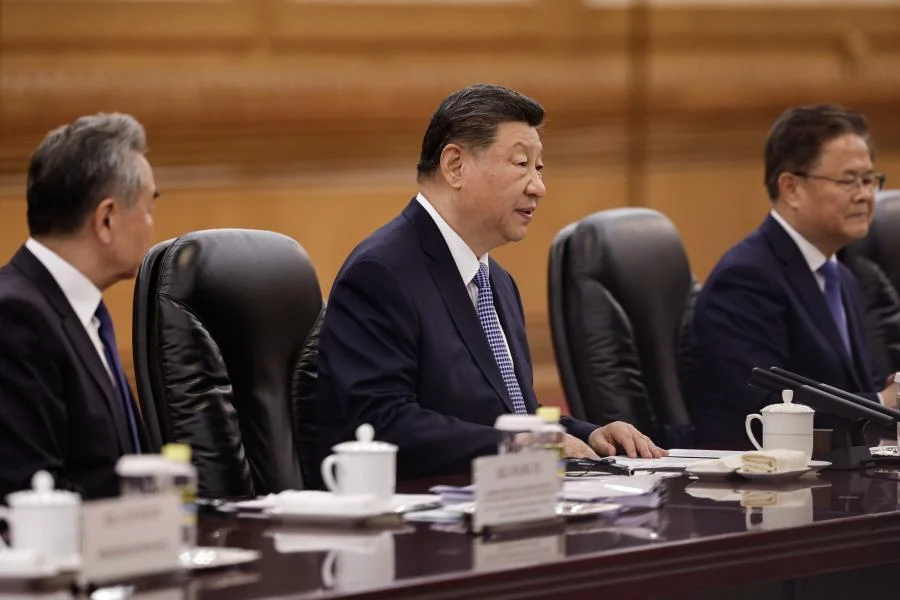
The Chinese President defended today the continuity of the alliance between China and North Korea and called for the strengthening of coordination in the face of “hegemonism” and “power politics” in an article published in the North Korean newspaper Rodong Sinmun.
The text, also released by the Chinese state-run news agency Xinhua, was published on the occasion of Xi Jinping’s trip to North Korea—his first in seven years—and in the year marking the 65th anniversary of the Treaty of Friendship, Cooperation and Mutual Assistance between the two countries. Xi stated that the bilateral relationship is at a “new historical starting point” and maintained that Beijing intends to “boost the development” of ties with Pyongyang.
This comes after years during which relations cooled due to North Korean nuclear tests, and at a time when Beijing seeks to preserve its influence in the face of North Korea’s growing alignment with Russia. The Chinese leader stressed that the “traditional friendship” between the two countries “will last forever” and recalled that he has met six times with North Korean leader Kim Jong Un in recent years.
Read more about this topic: North Korea’s economic recovery with”support from China” (with video)
Xi also argued that Beijing and Pyongyang should preserve the international system centered on the United Nations and the order based on international law, while simultaneously opposing “hegemonism” and “power politics.”
The Chinese leader further condemned any attempt to “revive militarism,” an expression that Chinese authorities have repeatedly used in recent months in reference to Japan. The article does not mention the denuclearization of North Korea, an issue that Pyongyang dismissed once again on Sunday by stating that the country’s nuclear status is irreversible.
The Chinese leader’s visit occurs amid a full resumption of contacts between Beijing and Pyongyang following a meeting that Xi and Kim held in September 2025 in Beijing, a visit by Chinese Foreign Minister Wang Yi to North Korea in April, and the March resumption of cross-border passenger rail and air connections between both countries after a six-year suspension.
