

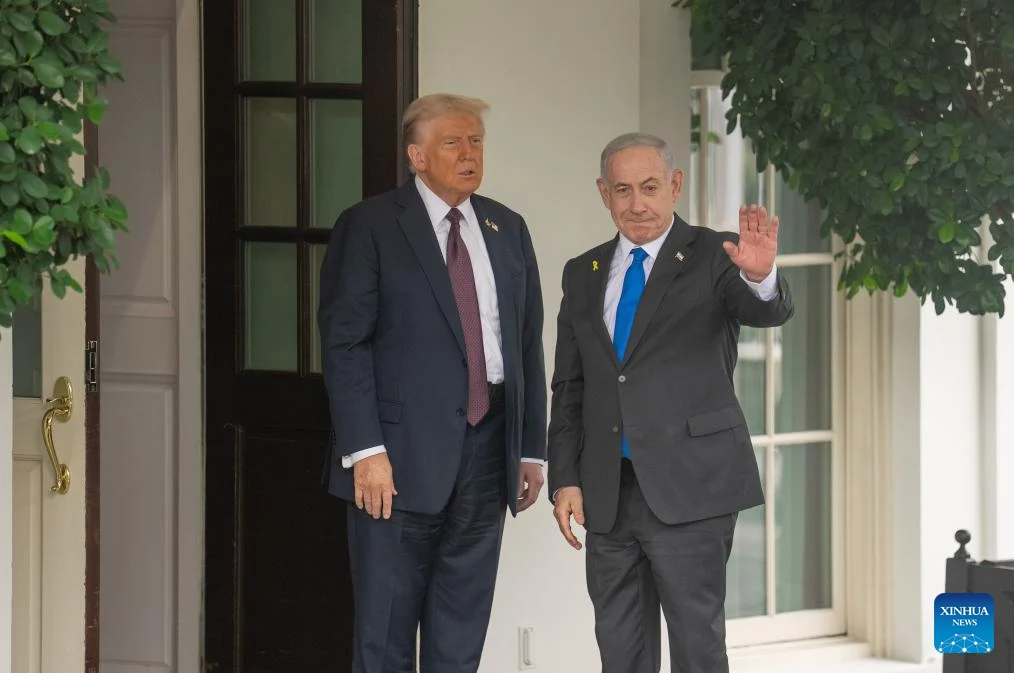
Israeli Prime Minister Benjamin Netanyahu left for Washington on Monday for what will be his first in-person meeting with President Donald Trump since the two countries’ joint conflict with Iran began, an encounter he described as centering primarily on Iran.
The meeting marks Netanyahu’s eighth with Trump since the president returned to office, and their first since February, just before Israel and the United States launched a joint air campaign against Iran.
In a video statement recorded before his departure, Netanyahu said the current moment demands both firm resolve and careful judgment, adding that discussions would cover the full agenda but that Iran remains the central issue, alongside the broader goals of protecting Israel’s security and expanding the circle of peace around it.
Israel had not directly participated in a two-week U.S. bombing campaign against Iran earlier this month, a campaign that prompted Tehran to strike back at American bases in the region. Trump paused that campaign over the weekend, and Iran has said it will hold off on further attacks for as long as the American pause continues. Israel, meanwhile, has warned that any renewed Iranian aggression would trigger a forceful response of its own.
Read more about this topic: Mamdani calls Netanyahu “war criminal”; wants to arrest him in New York. Trump has already ruled it out (with videos)
Netanyahu has acknowledged in recent weeks that friction has emerged between himself and Trump, as the two countries’ regional interests haven’t always aligned. That tension became public after a tense phone call in June in which Trump reportedly called Netanyahu an expletive-laced term for erratic, a characterization first leaked to the press and later confirmed publicly by Trump himself.
In what appeared to be a conciliatory gesture ahead of the meeting, Israel said Sunday it would allow a multinational security force to enter Gaza, a step outlined in Trump’s broader peace proposal for the territory. Earlier this month, on July 21, Israel also announced it had redeployed some of its forces out of southern Lebanon, part of U.S.-backed arrangements reached with Lebanese authorities in recent weeks.
The meeting comes at a politically useful moment for Netanyahu, who faces an October 27 election at home and has been struggling in the polls. A public display of the traditionally close relationship between the two leaders could offer him a boost domestically, even as support for Israel within the United States has been declining more broadly.
