

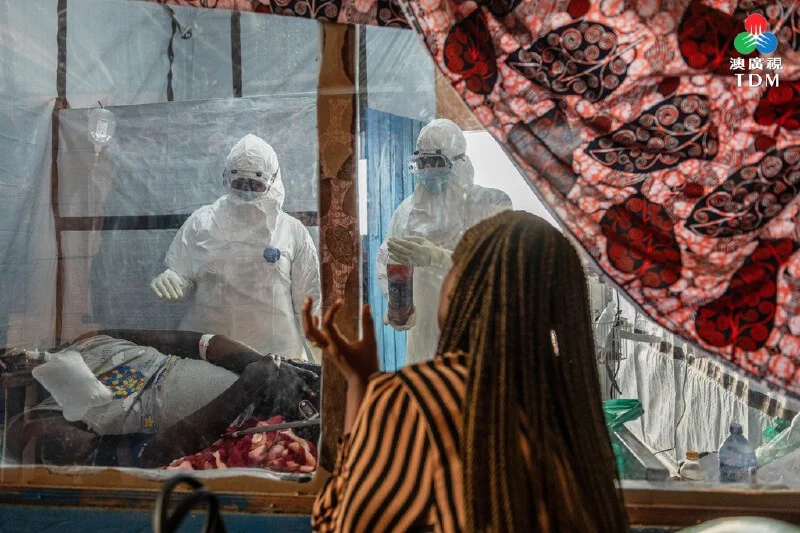
The World Health Organization (WHO) has issued a stark warning that the true scale of the ongoing Ebola outbreak in the Democratic Republic of the Congo (DRC) could be “two to four times” larger than official government estimates.
Chikwe Ihekweazu, the head of the WHO’s health emergencies program, announced to the press that the agency’s projections suggest undetected community transmission is significantly higher than what is currently being documented. Despite this discrepancy, Ihekweazu noted that the international ability to detect and track active cases is improving daily.
According to official government figures, the outbreak—which was first declared two months ago in the northeastern province of Ituri near the borders of South Sudan and Uganda—has officially caused 702 deaths and infected 1,926 people. Initially concentrated in Ituri, the virus has now expanded into four additional Congolese provinces: North Kivu, South Kivu, Tshopo, and Haut-Uélé.
Additionally, neighboring Uganda has already confirmed 20 cases of the virus.
Read more about this topic: Ebola disease in Democratic Republic of Congo: MSF scales up response to a rapidly evolving outbreak
Ihekweazu, who recently returned from an assessment in eastern DRC, warned that the current crisis now ranks as the third-largest Ebola outbreak in history and has shown the fastest rate of single-month transmission ever managed by the organization. He emphasized that despite local and international response efforts, the virus continues to outpace intervention strategies.
The most concerning indicator for health officials is that a high number of the newly reported cases involve individuals who died within their local communities without ever receiving medical attention at a specialized treatment facility.
Health workers are prioritizing earlier detection, accelerated contact tracing, and rebuilding local trust in health clinics to encourage symptomatic individuals to seek professional care. Currently, more than 90% of the confirmed cases remain concentrated in the Ituri region.
On a positive note, health officials report that contact tracing success rates are approaching 80%, 700 treatment beds are now active, and regional laboratory capacity has expanded from just one facility to fourteen.
Read more about this topic: Ebola death toll rises to 254 in DR Congo
In addition to two experimental treatments currently being administered, the National Institute of Biomedical Research (INRB) in Kinshasa, along with French research agency ANRS MIE and the NGO Alima, are preparing to launch a clinical trial for a post-exposure prophylaxis (PEP) using the antiviral drug obeldesivir to protect individuals who have been in close contact with confirmed Ebola cases.
