

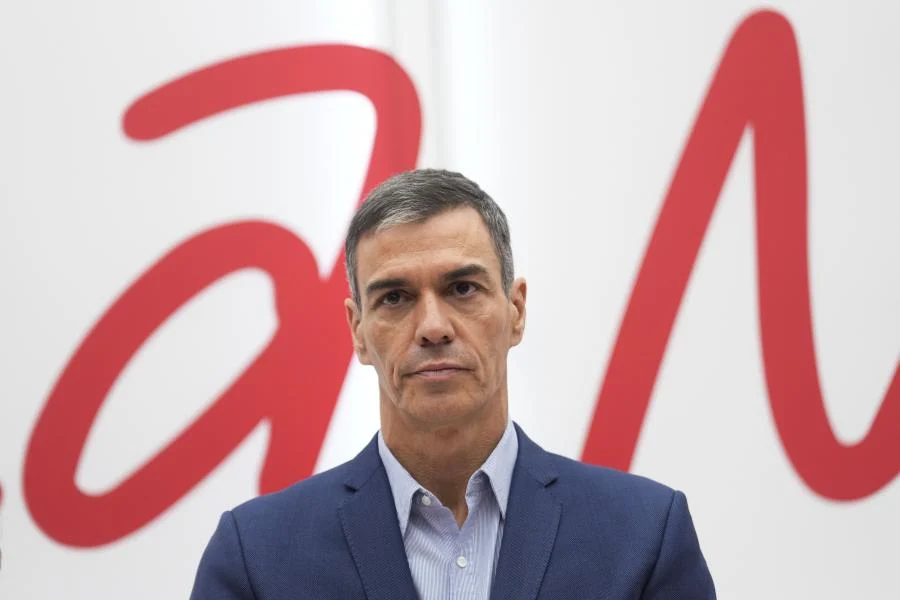
Spain’s High Court has expanded its ongoing corruption investigation to include Juan Manuel Serrano, a former chief of staff to Prime Minister Pedro Sánchez. High Court Judge Santiago Pedraz ordered law enforcement to seize and analyze data from Serrano’s mobile phone as part of a probe into alleged efforts to obstruct judicial and police inquiries involving the ruling Socialist Party (PSOE).
Investigators are specifically examining communications between Serrano and Leire Díez, a former executive at the state-owned postal service. Díez has consistently denied any wrongdoing. Serrano, who was once one of Sánchez’s most trusted political advisers, went on to run Spain’s postal service from 2018 to 2023 after leaving his post in the prime minister’s office.
Read more about this topic: Pedro Sánchez’s brother banned from public office amid corruption trial
The judicial inquiry also targets Vicente Fernández, the former head of the state holding company SEPI, over his role in appointing Díez to her executive position at the postal service. Like Díez, Fernández has denied all allegations of illegal activity.
This new development heightens the political pressure on Prime Minister Sánchez, whose inner circle and party have faced a series of recent corruption scandals. Although the prime minister himself has not been accused of any illegal acts, the growing list of investigations involving his close associates continues to fuel intense political debate in Spain.
