

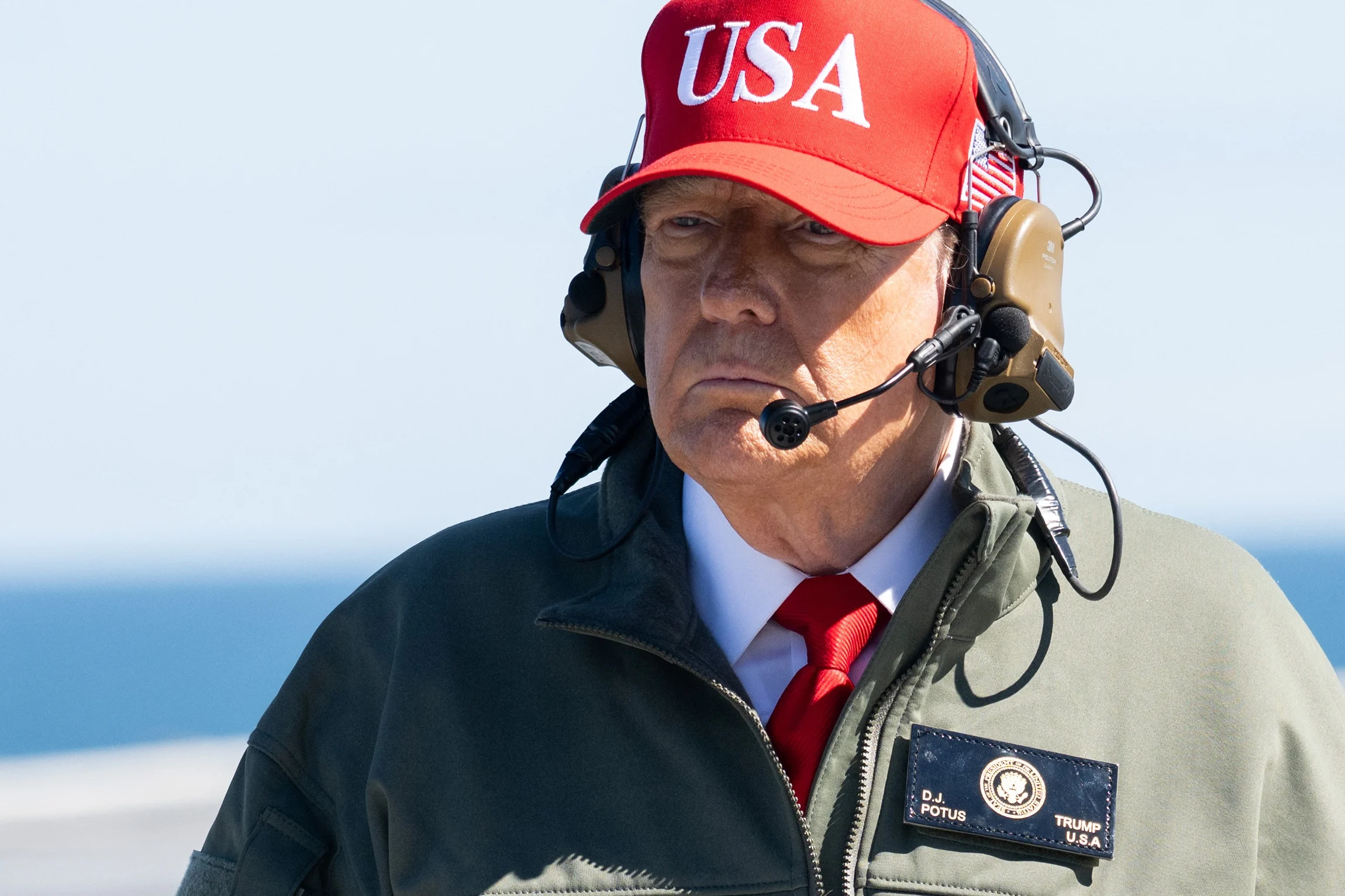
U.S. President Donald Trump has rejected a Senate resolution aimed at limiting his military powers against Iran, arguing that it obstructs his strategy to bring an end to hostilities.
In a post on his social media platform, Truth Social, on Tuesday, Trump claimed that Iran is “in deep trouble” and reiterated that his administration has placed the country under immense pressure, making it willing to negotiate “virtually anything” with Washington. The President criticized the lawmakers who backed the resolution, defending his stance by stating that the initiative complicates the Executive branch’s handling of foreign policy.
Furthermore, Trump accused a faction of Congress of “giving comfort to the enemy”—a phrase explicitly linked in the U.S. Constitution to the definition of treason—for questioning his actions regarding Tehran.
The resolution mentioned by Trump, framed under the War Powers Resolution of 1973, was passed on Tuesday by the upper house of Congress to restrict the use of military force without legislative authorization. This vote lands amidst an intense political debate in Washington over the scope of presidential powers regarding national security and Congress’s constitutional role in decisions involving potential conflict with Iran.
Read more about this topic: Trump claims sanctions money will be controlled by U.S. for humanitarian aid
The vote, which passed 50 to 48, ratifies a previous decision approved by the House of Representatives (the lower house) in early June opposing the Middle East conflict, which initially broke out on February 28.
The Senate’s decision came just one week after the United States and Iran signed a memorandum of understanding that successfully halted active hostilities, reopened the strategic Strait of Hormuz, and established a 60-day window to negotiate a comprehensive nuclear agreement and permanent sanctions relief for the Islamic Republic.
