

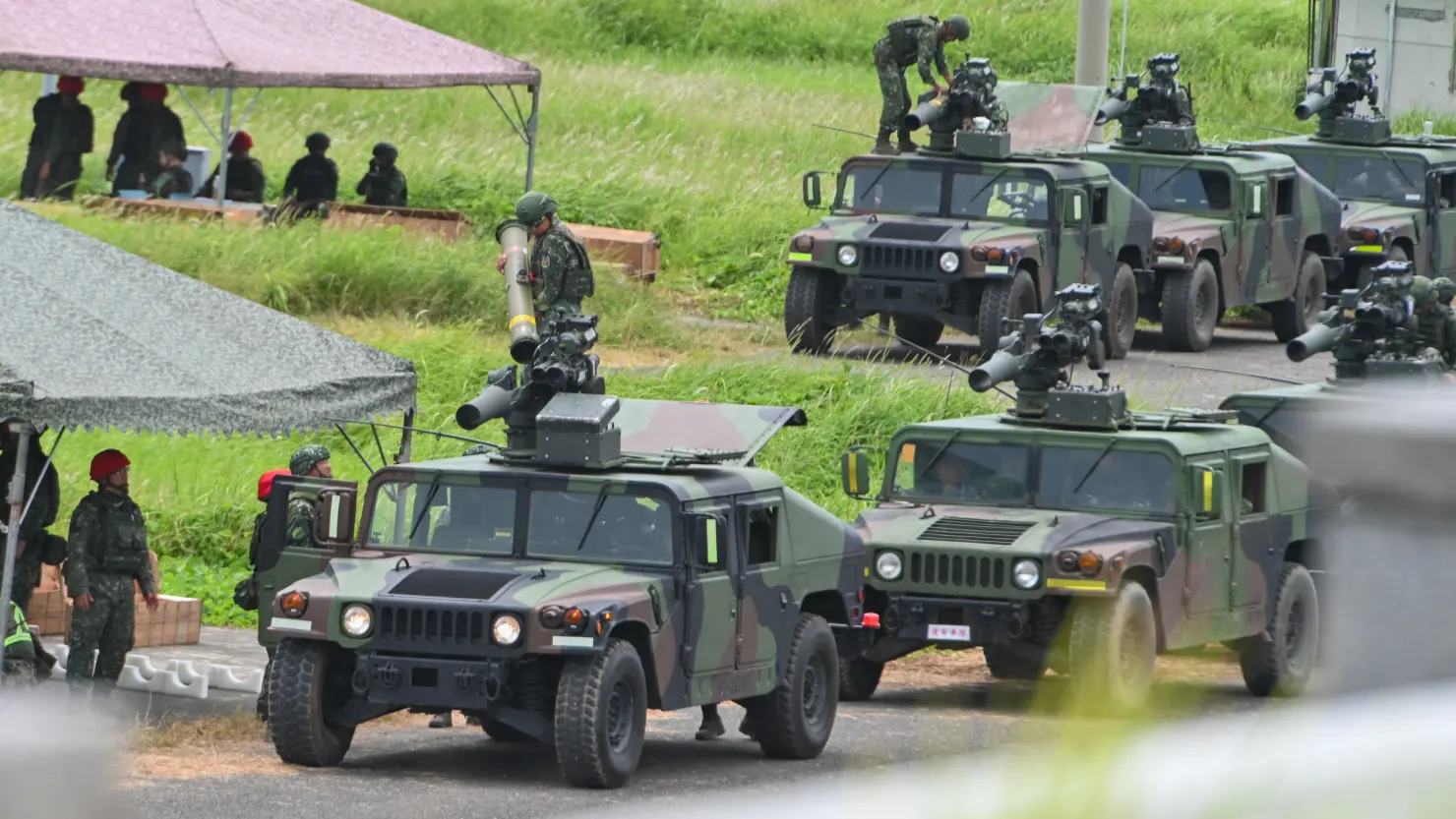
Taiwan must guarantee an immediate response to a potential Chinese attack at a time when early warning times are actively shrinking, the island’s Defense Minister, Wellington Koo, stated during a parliamentary address today.
On Monday, the island’s Armed Forces launched five days of immediate combat-readiness drills. These exercises are engineered to bolster operational capacity and test the efficacy of joint operations in the face of mounting military pressure from China, which claims sovereignty over Taiwan.
The maneuvers, running through Friday, are part of the Taiwanese military’s annual training program and specifically aim to “strengthen the rapid transition from a state of peace to a state of war”—a scenario the island’s troops are rehearsing with increasing frequency.
According to statements cited by the Liberty Times, Koo explained that the drills are designed to “rapidly carry out combat preparations in order to respond to potential unforeseen situations.”
Read more about this topic: China: Trump willing to speak directly with Taiwan (with video)
“Faced with the current threat from the enemy and a situation where early warning time is diminishing, it is necessary to confirm that the national defense force is capable of responding immediately, reacting autonomously, and safely completing the transition from peace to war,” the minister asserted.
The defense chief’s remarks came just one day after China’s newest and most advanced aircraft carrier, the Fujian, transited through the Taiwan Strait. This marked the first passage of a Chinese aircraft carrier through the strategic waterway since April.
Regarding the deployment, Koo assured that Taipei maintains “full control over movements” around the strait. He justified the public release of images of the Fujian by stating that the population needs to “clearly know” the activities of the Chinese military near the island.
In Beijing, Zhang Han, the spokesperson for the State Council’s Taiwan Affairs Office, hit back today by accusing Taiwan’s ruling Democratic Progressive Party (DPP) of maintaining a “separatist stance,” which she claimed is the root cause of tension and instability across the strait.
Read more about this topic: Taiwan rejects weapon sales as bargaining chip in U.S.-China negotiations
“We are willing to explore the prospects of a ‘peaceful reunification’ with the utmost sincerity and greatest effort,” Zhang said. “However, under no circumstances do we commit ourselves to renouncing the use of force, nor will we leave any room for any form of ‘Taiwan independence’ separatism.”
Taiwan has governed itself autonomously since 1949 under the official name of the Republic of China, maintaining its own military, as well as a political, economic, and social system distinct from the People’s Republic of China. Beijing, however, considers the island an “inalienable part” of Chinese territory.
In recent years, it has intensified a sweeping campaign of military, diplomatic, and economic pressure to achieve “national reunification”—a core objective for Chinese President Xi Jinping under the banner of the “rejuvenation of the Chinese nation.”
