

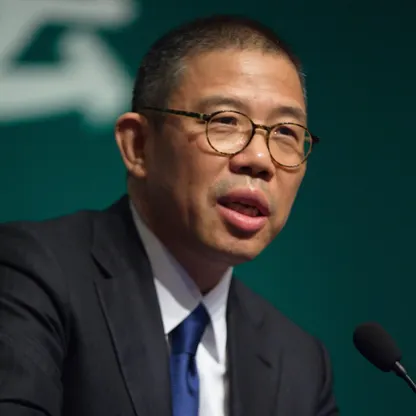
The Chinese stock market has benefited from enthusiasm surrounding artificial intelligence and expectations of new government stimulus measures aimed at countering a slowing economy and the prolonged effects of the trade war with the United States. Over the past year, the benchmark CSI 300 index rose by 15%, boosting most individual fortunes.
Zhang Yiming and Zhong Shanshan at the top
As in previous editions, the founder of beverage company Nongfu Spring, Zhong Shanshan, remains at the top of the list with an estimated fortune of around $77.1 billion (approximately €71.5 billion), driven by double-digit growth in the company’s profits and revenues in the first half of 2025.
In second place is Zhang Yiming, co-founder of ByteDance — the company behind the popular TikTok platform — with an estimated net worth of about $69.3 billion (around €64.3 billion), following a year marked by the overcoming of regulatory challenges in the United States and new global expansion strategies.
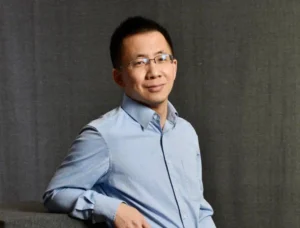
Zhang Yiming, co-founder of ByteDance — the company that owns the popular social media platform TikTok.
The third place on the list is held by Ma Huateng, chairman of the tech giant Tencent Holdings, whose fortune increased by more than a third to $62.8 billion (approximately €58.3 billion), despite dropping one position in the overall ranking.
Read more: Water billionaire is China’s richest man
Other notable names
Among the remaining top positions are the co-founders and leaders of major Chinese companies: Robin Zeng (CATL) ranks fourth with around $53.5 billion (about €49.7 billion). William Ding (NetEase) is fifth, with approximately $47.5 billion (around €44.1 billion).
The billionaire with the fastest percentage growth was Wang Ning, founder of Pop Mart International Group, known for the global Labubu toy phenomenon, whose fortune rose from $5.5 billion (about €5.1 billion) to $22.2 billion (approximately €20.6 billion), more than quadrupling in a single year.
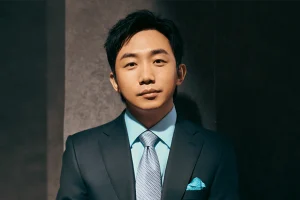
Wang Ning, founder of Pop Mart International Group, behind the global Labubu toy phenomenon.
Another notable figure is Chen Tianshi, chairman and CEO of Cambricon Technologies, an AI chipmaker dubbed the “China’s Nvidia,” whose fortune nearly tripled to around 21 billion dollars (approximately 19.4 billion euros).
New entries and departures
The 2025 list features eight new names, including Liang Wenfeng, founder of the AI company DeepSeek, who debuts with an estimated net worth of about 11.5 billion dollars (approximately 10.6 billion euros).
On the other hand, several billionaires who appeared on the list in previous years dropped out in 2025 — among them Wang Jianlin, chairman of Dalian Wanda Group, whose fortune was significantly reduced largely due to asset sales amid liquidity needs.
Minimum wealth and trends
The minimum net worth required to enter the list of the 100 richest rose this year to 4.6 billion dollars (around 4.3 billion euros), up from 3.9 billion dollars (approximately 3.6 billion euros) the previous year.
With two-thirds of the billionaires seeing their wealth increase, the new Forbes list reflects a period of economic appreciation for China’s leading tycoons, particularly in the technology, consumer, and artificial intelligence sectors, despite ongoing global macroeconomic and geopolitical challenges.
