

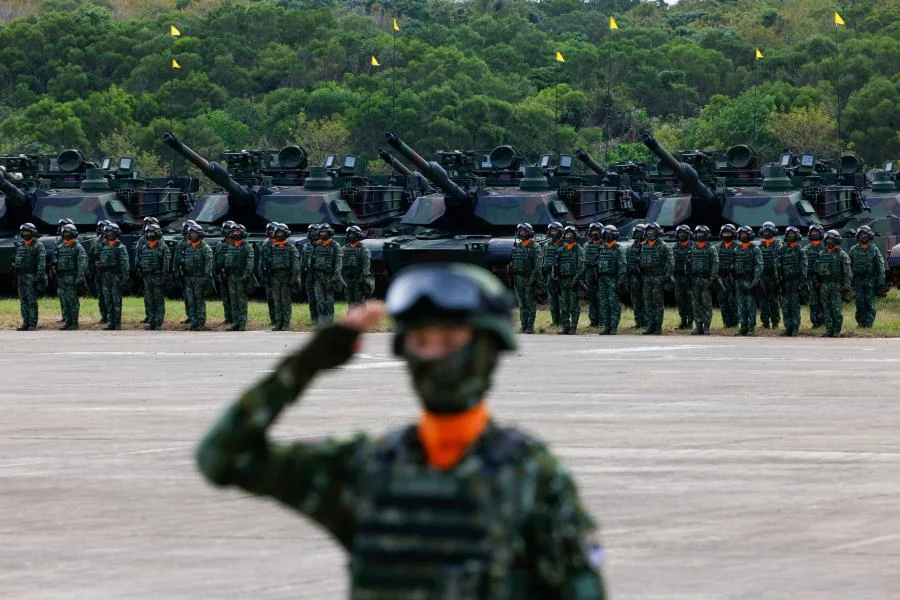
Taiwan expressed its firm intention on Tuesday to deepen cooperation with the United States and build “effective deterrence” to maintain stability in the Taiwan Strait. The statement from Taiwan’s Ministry of Foreign Affairs (MOFA) follows a controversial announcement by U.S. President Donald Trump, who indicated he would discuss American arms sales to Taipei during his upcoming high-level visit to Beijing.
During a regular press conference, MOFA spokesperson Hsiao Kuang-wei emphasized that Taiwan will continue to strengthen its security partnership with Washington. The goal remains the development of defense capabilities robust enough to discourage any potential aggression and ensure regional peace.
-
Effective Deterrence: Taiwan is prioritizing the acquisition of asymmetric defense capabilities, including mobile missile systems and drones.
-
Trump’s Stance: On Monday, President Trump confirmed in the Oval Office that he plans to discuss the $14 billion weapons package—currently delayed—with Chinese President Xi Jinping.
-
Deviation from Protocol: Trump’s willingness to negotiate arms sales with Beijing marks a departure from the “Six Assurances” established in 1982, which historically prohibit the U.S. from consulting China on arms sales to Taiwan.
Read more about this topic: Arms sales to Taiwan will be a key topic at the Xi-Trump summit
President Trump is scheduled to arrive in Beijing on Wednesday night. While he has downplayed the risk of a Chinese invasion, citing his “excellent relationship” with Xi Jinping, the discussions come at a time of heightened regional tension.
| Key Aspect | Current Status (May 2026) |
| Pending Arms Sales | A $14 billion package (including HIMARS and drones) remains stalled at the State Dept. |
| Taiwanese Defense Budget | Recently approved at $25 billion (NT$780 billion) specifically for U.S. weapons. |
| Beijing’s Position | Reaffirmed “firm opposition” to sales, urging Trump to act with “utmost caution.” |
Despite the diplomatic friction, Trump has expressed confidence that his personal rapport with Xi will prevent conflict. “President Xi knows I don’t want that [an invasion] to happen,” Trump told reporters, while noting that Xi “did not respect” the previous administration. Taipei, meanwhile, continues to balance these high-stakes negotiations by reaffirming its reliance on the Taiwan Relations Act and bipartisan support from the U.S. Congress.
