

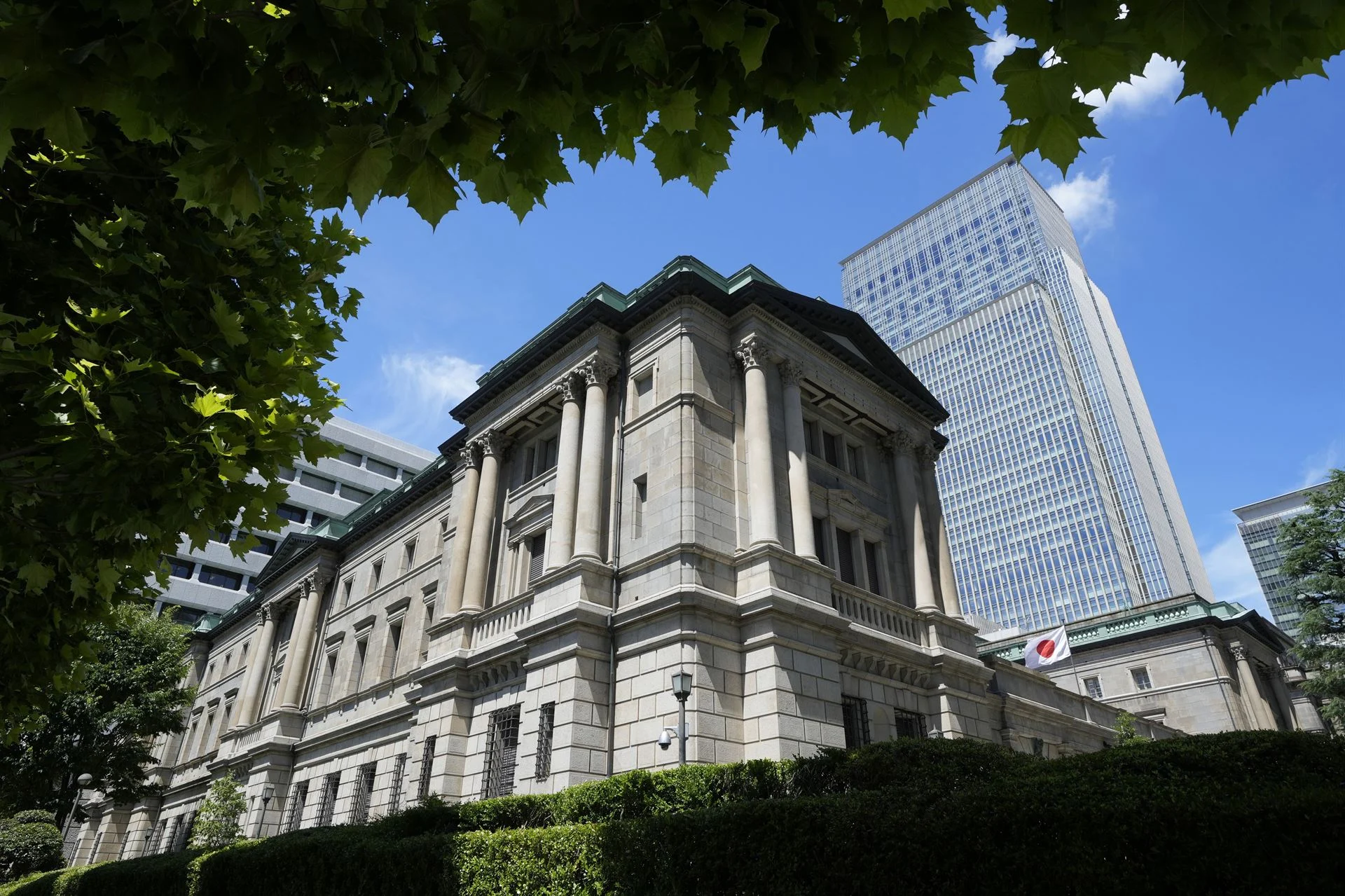
At the conclusion of its two-day monthly monetary policy meeting, the central bank’s committee decided, for the third consecutive month, to keep short-term benchmark interest rates at 0.75%, following a vote of six in favor and three against, the bank said in a statement.
Three members proposed raising rates to 1%, with one of them, Hajime Takata, arguing that the price stability target had been achieved “to a large extent.” The BoJ lowered its forecast for Japan’s economic growth for the current fiscal year—which began on April 1 and ends in March 2027—to 0.5%, down from the 1% estimated in January, due to the impact of the conflict in Iran.
“Rising crude oil prices, reflecting the impact of the situation in the Middle East, are expected to reduce corporate profits and real household income,” the central bank stated.
The institution also forecast a moderate recovery in growth to 0.7% in fiscal year 2027-28, as the negative effects of oil prices fade. Conversely, the BoJ estimated that the Consumer Price Index, which excludes food prices due to their high volatility, is expected to accelerate to 2.8% in the current fiscal year, compared to the 1.9% forecast in January.
Read more: Japan calls on Iran to protect ships in the Strait of Hormuz
“Rising crude oil prices are expected to drive up prices, particularly for energy and goods,” the institution stated, before warning that “special attention” must be paid to the situation in the Middle East.
The bank, which is aiming for a 2% inflation target, raised its interest rate to 0.75% in December 2025—the highest level in three decades. However, it has kept the rate unchanged since then to assess the measure’s impact on businesses and households.
Also today, official data was released showing that Japan’s unemployment rate rose to 2.7% in March, 0.1 percentage points higher than in February, and reached 2.6% in fiscal year 2025/26. The number of unemployed in March stood at 1.86 million, on a seasonally adjusted basis, an increase of 10,000 from February, the Ministry of Internal Affairs and Communications reported.
Meanwhile, the number of employed people stood at 68.15 million, a decrease of 120,000 from February, marking the lowest level in nearly a year. The number of job openings per 100 job seekers in Japan was 118, a decrease of 0.01 percentage points compared with February, the Ministry of Health, Labour and Welfare noted in a separate report.
