

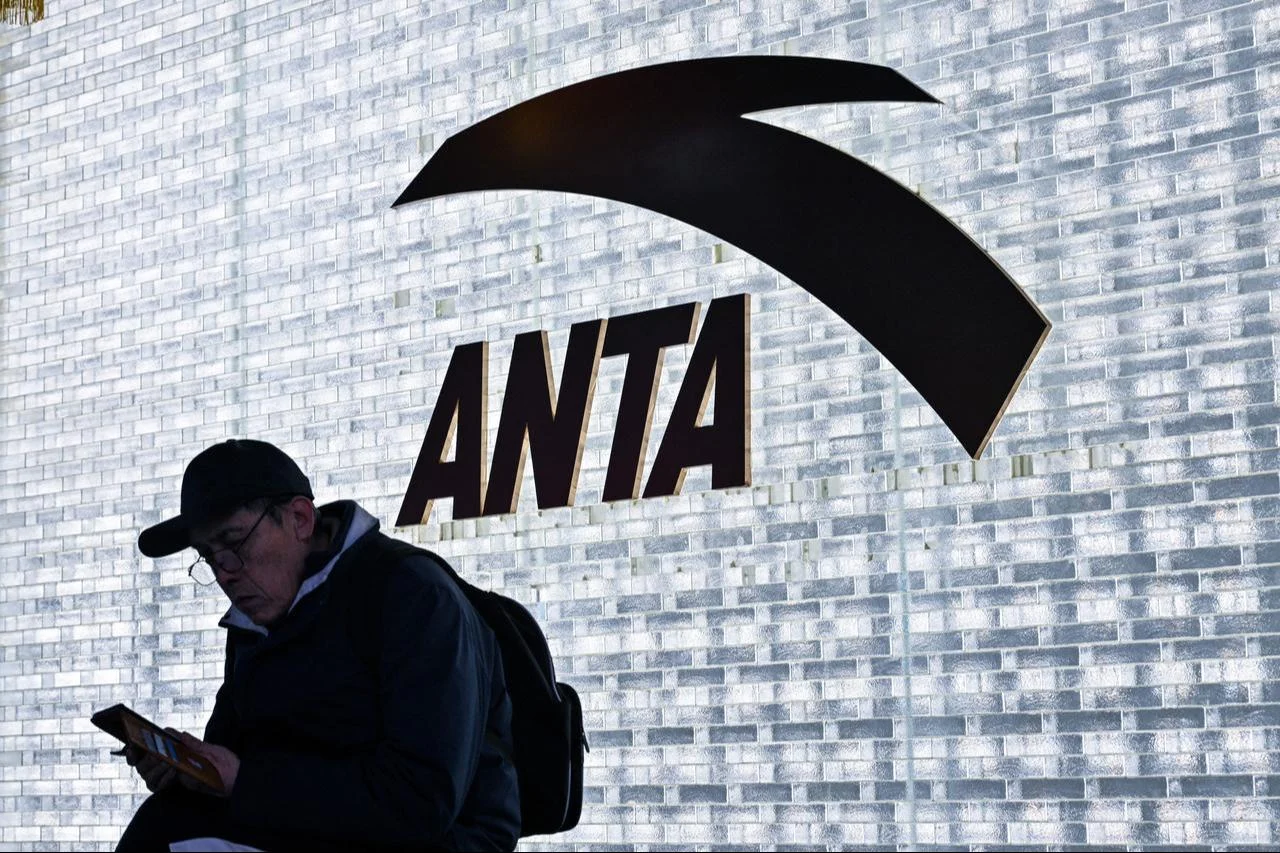
The Chinese brand Anta has transitioned from a small regional manufacturer in Fujian province to one of the world’s leading sports groups, with declared ambitions to compete directly with giants like Nike and Adidas.
The group’s origins date back to the late 1980s, when Ding Shizhong began operating in the footwear sector on a small scale, within the context of China’s gradual economic opening. In 1991, he officially founded Anta in the city of Jinjiang, which would become one of the world’s largest industrial hubs for footwear.
For years, the company operated as a subcontractor for major international brands, benefiting from the strong industrial concentration of the region, where there were highly specialized and complete production chains. This ecosystem allowed for economies of scale, speed, and efficiency, while providing Anta with deep knowledge of design, production, and distribution.
The company’s growth accelerated after its IPO on the Hong Kong Stock Exchange in 2007, at which point it consolidated its transition from a manufacturer to a global brand. From then on, the strategy shifted to focus on expansion through acquisitions and the development of a multi-brand portfolio.
Read more: Nike to lay off 1,400 employees (with video)
Key operations include entering the Fila business in China, acquiring Amer Sports—which includes brands such as Arc’teryx and Salomon—and strengthening its global presence with Wilson and a significant stake in Puma. This model allows Anta to grow internationally through brands already established in the Western market.
Thirteen luxury brands are currently suspected of exploiting Chinese workers in Italy, a trend that stands in contrast to the rapid rise of Chinese industrial entities. Currently, the group operates more than 10,000 stores in China and hundreds of points of sale abroad, with plans for continuous expansion, especially in Asia. The strategy aims to consolidate its global presence without relying exclusively on its own brand.
Despite this growth, Anta’s challenge remains establishing its identity outside of China, in a market where the perception of Chinese products still represents an obstacle. The company seeks to overcome this barrier through sports sponsorships and associations with elite athletes, such as Eileen Gu, although it is still far from the cultural impact of brands like Nike.
Anta’s trajectory reflects a broader trend in the Chinese economy: companies that started as part of the global production chain and now compete directly with their former clients in an increasingly globalized and competitive market.
