

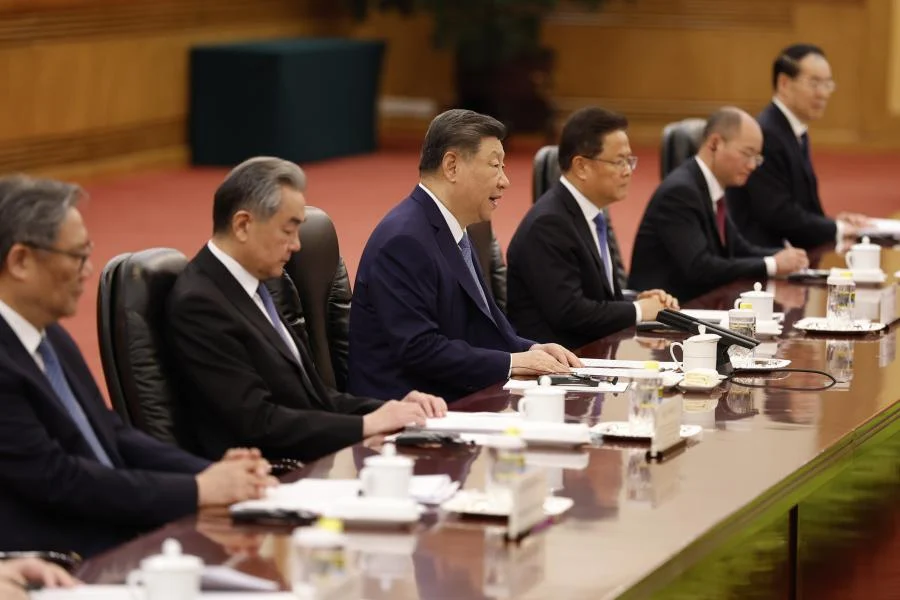
Chinese President Xi Jinping held a telephone conversation today with Saudi Crown Prince Mohammed bin Salman, during which he advocated for an “immediate and comprehensive” ceasefire in the Middle East. Central to their discussion was the urgent necessity of guaranteeing the freedom of navigation in the Strait of Hormuz, a critical maritime artery currently threatened by regional hostilities.
As the international community anticipates a second round of peace negotiations between Iran and the United States, Xi Jinping emphasized that the ongoing conflict must be resolved through political and diplomatic channels. According to reports from the Chinese state agency Xinhua, the Chinese leader expressed full support for all international efforts aimed at restoring peace and stability.
Xi argued that maintaining an open flow of traffic through the Strait of Hormuz is essential, noting that this serves the common interests of regional nations and the broader international community.
Saudi Crown Prince Mohammed bin Salman highlighted the severe repercussions of the current Middle East conflict, noting that it is undermining the security of Gulf nations and causing significant disruption to global energy supplies and the world economy.
Read more about this topic: China: Xi assuring Trump that it does not supply arms to Iran not confirmed
The Prince praised China’s “fair position” and its ongoing efforts to promote good neighborly relations in the region. He confirmed that Saudi Arabia is eager to maintain coordination with Beijing to prevent a resumption of hostilities, ensure navigational freedom in the strait, and work together toward finding a path for lasting stability.
This diplomatic outreach comes at a delicate time as Washington and Tehran prepare for a new round of peace talks. Iran has maintained a firm stance, refusing to engage until the United States lifts its maritime blockade on Iranian ports. China has consistently criticized the military operations launched by the United States and Israel against Iran on February 28, which ignited the current war.
Throughout the crisis, Beijing has advocated for respect for the sovereignty of Gulf nations, with whom it maintains strong political and commercial ties.
Iran has responded to the offensive with attacks on U.S. interests and energy infrastructure in the region, alongside its blockade of the Strait of Hormuz.
Read more about this topic: Iran War: China predicts normal air routes for May 1st despite oil prices
The conflict has already resulted in over four thousand deaths, primarily in Iran and Lebanon. Furthermore, the sharp increase in energy prices triggered by the hostilities has fueled widespread fears of an imminent global economic crisis, adding urgency to the diplomatic efforts led by Beijing and Riyadh.
