

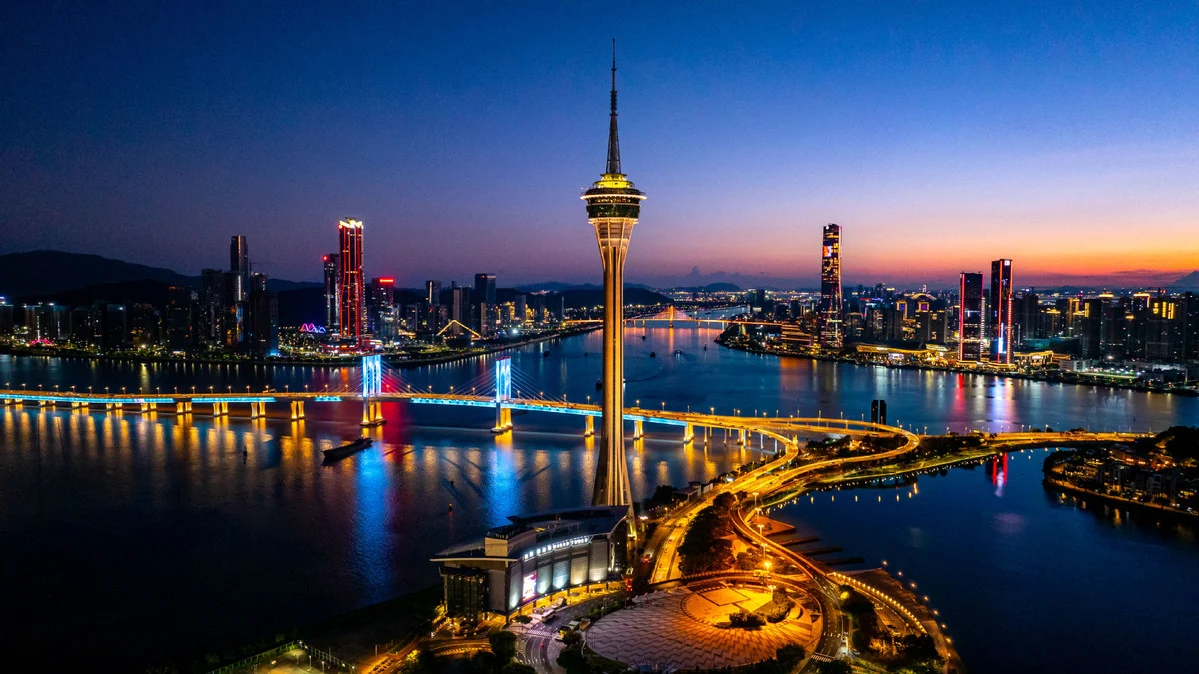
Macau’s positioning has often been described as a bridge between China and the Lusophone world; yet this metaphor, while simple and effective, is insufficient to capture the complexity of the role the Region is now called upon to play.
In an international context marked by economic fragmentation, regulatory divergence, and growing tensions between blocs, Macau cannot limit itself to connecting geographies; its greatest value lies in its ability to operate as a space of convergence between distinct economic and legal systems, but also cultural and civilisational ones.
Recent policy directions from Beijing, particularly in the context of the “Two Sessions,” make this clear: rather than merely maintaining its outward-looking vocation, Macau must deepen its role as a platform for external engagement, leveraging its institutional specificities.
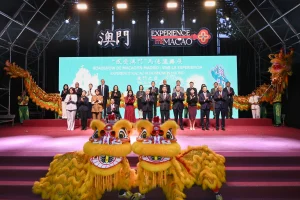
The reference to its “unique advantages” reflects recognition that Macau occupies a singular position within China: different legal traditions, economic practices, and cultural references coexist as a result of a long history of interaction between civilisations.
International centres typically thrive through scale in production and service capacity; Macau, however, can assert itself as a space where distinct systems meet and become compatible. Connecting economies is a political act, a logistical exercise; making systems compatible is an institutional, technical, and cultural process – one that requires trust, predictability, and mediation capacity.
In the Chinese context, the Portuguese legal framework is highly distinctive. It is, above all, a valuable asset for Chinese companies seeking to expand into markets with European-inspired legal systems. For Lusophone – or Iberian – partners, beyond serving as a gateway, Macau ensures more effective interaction with the Chinese system within a predictable and structured environment.
The same logic applies to the financial system: the growing internationalisation of the renminbi and the development of Sino-Lusophone cooperation instruments require platforms capable of operating across different monetary and regulatory regimes.
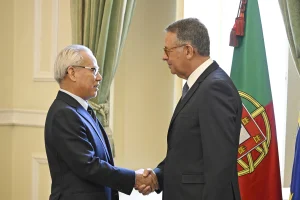
Macau has been performing this role not as a large-scale financial centre, but as a specialised interface. Its relevance does not depend on volume, but on its ability to structure operations involving multiple systems and jurisdictions.
This convergence extends to globalised services such as arbitration and the harmonisation of standards. As cooperation between China and Portuguese-speaking countries becomes more sophisticated, the need for mechanisms to manage legal, commercial, and institutional differences becomes increasingly evident.
In this intermediary space, beyond enabling mediation, Macau can consolidate itself as a platform where such differences are addressed, translated, and, whenever possible, aligned.
From a cultural perspective, due to its history and configuration, the MSAR has unique conditions to perform this role. In an increasingly polarised world – where distances between competing narratives, development models, governance systems, and values are widening – the ability to create spaces of understanding becomes more relevant. It is not always necessary to be a direct political actor; what matters is the capacity to operate continuously and pragmatically between worlds.
In this sense, the Region can be understood as a space of civilisational mediation. The coexistence of distinct cultural references is not merely a historical legacy; it is a contemporary asset. In a tense and fragmented global context, the ability to coexist and adapt reduces frictions and facilitates more balanced forms of cooperation.
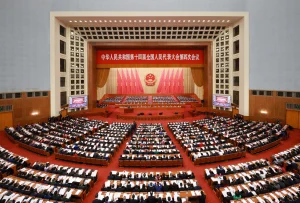
It is also within this framework that extending the Lusophone logic to Iberian markets, particularly Spain, gains relevance. Not to dilute Macau’s Lusophone vocation, but to recognise that its intermediary platform can expand into other European contexts with cultural and legal proximity. On one hand, this reinforces the city’s scale and international relevance; on the other, it preserves coherence and strategic positioning.
The “Two Sessions” reinforce the idea that Macau’s future lies in elevating the profile and nature of its functions, evolving from a platform of connection into an infrastructure of convergence. This transition is demanding in institutional terms, in human resource qualification, and in the density of services provided – but it is also an opportunity for differentiation in an increasingly fragmented international system.
There is intense competition among cities seeking global positioning, but few possess the conditions that Macau has – not because of scale, but due to its historical and institutional configuration. The challenge lies not in defining functions, but in fully delivering on the one already assigned to it.
More than a bridge, Macau can be the space where different systems – ultimately, different worldviews – learn to function together. The capacity for convergence may well be Macau’s greatest strategic asset today.
