

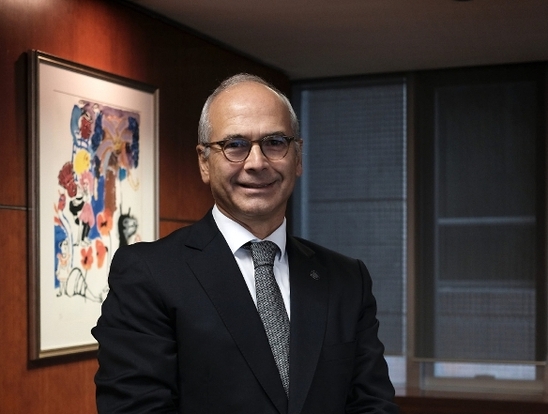
The president of the Portuguese-Chinese Chamber of Commerce and Industry (CCILC), Carlos Cid Álvares, said today, March 10, to Lusa that a new investment fund launched by local authorities “opens doors” to Portuguese-speaking investors interested in China.
Álvares pointed out to Lusa that the fund of 20 billion patacas (2.1 billion euros) “could be a significant step towards restructuring Macau’s economic fabric.”
“It represents a paradigm shift,” as the city authorities will now assume the role of “patient capital investors that accept a late return”, as a well as a role as a “diversification economy advisor,” said the president of CCILC.
Macau’s city government announced on February 27 the launch of a Government Guidance Fund, which aims to direct private capital towards investment in priority sectors that will help the local economy diversify beyond the dominant casino sector in Macau.
The fund, which Macau expects to conclude this year, has four main targets: the health and wellness industry, the modern finance industry, the cutting-edge technology industry, and finally, the conventions, exhibitions, and trade, culture, and sports industry.
“The focus on emerging industries and the transformation of scientific and technological results opens doors for foreign investors, including those from Lusophone countries,” Álvares stated.
According to the CCILC, the fund, which is set to launch this year with an initial injection of 1.38 billion patacas and could reach 2.5 billion patacas with private capital, “could be an opportunity for companies from Portuguese-speaking countries.”
“The fund, by prioritizing investment in innovation and industrial modernization projects, could function as a catalyst for these companies to find in Macau a strategic partner and capital to scale their projects in Asia,” described Álvares.
Read more: Macau: 20 billion MOP to reinvent the economy
Álvares stated that CCILC has also defended Macau’s role as a Sino-Lusophone platform and that this measure “practically realizes this vision.”
The entrepreneur emphasized that the priority target sectors defined by the Macau government coincide with areas where Brazilian, Portuguese, and Portuguese-speaking African countries (PALOP) companies have “know-how”[saber-fazer]”and international competitiveness”.
“Take the example of Brazil, with a strong presence in technological agribusiness and renewable energies, or Portugal, with a very dynamic ecosystem of technology and fintech startups,” he pointed out. Another relevant point is the coordination with the Deepened Cooperation Zone between Guangdong and Macau in Hengqin, according to the president of the CCILC.
The Chinese Central Government established this special economic zone adjacent to Macau to diversify the economy of the Special Administrative Region, with a focus on technology, finance, and tourism.
Read more: “Macau can inspire other Lusophone diasporas”
The China-Portuguese and Spanish Speaking Countries Economic and Commercial Services Center was established in this area to promote trade, offering legal, tax, and language services for Lusophone and Hispanic companies in the Chinese market.
The president of the CCILC added that the fund “comes to provide liquidity and institutional weight” to the joint cooperation model established for Macau and Hengqin.
“For Portuguese-speaking entrepreneurs, it could be the ideal scenario: setting up their headquarters in Macau, benefiting from its legal system and familiarity with the Portuguese language, and locating the space- or production-intensive component in Hengqin,” he explained.
“We assume that the voice of experience from China and the Portuguese-speaking markets could add value to the project,” concluded Álvares, who is also the President of the Banco Nacional Ultramarino, which is part of the Caixa Geral de Depósitos group.
