

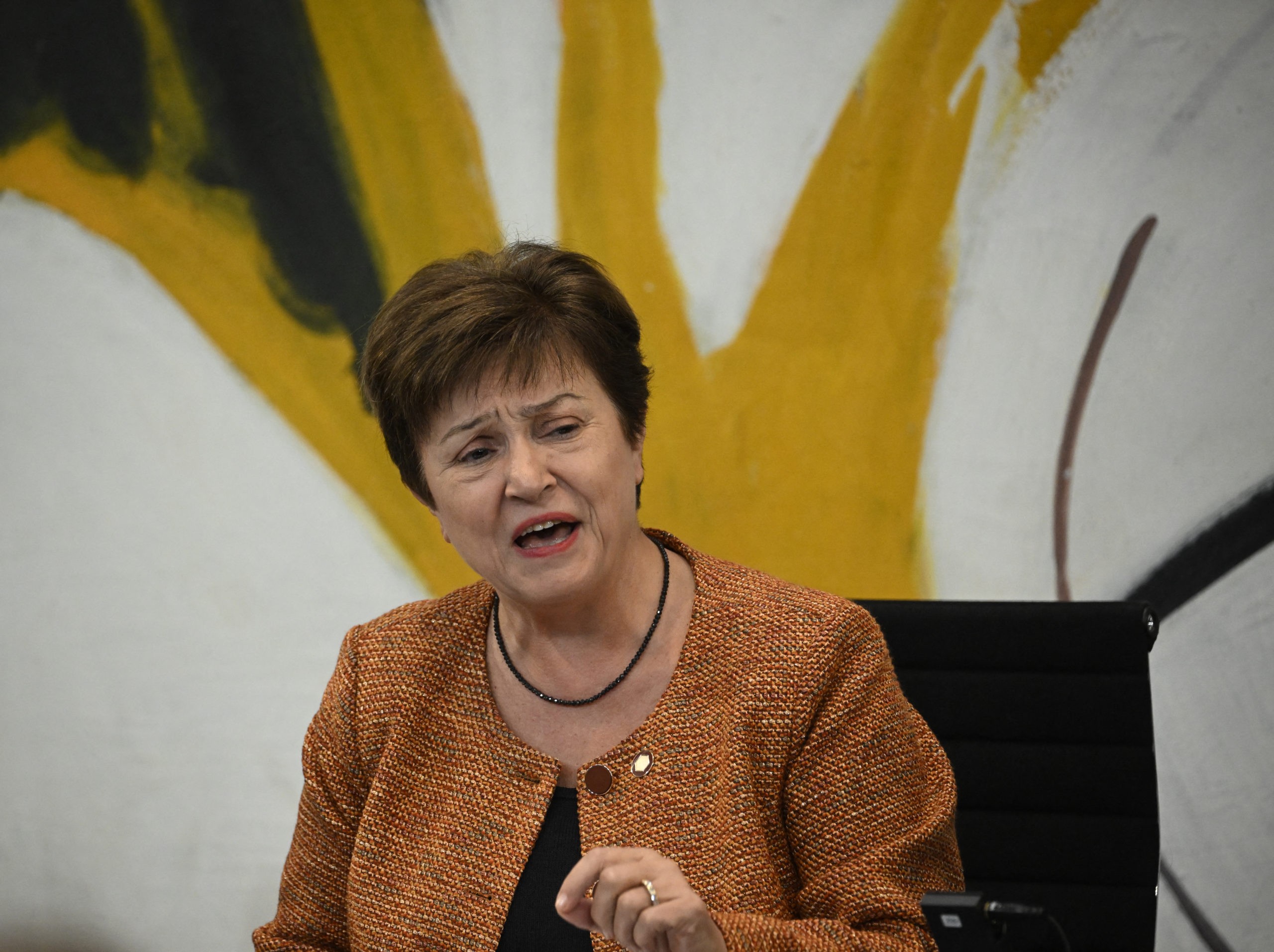
With the Strait of Hormuz effectively closed, the IMF chief advocates agile responses and solid institutions — and promises to assess the impact on member countries ahead of the April meetings.
The International Monetary Fund’s managing director urged policymakers on Monday to think “the unthinkable” in the face of the war with Iran and successive global shocks, calling for swift responses to strengthen growth and economic resilience.
“If, as we all hope, the conflict [in Iran] ends soon, rest assured that shortly after, a new shock will emerge,” said Kristalina Georgieva in a speech delivered in Tokyo, in which she described the global economy as entering an era of permanent turbulence.
The succession of recent events — the COVID-19 pandemic, the war in Ukraine and the inflationary crisis — demonstrates, according to the IMF chief, that the world is facing a continuous cycle of disruptions.
“My advice to policymakers around the world in this new global context: think the unthinkable and prepare for it,” she stressed, before outlining “three pieces of advice.”
The first is to “invest in solid institutions and policy frameworks to sustain strong economies and private sector-driven growth,” the second is to use, at the right moment, whatever fiscal, monetary or reserve policy space is available, and the third is to “be agile.”
Georgieva also acknowledged the negative effects that the war against Iran is already causing — in particular damage to energy infrastructure and the near-total halt to maritime traffic through the Strait of Hormuz, following threats from Iran’s Revolutionary Guard.
“About one fifth of the world’s oil supply and liquefied natural gas (LNG) trade normally passes through the Strait of Hormuz. This includes nearly half of Asia’s oil imports and approximately one quarter of its LNG imports,” the Bulgarian economist stressed.
Read more: Iran War: China, Russia and France ready to discuss ceasefire
Georgieva also assured that the IMF is “collecting data, analysing it and assessing the possible impact on member countries,” adding that a detailed analysis will be included in the next World Economic Outlook report, to be published at the spring meetings in Washington between April 13 and 18.
