

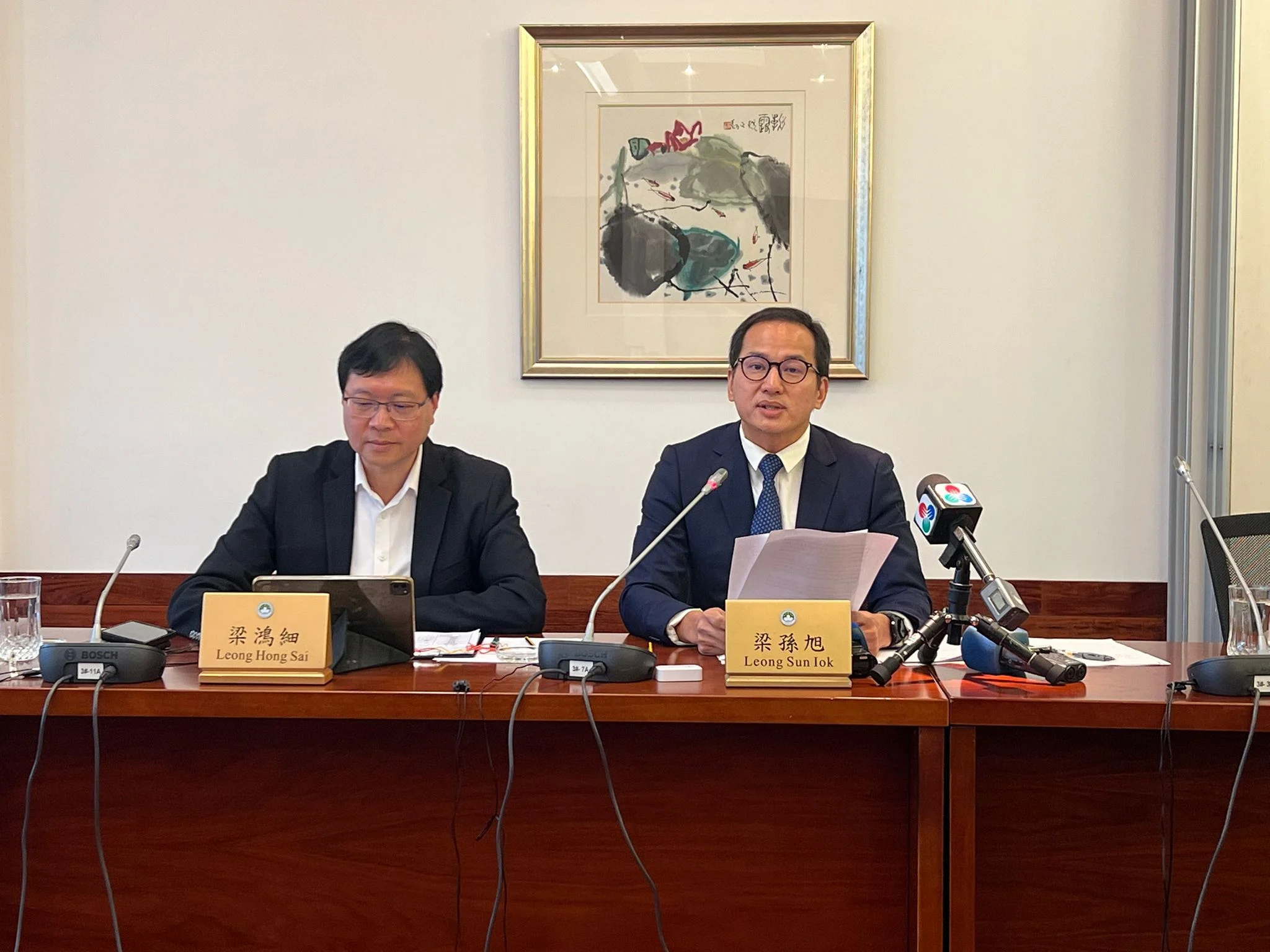
The composition of the CDSE will be expanded to include the president of Cultural Affairs Bureau (IC), the director of the Services of Education and Youth Development and the director of the Gaming Inspection Department.
Government representatives justified the expansion, saying that “the security of the State will no longer be limited to traditional areas such as the military, but will now cover educational, cultural, and economic areas,” said Leong.
After a parliamentary committee meeting, the chairman of the Commission added that the CDSE will also be responsible for the “promotion of monitoring, warning, assessment, and response to risks to national security.”
In statements to PLATAFORMA, political analyst Sonny Lo affirms that “there is no change to the governance or autonomy of Macau.” The analyst emphasizes that “the definition of national security adopted by China has already been comprehensive since 2013 and includes political, economic, social, cultural, environmental, space, and maritime domains.”
For Sonny Lo, changes to the legal framework in Macau constitute a “necessary update,” aiming to protect national security under the principle of “one country, two systems,” so the update “will not have any impact on civil liberties.”
Also read: Sam Hou Fai calls for stronger national security to ensure stable development of “one country, two systems”
Asked by LUSA whether the CDSE will assess national security risks for cultural events, educational curricula, or business dealings between private companies, the president of the 3rd Permanent Commission of the Legislative Assembly did not respond directly.
The deputy preferred to emphasize that “national security is very broad” and that the expansion will allow the CDSE to cover “services that are also very important.”
Leong revealed that some deputies questioned the Government about possible changes due to the planned merger between the IC and the Sports Bureau, and about the exclusion of the director of the Health Bureau from the CDSE.
The president of the parliamentary committee recalled that Macau was practically under strict restrictions for nearly three years within the ‘zero-covid’ policy framework, including a ban on entry for foreigners without resident status. “If”[uma pandemia]”What if it happens again in the future, how will it be handled?” asked Leong.
The deputy said that the Government responded, emphasizing that the proposed law provides for the possibility of “inviting other services and personalities to participate in the meetings, without voting rights.”
The government program for 2026, presented in November, foresees the creation, by the end of the year, of a Working Group for the Coordination of Young People’s Patriotic Education.
Government Action Lines also include, as part of what is called the “overall plan for national security education,” the revision of textbooks and other instructional materials for primary and secondary education, by the third quarter of 2027.
In 2022, then-Secretary for Security Wong Sio Chak said that state security education would be expanded to non-Chinese students.
