

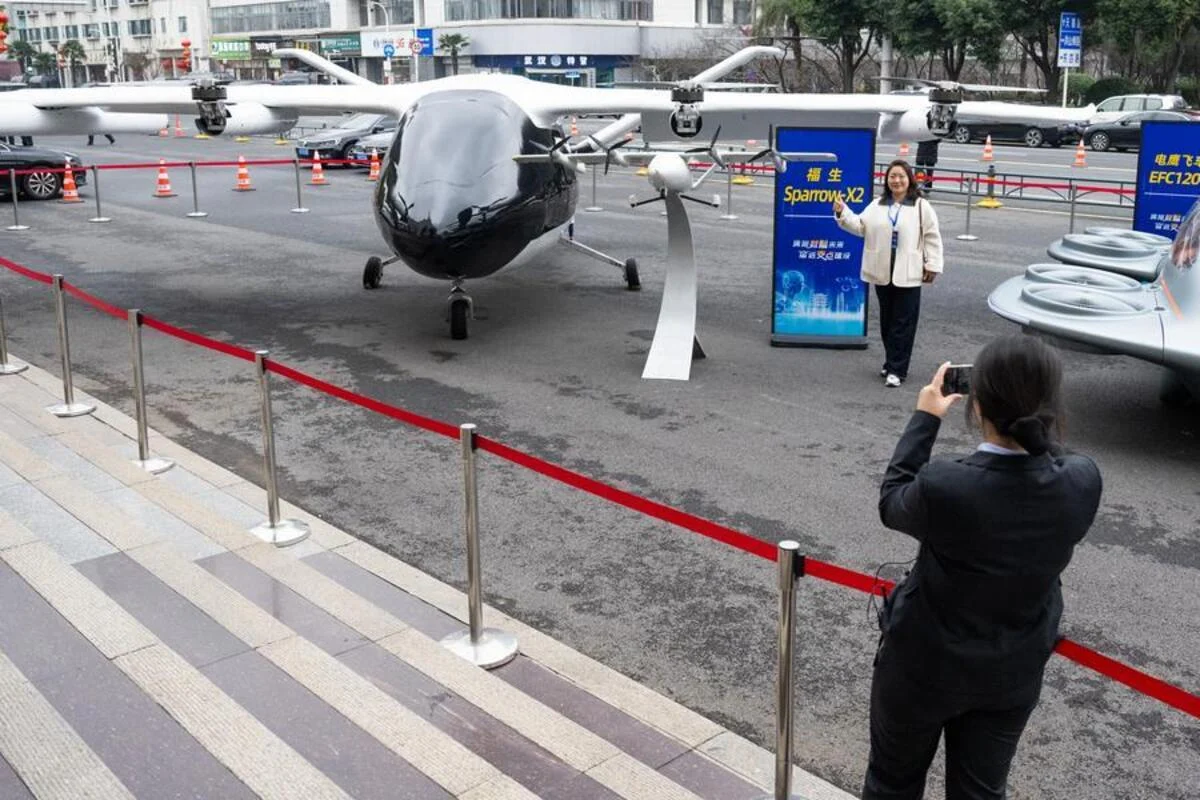
A silent aircraft lifted off in front of an auditorium in downtown Wuhan, the capital of China’s Hubei Province, drawing applause from spectators. These drones are genuine air taxis, serving not only to transport goods but also passengers.
However, this Tuesday display, featuring four distinct electric vertical takeoff and landing (eVTOL) vehicles outside the Hongshan Auditorium, was not a film promotion, but the highlight of Hubei’s provincial meeting where local officials set the economic agenda.
Hubei thus signals that China’s low-altitude economy, a national strategic priority, is rapidly moving from a theoretical plan to reality.
The timing of this acceleration is critical. Industry executives and regulators increasingly see 2026 as the decisive year for eVTOL commercialisation, with multiple manufacturers racing to secure certifications and begin production.
“The year 2026 will be the crucial node for the low-altitude industry to ‘cross the chasm’,” said Huang Xiaofei, vice-president of strategy at Volant Aerotech, based in Shanghai in eastern China.
“eVTOL, as the core technological direction of a billion-yuan market, has moved from concept into a commercial sprint phase,” he added.
Also read: China registers 121 million passenger return trips as Spring Festival holiday ends
Hubei Province aims to secure its place in this race, currently developing nine eVTOL models, four of which have already completed test flights, according to local officials. Major companies in Wuhan’s low-altitude industry recorded revenue growth of more than 30 per cent this year, building on an aviation industry output valued at 9.6 billion yuan (2025) in Hubei alone.
