

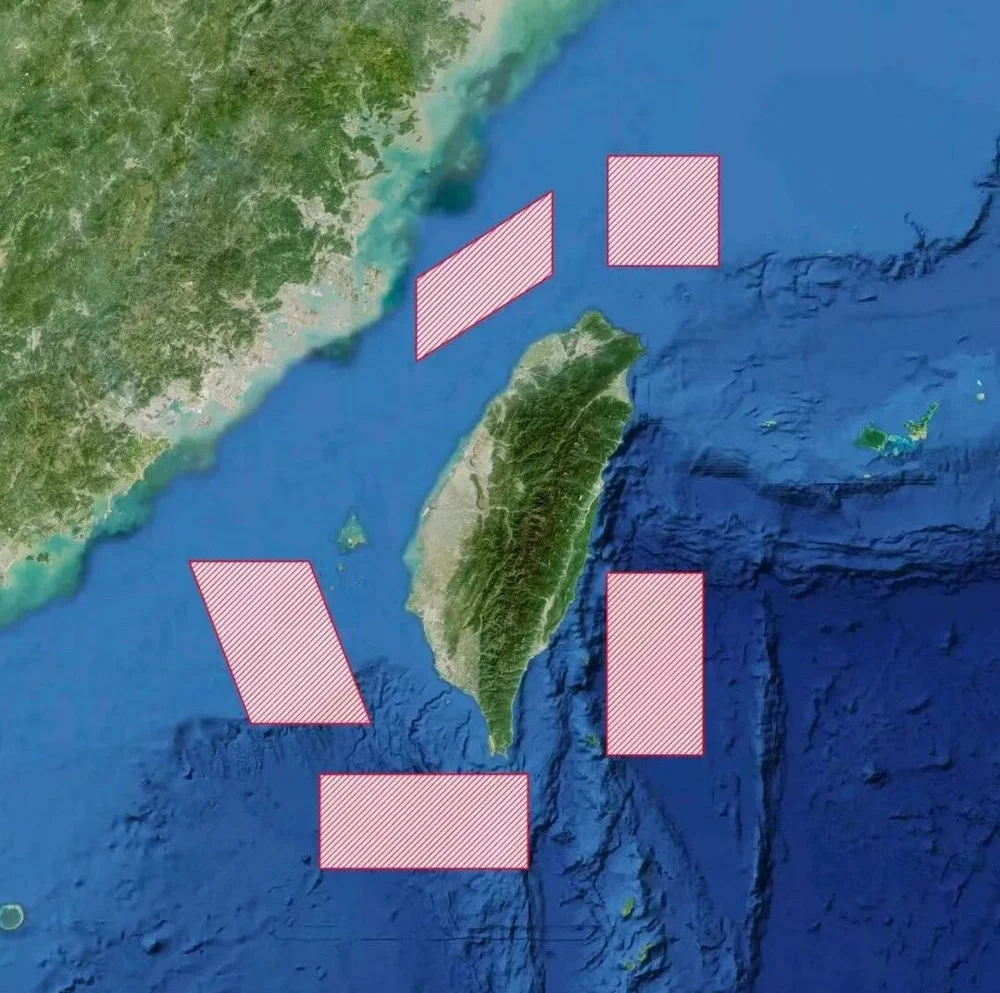
At a press conference, Lieutenant General Lien Chih-wei declined to specify Taiwan’s response should Beijing use live ammunition within Taiwan’s territorial waters, which extend 12 nautical miles (22.2 kilometers) from the coast.
According to Taiwan’s national news agency CNA, the military commander simply stated that frontline forces would adhere to the army’s engagement rules and “respond appropriately.”
“The Armed Forces have established engagement rules and authorization matrices at the strategic, operational, and tactical levels, outlining response measures that include communication, alerts, monitoring, and follow-up,” he said.
During the same press conference, Taiwanese military spokesman Sun Li-fang condemned the People’s Liberation Army (PLA) plan to conduct live-fire exercises in these areas as irresponsible and argued that such actions would further escalate tensions in the region.
On Monday, Beijing announced it would conduct large-scale military exercises around Taiwan for two days, with the stated goal of delivering a “severe punishment” to the island’s “separatist forces.”
Taiwan, officially known as the Republic of China, has been self-governed since 1949, has its own armed forces, and maintains a political, economic, and social system distinct from the People’s Republic of China, standing out as one of Asia’s most developed democracies.
However, Beijing considers Taiwan an “inalienable part” of its territory and has intensified its pressure campaign on the island in recent years with the aim of “national reunification” — a central objective of President Xi Jinping’s long-term plan for “the rejuvenation” of the Chinese nation.
Also on Monday, Russia’s Foreign Minister declared that Moscow would support China in the event of escalation in the Taiwan Strait, under the bilateral treaty between the two countries.
“The possibility of escalation in the Taiwan Strait is anticipated in our treaty with China. One of the fundamental principles is mutual support in defending national unity and territorial integrity,” said Sergey Lavrov in an interview with the Russian state news agency TASS.
Lavrov’s statements came amid growing friction between China and Japan over the Taiwan issue. In November, Japanese Prime Minister Sanae Takaichi stated that a Chinese attack on the island could constitute an “existential threat” to Japan, indicating the potential involvement of Japanese defense forces alongside the United States.
