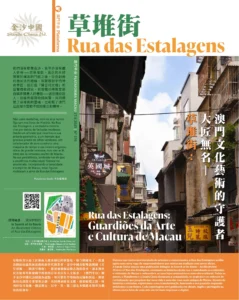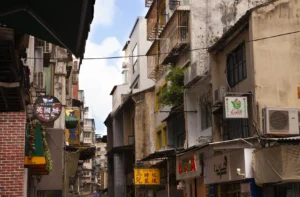
Once a bustling hub of artisans and traders, Rua das Estalagens now welcomes a new wave of entrepreneurs blending tradition with fresh ideas. Sands China has released the bilingual publication In Search of Its Roots – An Illustrated History of Rua das Estalagens, uncovering the stories of this historic lane and inviting both Macao residents and visitors to rediscover its century-old shops and rich cultural atmosphere. Each month, Plataforma and Sands China are highlighting the community, businesses, and revitalization efforts that are breathing new life into one of Macao’s oldest streets. Through captivating stories, we explore its transformation, honoring its past while shaping its future. Each report will be published in Chinese, English, and Portuguese on the last Friday of every month in print and digital formats.
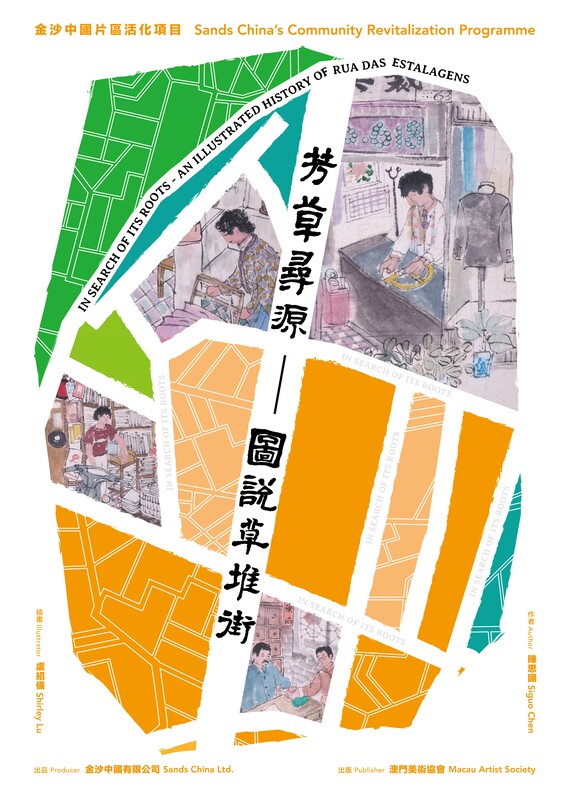
Learn more about In Search of Its Roots – An Illustrated History of Rua das Estalagens
- Producer: Sands China Ltd.
- Publisher: Macau Artist Society
- Author: Siguo Chen
- Illustrator: Shirley Lu
The tailor with the unique method
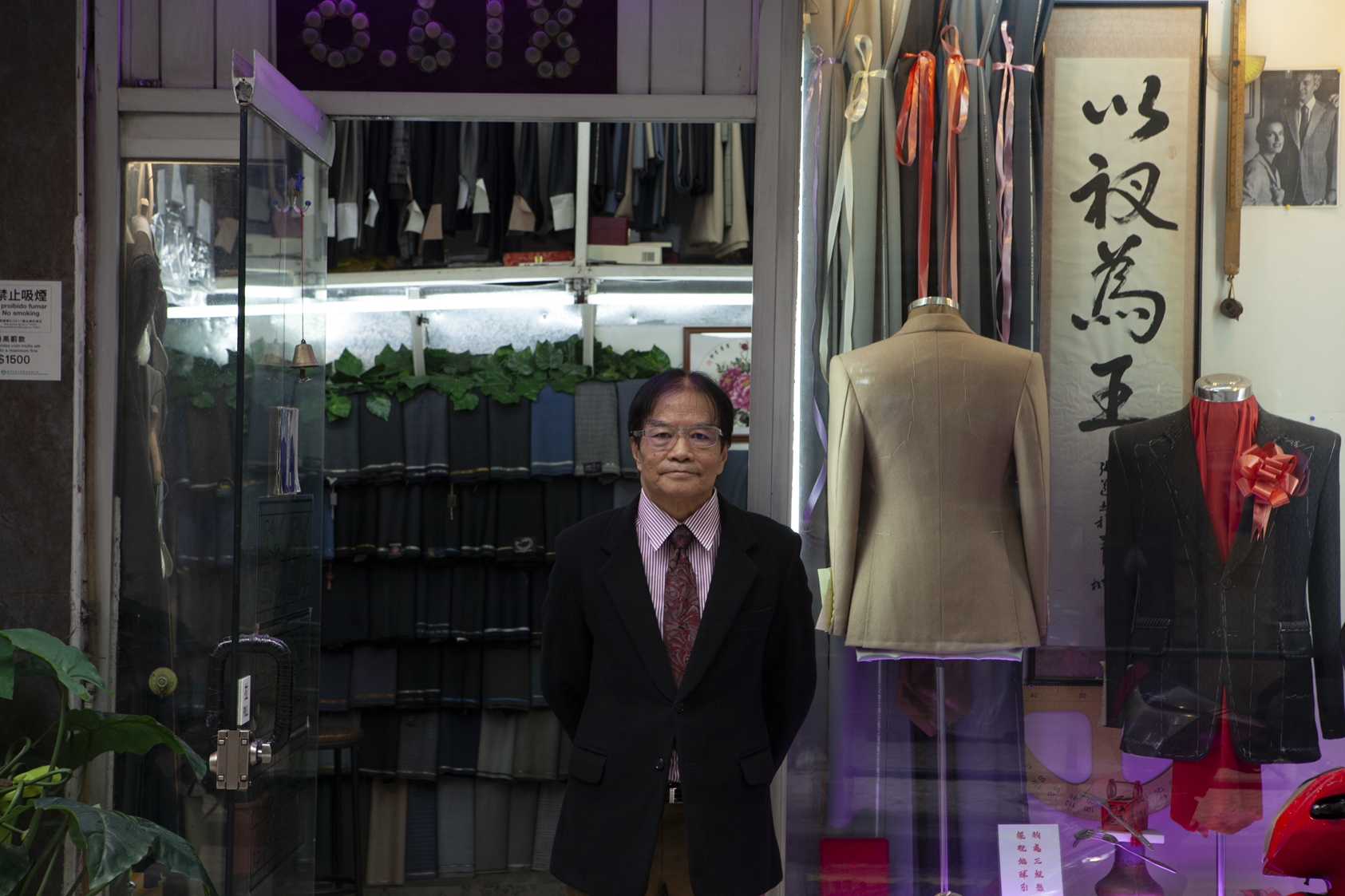
Fong Chan Hou stands at the door of I Choi Tailor Shop, at No. 63 Rua das Estalagens. At the top, you can read “0.618,” the three-dimensional measurement he pioneered, which challenges the standard format: “The human body is proportioned like this.” Platform
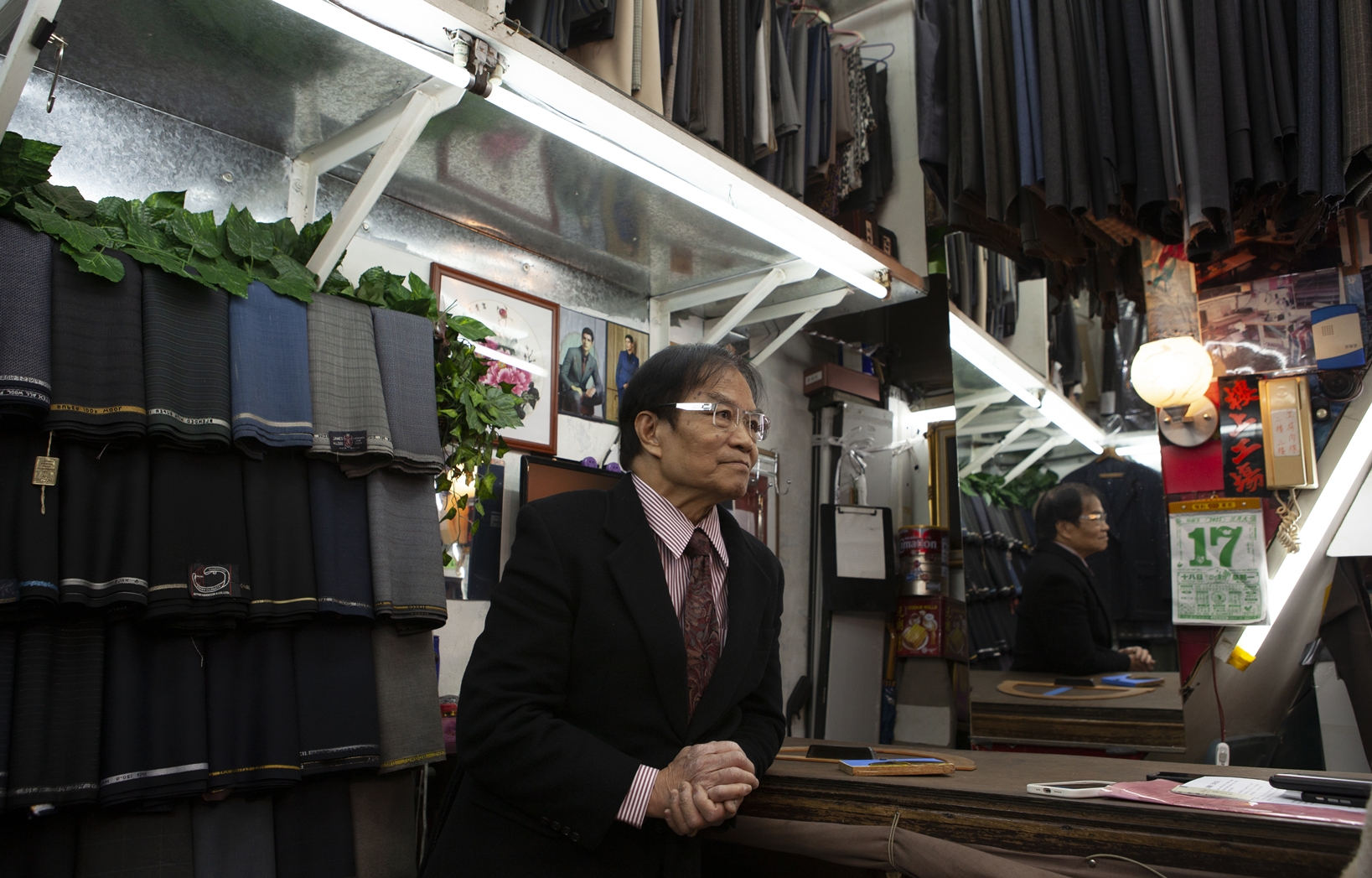
Shop owner and tailor Fong Chan Hou stands inside I Choi Tailor Shop. Now 70 years old, he once employed nine tailors who worked day and night to meet demand. Platform
Inside the modest I Choi Tailor Shop, at No. 63 Rua das Estalagens, Fong Chan Hou still measures fabric with geometric discipline. Since 1973, his second home has been the cutting table. At the height of demand, Hou employed nine tailors who “used to sleep on the tables and wake up early to keep working.”
Fong developed what he calls the “three-dimensional measurement method,” combining posture and geometry to ensure suits fall perfectly on the body. “In my mind, I’m already visualising the geometric shape in space.” While most tailors rely on standardised proportions, Fong uses the golden ratio — 0.618 — “because the human body is proportioned that way.”
Now in his seventies, Fong has no successor. His technique, he says, “no one knows how to use.” In a street where tailoring has all but disappeared, he remains as steady as his stitching — a master craftsman preserving his art through daily practice. Hou is not just the last tailor on Rua das Estalagens — he is the guardian of a method no school teaches, and no apprentice has inherited.
The Sound Collector
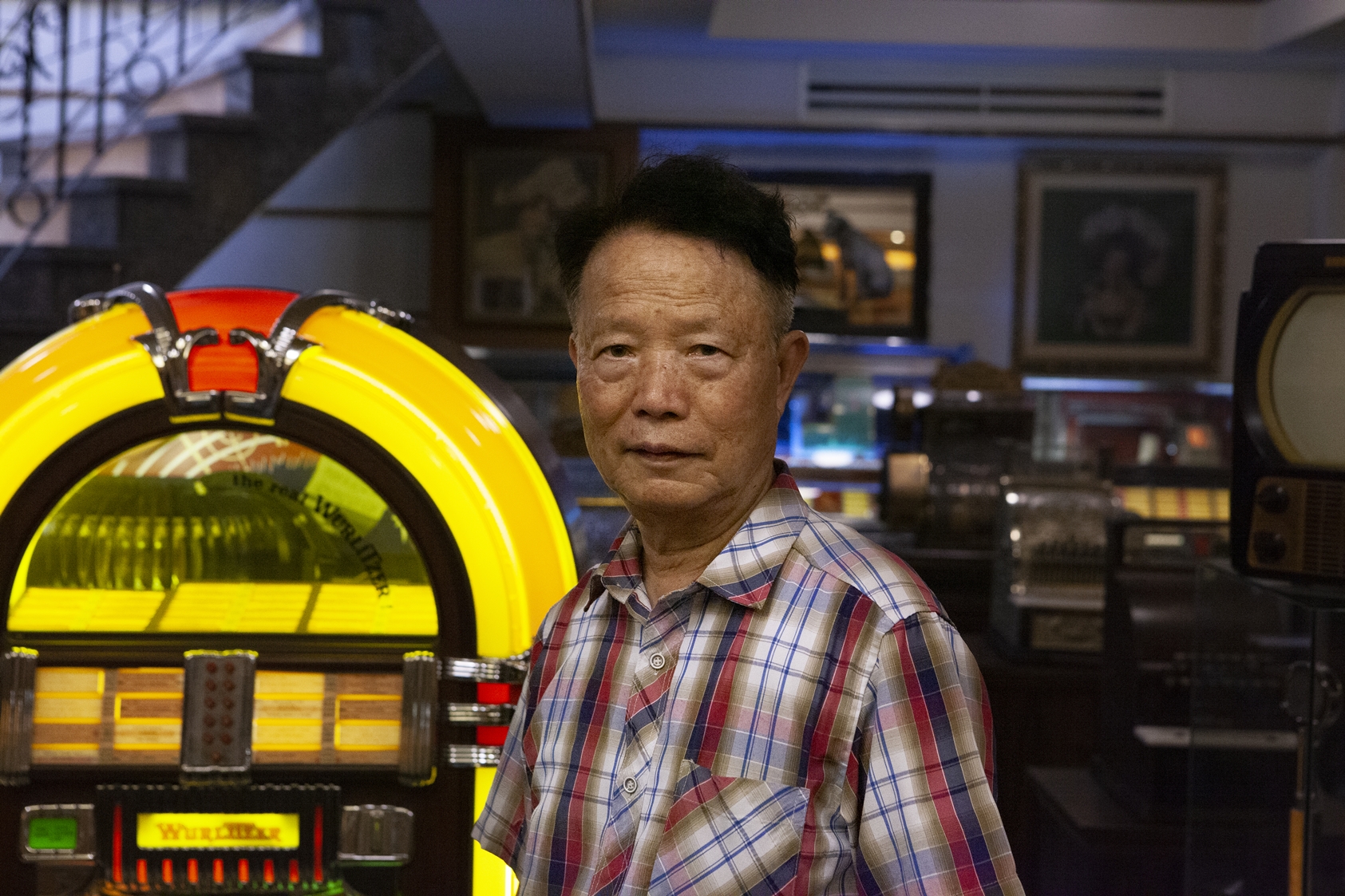
Henry Chan, owner of the Sound of the Century – Museum of Vintage Sound Machines, poses next to an American jukebox. Platform
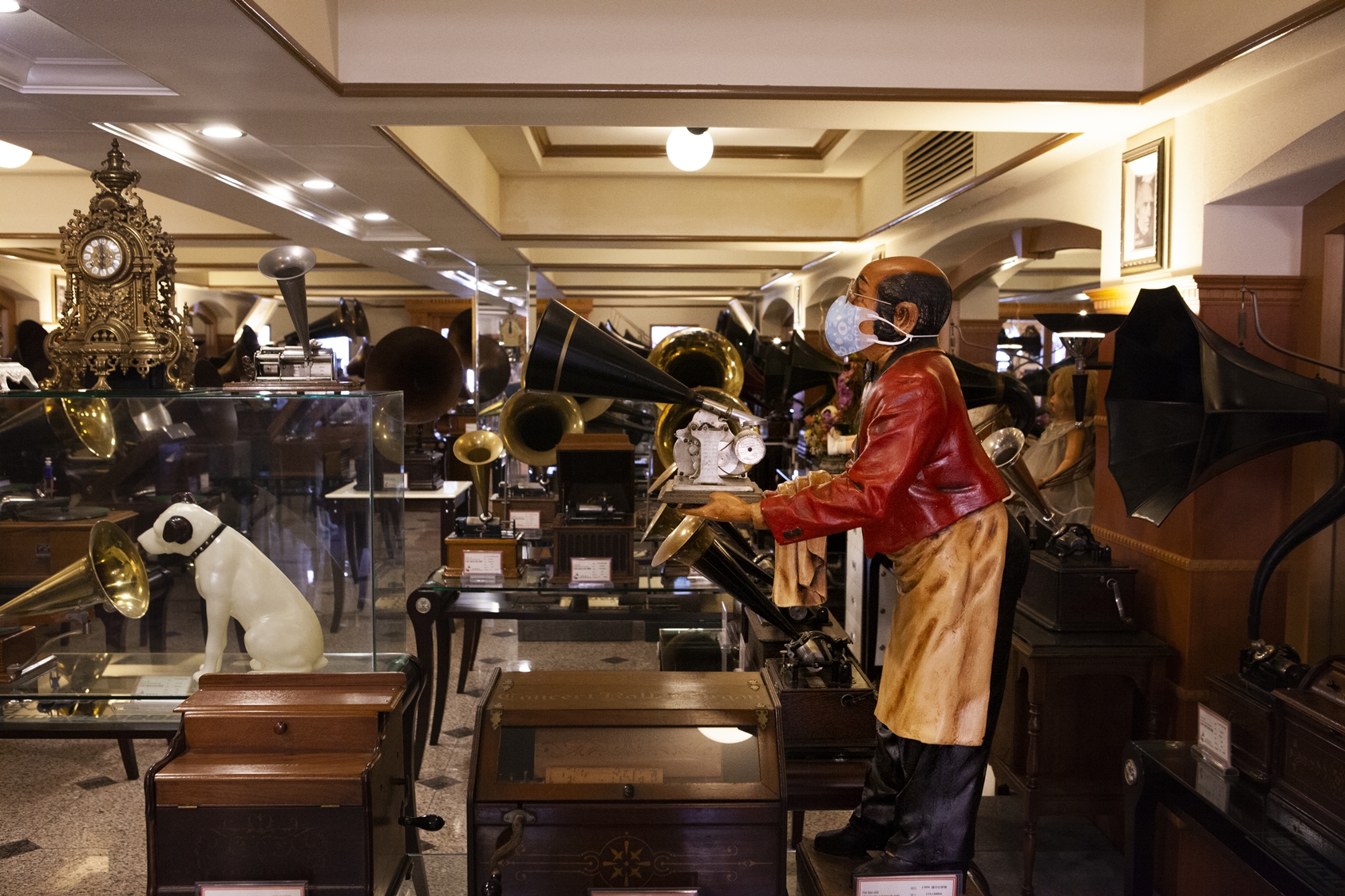
On the second floor of Sound of the Century, Henry Chan keeps one of the largest private collections of gramophones in Asia. Platform
Tucked above Tai Peng Electronics at No. 13–15 is the Sound of the Century – Museum of Vintage Sound Machines, a rare private collection. Founded by Henry Chan in 2000, it includes more than 200 items — phonographs, jukeboxes, and even a self-playing piano from 1857, which took four movers and HKD 20,000 just to ship.
An electrician by trade, Chan restores and maintains every machine himself. His passion began in Toronto when he spotted a 1930s radio in a shop window. “Every piece I have was acquired by me. Each one carries sentimental value,” he says, admitting that he once hid phonographs in the garage to avoid family complaints.
Today, the museum opens by appointment only, but continues to impress its visitors. A tourist from Taiwan wrote: “Macau felt so small before I arrived. After the museum, the city felt much larger.” An elderly Japanese man, moved by a melody from 1910, bowed in silence for a full minute.
Each machine is more than an object; it tells a story. And through quiet dedication, Henry Chan has created in Macao a sonic archive of civilisation, where time can be heard.
The Brush Master
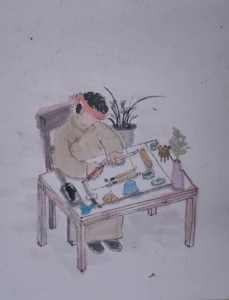
Chan Fu Ching, better known as Kuai Hon (“strange man” in Cantonese), engraved Chinese characters on brush handles while blindfolded. Illustration from the book In Search of Its Roots – An Illustrated History of Rua das Estalagens
In the 1960s, a man named Chan Fu Ching — self-proclaimed as Kuai Hon (“strange man” in Cantonese) — opened a small shop, Artigos Escolares Kuai Hon, at No. 87 Rua das Estalagens. What made his business unforgettable was an unusual gift: he could engrave Chinese characters into brush handles — while blindfolded.
With the brush in one hand and a carving knife in the other, he mentally visualised each stroke, achieving a perfect harmony between thought and movement.
Though few customers dared request it, the rare service made Kuai Hon a local legend. His shop closed in the early 2000s, as traditional calligraphy faded from daily use. Even so, his legacy persists — a craftsman whose peculiar skill continues to mark the memory of Rua das Estalagens.
At a time when brushes and handwriting were part of everyday life, his talent stood out for its rarity and precision. The shop is gone, but long-time residents still speak Kuai Hon’s name.
Also read: Rua das Estalagens: Golden Traditions
The Archivist of History
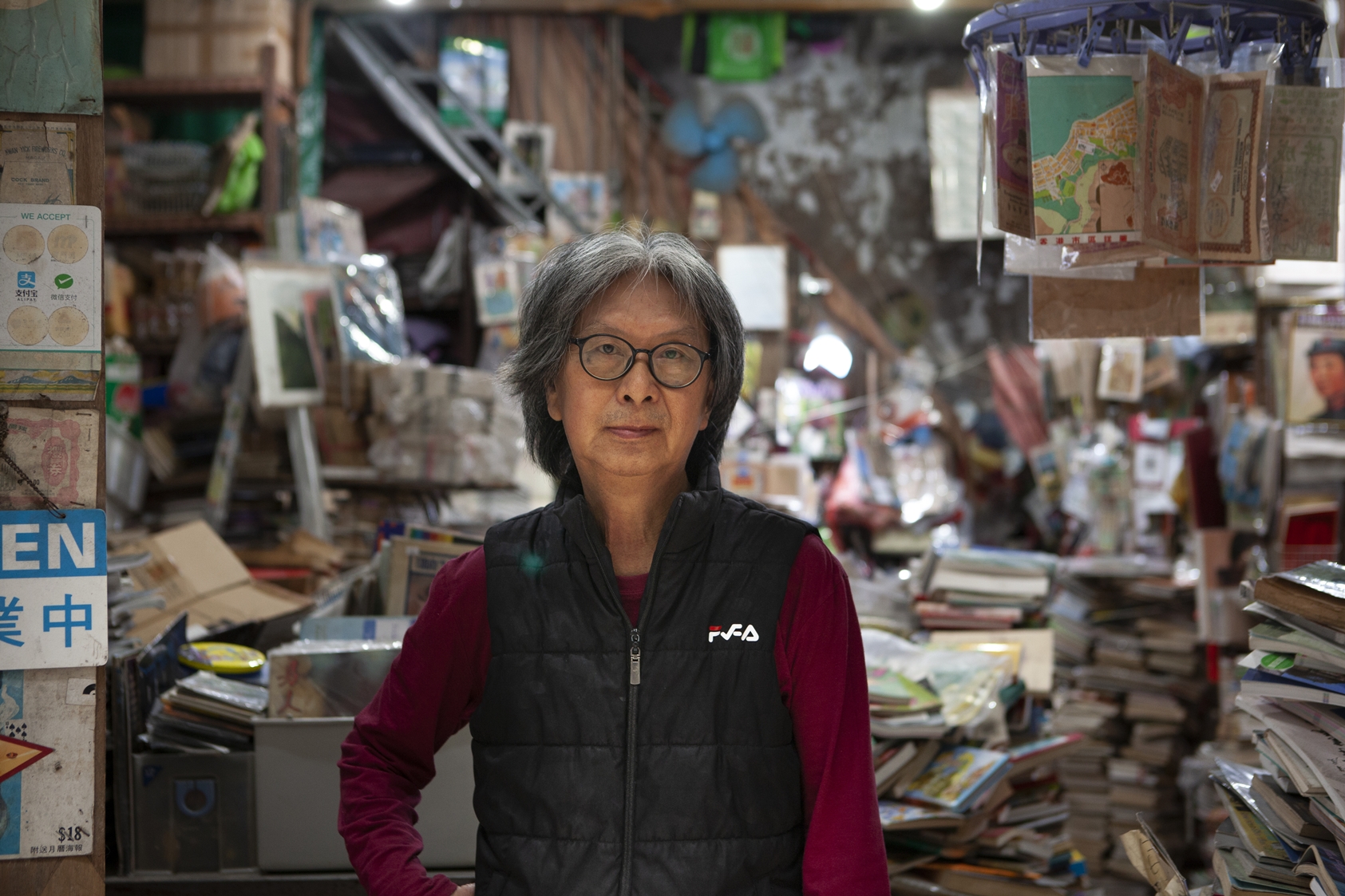
Lao Io Chun stands outside Chun Kei Bookstore, at No. 4 Rua das Estalagens. Despite owning one of Macau's rarest collections, he claims that he “doesn't like” anything. “I'm a seller, not a reader.” Platform
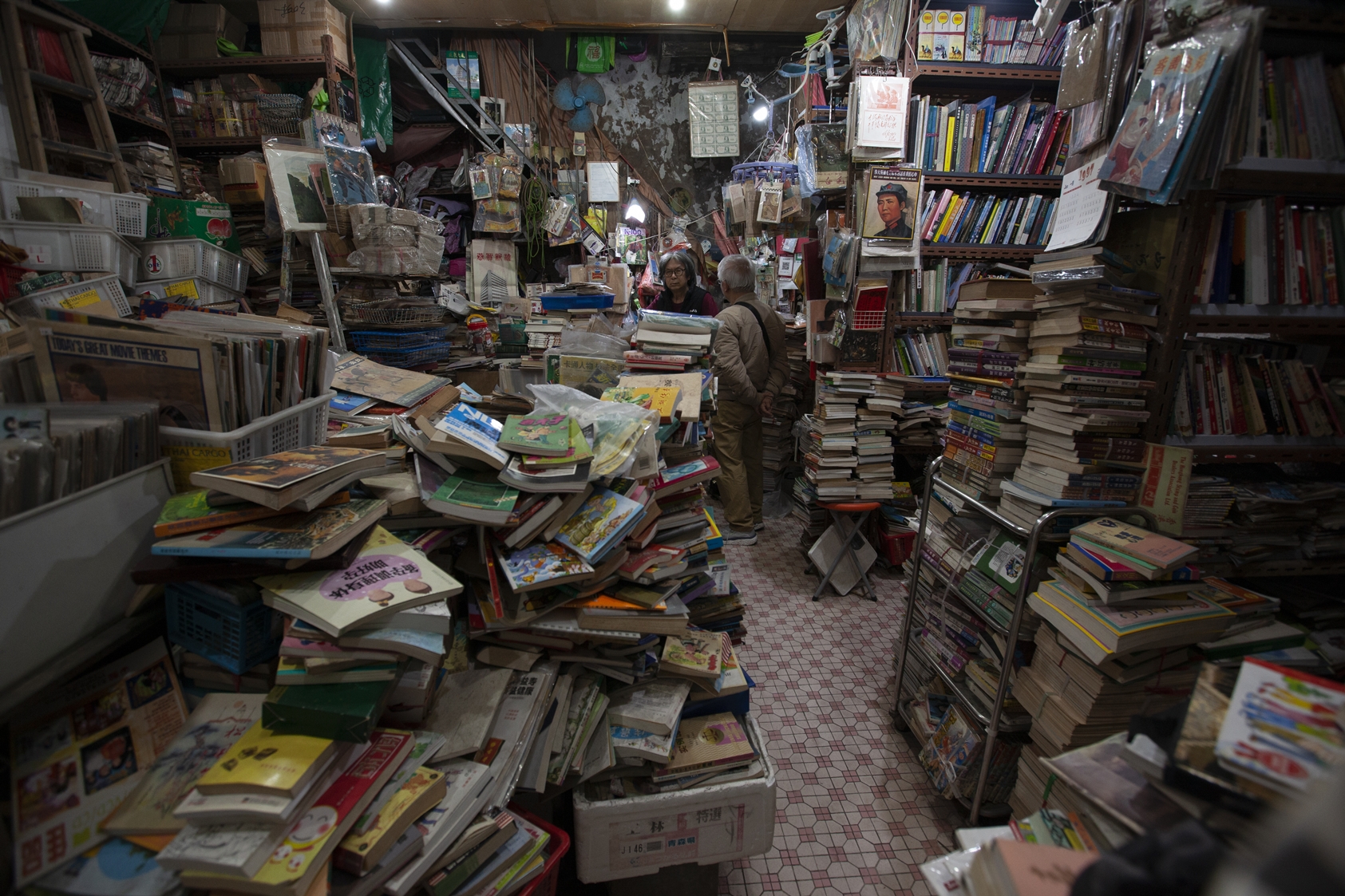
Inside the Chun Kei Bookstore holds treasures such as woodblock-printed books from the Ming and Qing dynasties, antique maps, lottery tickets, cinema stubs, and comic books from the 1950s and 60s. Platform
At No. 4 Rua das Estalagens, Chun Kei Bookshop holds one of Macao’s most unusual and rich collections. Among its treasures are woodblock-printed books from the Ming and Qing dynasties, antique maps, lottery tickets, cinema stubs, and comic books from the 1950s and 60s. “I don’t like any of this stuff. I’m a seller, not a reader,” says the shop’s owner, Lao Io Chun.
A former taxi driver and part-time coin trader, Lao started the shop with a few boxes of old materials and a knack for improvising. He used to rely on elderly ladies “who would rummage through bins and bring me things.” What began as a side business gradually became a repository of Macao’s printed past.
Today, he opens from 4 to 7 p.m. The vast collection is arranged in a way only he seems to understand. Occasionally, film crews come looking for props. Tourists enter, intrigued by what they can no longer find elsewhere.
Aloof on the surface, Lao is the keeper of a rare collection — one that discreetly traces many chapters of history itself.
Be sure to check back on July 25, when we uncover the little-known Macao chapter in the life of Dr. Sun Yat-sen at Rua das Estalagens. From his work at Kiang Wu Hospital to the founding of Chong Sai Pharmacy, discover how this street became the starting point for one of modern China's most influential figures.