

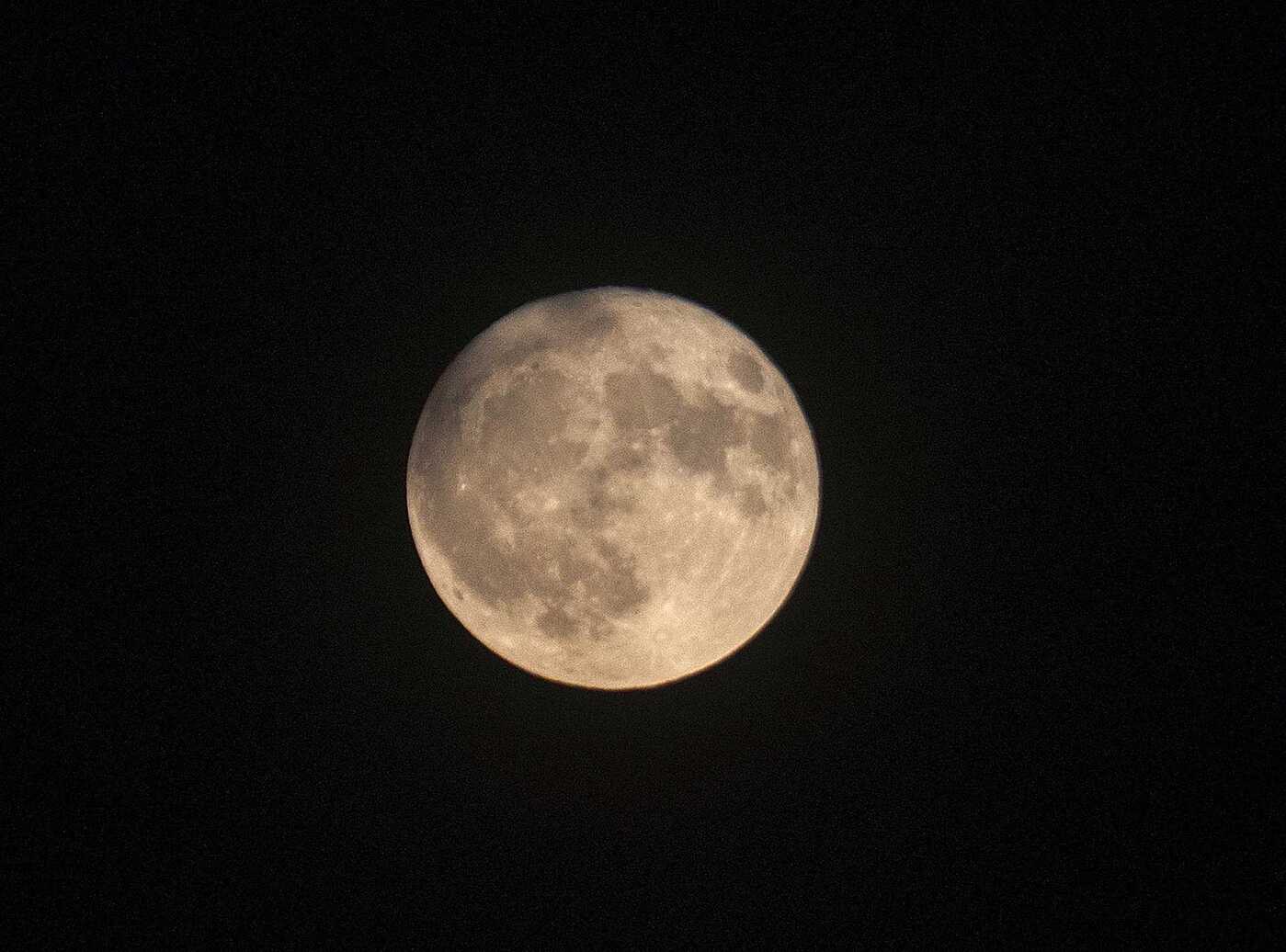
The sky was brighter last night and the first supermoon of the year was to blame. The phenomenon was observed on the night of Monday to Tuesday, when the natural satellite was 361,934 kilometers from Earth.
“For any scientist who studies the Moon, the Moon is always super. We are on this planet due to your action and the Moon is responsible for stabilizing the Earth’s rotation axis (…). Without the Moon, we would not have the habitable conditions we have on this planet of ours and, therefore, it is always super”, explained Miguel Gonçalves to TSF.
The science communicator recognizes that the Moon may even “appear slightly larger”, but those who are used to seeing a full moon hardly notice any differences: “The closer to the horizon it [the Moon] is, the more strange impression, say so it seems to us.”
According to the website of the North American Space Agency (NASA), a supermoon – a concept attributed to Richard Nolle – happens when the full or new Moon is at about 90% of its perigee, its closest point to Earth.
Read more at TSF
