

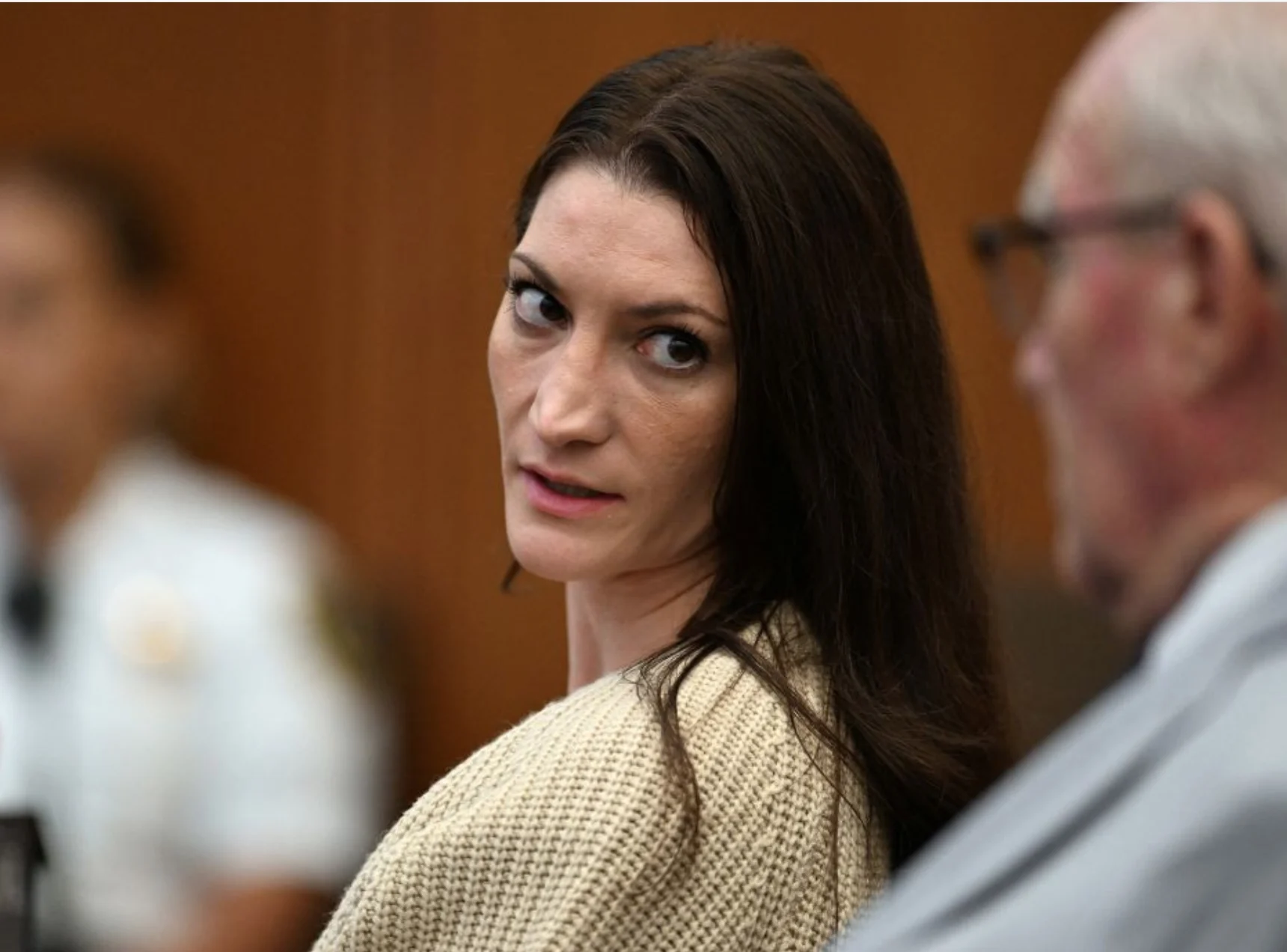
As jurors prepare to deliberate in the trial of Lindsay Clancy, the Massachusetts mother accused of killing her three children, legal experts say the verdict will determine not just her guilt or innocence, but the very different paths her life could take afterward, according to CBS News.
Clancy, 36, has pleaded not guilty to three counts of first-degree murder in the January 2023 strangulation deaths of her children, 5-year-old Cora, 3-year-old Dawson and 8-month-old Callan. Her defense argues she was experiencing postpartum psychosis at the time and cannot be held criminally responsible due to insanity. Prosecutors counter that the killings were planned and that Clancy was not psychotic when they occurred.
Under Massachusetts law, a first-degree murder conviction carries a mandatory sentence of life in prison without the possibility of parole. A conviction on a lesser murder charge would still mean substantial prison time, but could leave open the possibility of parole eventually, according to WBZ-TV legal analyst Jennifer Roman.
Clancy’s physical condition, she is paralyzed from the waist down following an alleged suicide attempt, is expected to influence where she would be housed if convicted. Roman noted that her physical limitations, combined with the fact that she remains on 24/7 suicide watch, will likely shape how the prison system manages her custody going forward.
Read more: What we know about Hayden Panettiere’s sudden death (with video)
Should Clancy instead be found not guilty by reason of mental disease or defect, she would avoid prison but would not go free. Legal analyst Caroline Polisi explained Monday that Clancy would instead be committed indefinitely to a state mental health facility, the kind of institution where she is currently held at Tewksbury Hospital.
She would undergo periodic evaluations, and if doctors eventually determined she was fit for release, a judge would then decide whether she still posed a danger to herself or others.
Polisi drew a comparison to the case of Andrea Yates, who was found not guilty by reason of insanity in 2006 for killing her five children in Texas.
“I always note Andrea Yates is still in a psychiatric facility, so this can be an indefinite confinement,” Polisi said. Under Massachusetts law, there is no set time limit on commitment to a mental health facility. “It could be in essence a life sentence at the state hospital if the faculty there ultimately decides she’s not safe to return to the community,” Roman added.
Read more: A man killed eight family members at a Sunday dinner in Montana. A relative says warning signs were reported and ignored (with videos)
Still, Polisi emphasized that the potential consequences of either verdict should play no role in the jury’s deliberations. Jurors are required to reach their decision based strictly on the law, not on speculation about what might follow.
At the core of the case is a narrower legal question: whether Clancy understood the difference between right and wrong, or was capable of conforming her actions to the law, at the moment she killed her children.
“This case comes down to what was in Lindsay Clancy’s mind,” said CBS News legal contributor Jessica Levinson. “Was she able to understand that what she was doing was wrong or criminal? Was she able to comport her behavior within the law?”
Jurors have heard sharply conflicting assessments of Clancy’s mental state from forensic psychiatrists called by both sides. Rebecca Roiphe said the case will likely hinge on those competing experts, and on whether the trial’s evidence lines up more closely with the prosecution’s interpretation or the defense’s. Closing arguments in the trial are expected this week.
