

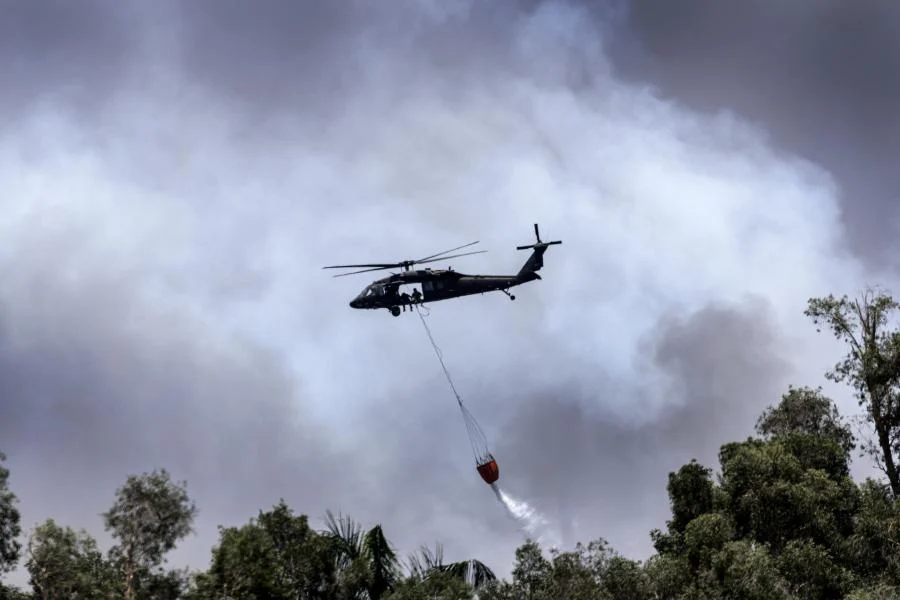
Emergency crews in northwest Nevada have established partial containment on a fast-moving blaze that consumed dozens of structures and forced tens of thousands of residents to flee their neighborhoods. Ground crews and aerial units halted the growth of the Hawk Fire near the Peavine Peak area of the Humboldt-Toiyabe National Forest after intense weekend winds pushed flames perilously close to densely populated subdivisions in Reno.
Authorities reported that the wildfire has scorched roughly 23 square miles of terrain dominated by sagebrush and dry grass near the California state line. While improved weather conditions helped firefighters gain ground, extreme heat, low humidity, and unpredictable wind gusts continue to pose a threat to surrounding communities. Assessment teams entering burned sectors expect the damaged and destroyed home counts to rise as survey work continues.
The rapid spread of the fire prompted widespread emergency measures across Washoe County. Local officials ordered the closure of public schools to keep roadways clear for first responders, while state leadership declared a state of emergency to deploy National Guard personnel for aerial suppression and neighborhood security.
Evacuation orders that initially covered more than 90,000 residents have been gradually scaled back as containment lines hold, though public safety agencies urge caution as dry conditions persist.
Read more about this topic: US: Reno, Nevada wildfire forces massive evacuations (with video)
Investigators determined that human activity caused the blaze, marking the third major fire to strike the rugged terrain north of Reno in recent weeks. Authorities have not yet disclosed whether the ignition was accidental or intentional. Local officials emphasize that despite progress along the perimeter, mandatory evacuation zones remain strictly enforced until ground crews confirm that active embers no longer threaten unburned structures.
Community shelters set up across the city continue to provide aid to displaced families, offering food, clothing, and temporary housing.
The emergency has also impacted regional travel and logistics ahead of major local events, leading organizers and city leaders to request that incoming visitors avoid occupying local resources needed by displaced residents and emergency teams.
