

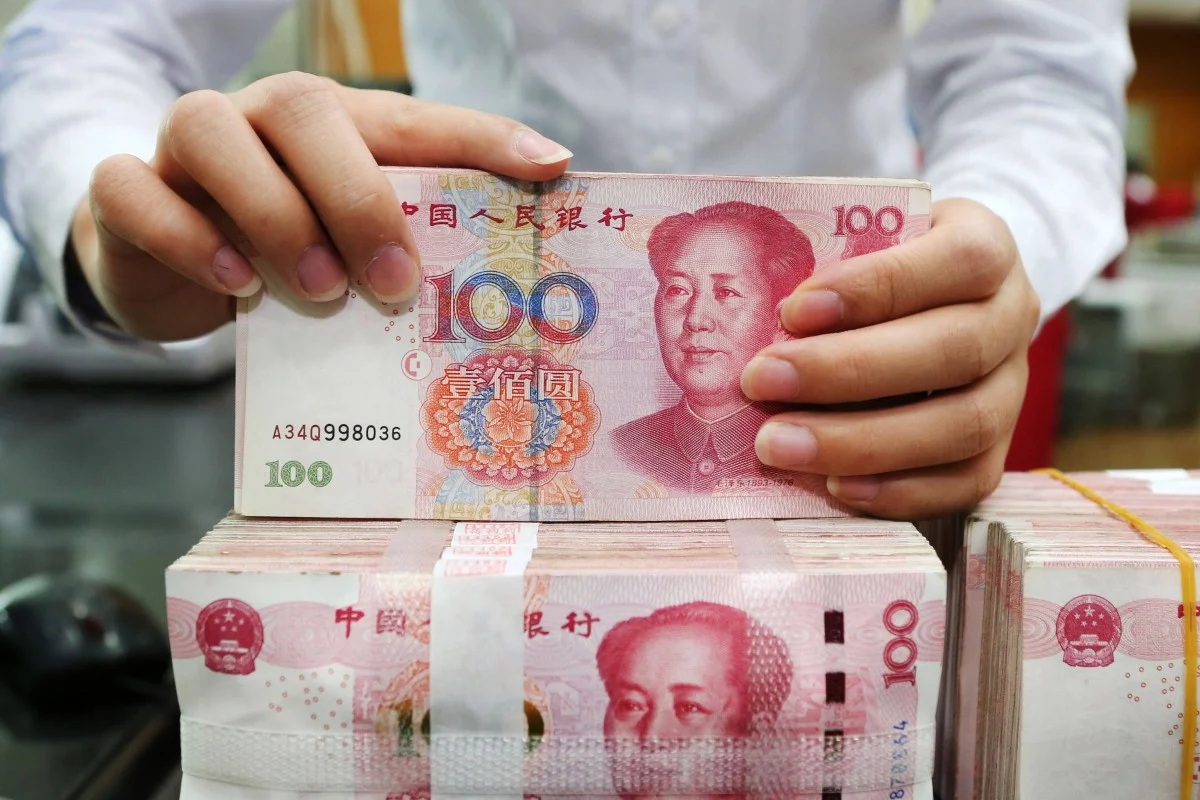
China’s central bank announced the designation of Germany’s Deutsche Bank as a clearing bank for the Chinese currency, making it the first European institution to receive this authorization.
In a statement released Monday, the People’s Bank of China (PBOC) indicated that, in accordance with an agreement with Germany’s central bank, it had decided to authorize Deutsche Bank to act as a renminbi settlement bank in Frankfurt.
Clearing banks, also known as settlement banks, are entities authorized to process and finalize cross-border transactions, which are essential to international trade and to Beijing’s plans to internationalize the use of the Chinese currency. In a separate statement, Deutsche Bank confirmed the decision and pledged to “facilitate end-to-end processing, clearing and settlement for cross-border yuan transactions for European financial institutions and companies.”
The German bank set as its goal becoming a “local bridge to China’s payment systems” and a “key link” between the financial markets of Europe and the Asian country. Deutsche Bank’s head for Asia-Pacific, Europe, the Middle East, Africa and Germany, Alexander von zur Muehlen, said the initiative “will strengthen the financial connection between China and Europe.”
Read more: China’s yuan added to Angola’s mandatory bank reserves, signaling bilateral ties
The German institution reiterated its “longstanding support” for the internationalization of the renminbi and stressed that it was one of the first international banks to participate directly in CIPS, China’s alternative, launched in 2015, to the international SWIFT payments system.
Beijing has been seeking to increase the use of the Chinese currency worldwide and thereby reduce global dependence on the U.S. dollar, although, according to SWIFT data, the dollar’s market share stands at 50.1%, while the renminbi’s is just 3.1%.
At the end of June, China’s central bank announced a series of measures to promote the currency’s internationalization, for example, allowing financial institutions such as central banks and sovereign wealth funds to borrow directly from the PBOC itself, using Chinese bonds as collateral, mirroring the operation of U.S. Treasury bonds, one of the world’s preferred reserve assets.
Additionally, the country’s six largest state-owned banks were authorized to carry out offshore renminbi transactions (traded in foreign markets), within set quotas, directly from their headquarters, rather than through overseas subsidiaries.
Read more: Xi Jinping advocates for yuan as a global reserve currency, analysts warn large reforms needed
At the end of June, the PBOC designated South Africa’s Standard Bank as Africa’s first renminbi clearing bank, operating jointly with China’s largest bank, the state-owned ICBC, to process transactions across 19 countries on the continent.
