

The United States military has officially reinstated its blockade of Iranian ports following a series of retaliatory strikes by Tehran against vessels attempting to navigate the strategic Strait of Hormuz.
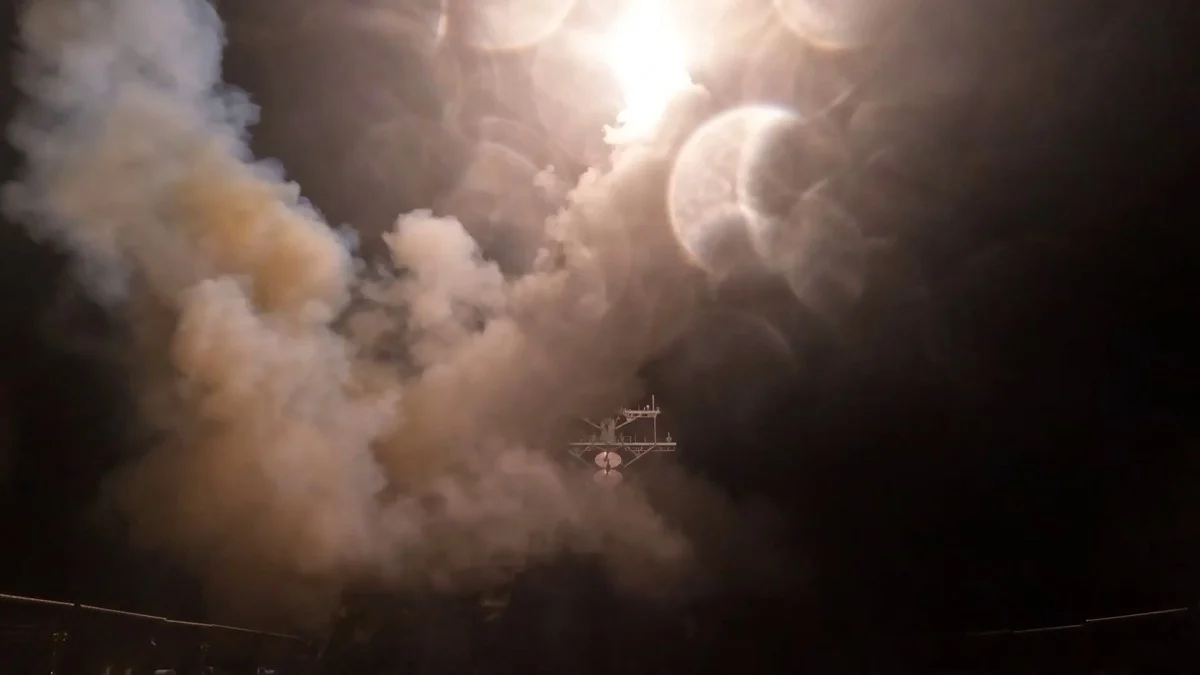
The U.S. Central Command (CENTCOM) announced it carried out a fresh wave of airstrikes targeting multiple locations inside Iran on Tuesday before re-establishing the maritime blockade overnight. The escalations triggered missile warning sirens in neighboring Bahrain and Kuwait amid retaliatory Iranian strikes, further threatening the fragile regional ceasefire. Hours after the blockade was implemented, Iranian state media reported active firefights in the strait.
Admiral Brad Cooper, commander of CENTCOM, stated that Iran had launched dozens of missiles and drones toward neighboring Arab nations, declaring that the U.S. is holding Tehran accountable for unjustified aggressions that endanger innocent lives.
Currently, the U.S. has deployed at least 19 warships to the Arabian Sea, including two aircraft carriers and an amphibious assault ship carrying over 1,000 Marines. According to CENTCOM, hundreds of military aircraft are also operating across the Middle East. The escalating cycle of retaliatory strikes and the struggle for control over the Strait of Hormuz have once again pushed the region to the brink of a full-scale war.
Read more about this topic: Trump confirms deal with Iran and reopening of Hormuz (with video)
The U.S. previously enforced a blockade on the strait in mid-April but lifted it in June, a day after signing an interim agreement. That pact was intended to facilitate 60 days of diplomatic negotiations regarding Iran’s nuclear program and regional security. However, those talks stalled as maritime hostilities flared.
When first announcing the return of the blockade on Monday, U.S. President Donald Trump proposed a 20% transit fee on ships passing through the strait. He abandoned the proposal hours later, citing appeals from Persian Gulf allies. Trump stated that regional monarchs and emirs offered to invest billions of dollars in the U.S. economy as an alternative arrangement, which he preferred over toll collection on an international waterway.
The initial toll proposal would have marked a significant shift in U.S. foreign policy, which historically champions free and unrestricted navigation through international straits. Speaking to Fox News, Trump warned that further airstrikes on Iran are planned in the coming days, noting that critical infrastructure, including bridges and power plants, could be targeted as early as next week if Tehran refuses to return to the negotiating table.
The original interim agreement guaranteed free passage through the strait for 60 days but left its long-term status unresolved, with Tehran asserting its right to manage traffic and collect fees—a claim Washington strongly rejects.
Read more about this topic: Iran War: US assures that ships are circulating in Hormuz
The renewed tensions immediately jolted energy markets. Brent crude oil briefly surged past $87 a barrel on Tuesday before pulling back to $78 following Trump’s statements. Regional mediators, led by Pakistan, are working to revive the ceasefire.
Diplomatic delegations from Israel and Lebanon met in Rome on Tuesday for U.S.-mediated negotiations. Following the outbreak of the war, Hezbollah joined the conflict in support of Iran, prompting a ground invasion of southern Lebanon by Israeli forces. Although Lebanon and Israel agreed on a framework last month to withdraw Israeli troops in exchange for disarming Hezbollah, the implementation of that deal remains frozen.
