

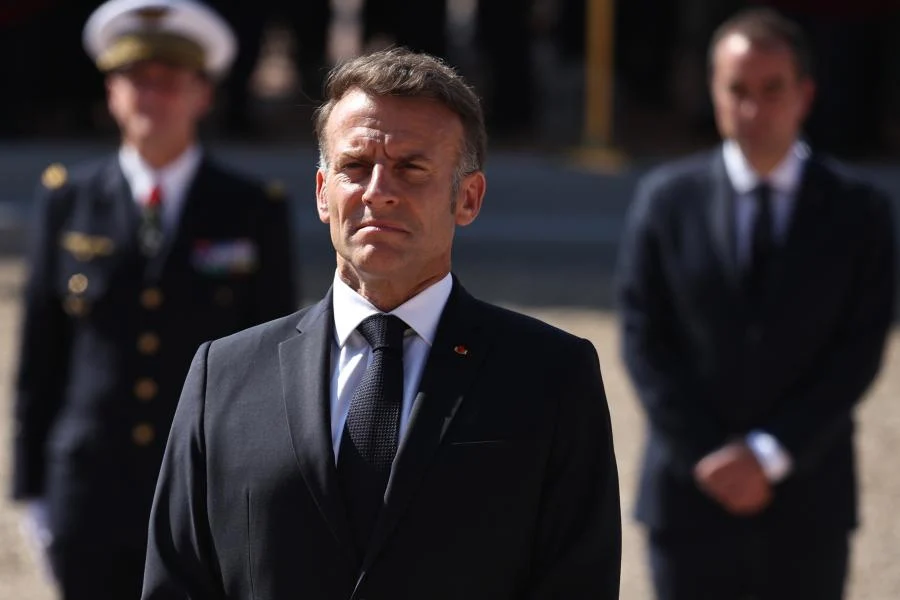
French President Emmanuel Macron declared that the global abolition of the death penalty is far from a settled historical issue, calling it a vital “contemporary battle.” Speaking amid a global resurgence of debate on capital punishment, Macron warned that reinstating the practice would pose an “existential risk” to democratic societies.
Addressing the opening session of the 9th World Congress Against the Death Penalty, which is taking place this week in Paris, Macron emphasized that the total eradication of the maximum sentence is a continuous struggle that is “never truly won.” The French President firmly dismissed arguments supporting capital punishment as a tool for public safety.
“The death penalty has never made a society safer because it does not deter. That has been proven and evaluated,” Macron stated.
Reiterating that capital punishment can function as “a weapon, but never a shield,” the French head of state grounded his defense of abolition primarily in the preservation of basic human dignity. He added that society must punish and demand reparations from criminals, but cannot entirely strip away their fundamental membership in humanity.
Read more: Iran War: Macron does not believe conflict is over; urges responsibility from Netanyahu
Macron pointed out a striking paradox in the modern global landscape: while an increasing number of countries have legally abolished capital punishment over the last several years, the total volume of executions has reached alarming new highs.
According to global figures cited during the congress, the year 2025 recorded the highest number of executions worldwide since 1981. Specifically, 2,707 people were executed across just 17 nations, while an estimated 25,000 individuals remain on death row awaiting execution.
France officially abolished the death penalty 45 years ago, in 1981, under the presidency of Socialist leader François Mitterrand. Macron used the historical milestone to reinforce that today’s democratic institutions must remain vigilant against populist political pressures seeking to revive the practice.
