

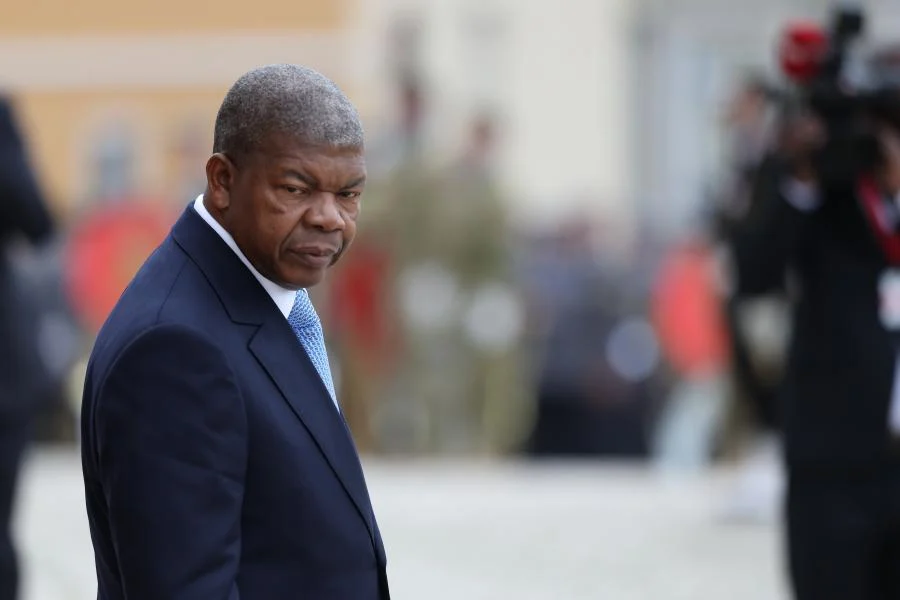
Angolan President João Lourenço has banned foreign travel for ministers, police chiefs, military commanders, and state intelligence leaders seeking to attend scientific, festive, commemorative, or corporate events outside the country without prior scheduling and presidential approval.
In a presidential decree dated May 21, Lourenço justified the measure by highlighting the urgent need to strictly regulate foreign departures for individuals holding political, managerial, and command roles across national defense, the armed forces, public order, and state security organs.
The travel restriction specifically targets participation in unscheduled overseas events that fall outside officially approved institutional calendars for international summits, forums, workshops, or similar gatherings, whether organized by sovereign states, regional bodies, or foreign corporate entities.
According to the official document, the restricted sectors encompass the Ministry of National Defense, Former Combatants and Veterans of the Homeland, the Ministry of the Interior, Military Justice Organs, the Angolan Armed Forces (FAA), the National Police, and the Military Security Services.
Read more: Angola: foreign investment plunged 59% between 2017 and 2025
Under the new regulations, personal foreign travel for pre-approved annual vacation leave or verified medical treatment remains unaffected, provided it adheres to the standard internal administrative procedures of the respective institutions.
In a separate decree, the Angolan Head of State clarified that the ban directly bars general officers of the FAA, commissioner officers of the National Police, and directors of state security services holding active command and chief leadership positions from exiting national territory without explicit authorization.
Consequently, these specific high-ranking officials can only attend international events that have been explicitly vetted and authorized beforehand by the President of the Republic in his capacity as the Commander-in-Chief of the Angolan Armed Forces.
Within the FAA, this command structure covers the Chief of the General Staff, branch commanders, supreme military court judges, the Military Prosecutor, the commander of the War College, and all regional military, air, and naval commanders, alongside central unit directors.
Read more: Angola: President criticizes global “might makes right” policy (with videos)
Regarding the National Police, the newly implemented regulatory framework covers the general commander, deputy general commanders, the national police inspector, the head of patriotic education, national directors, and all provincial commanders across the country.
Within the state intelligence apparatus, the restriction targets the chiefs, directors, deputy directors, and department heads of the State Intelligence and Security Service (SINSE), the External Intelligence Service (SIE), and the Military Intelligence and Security Service.
