

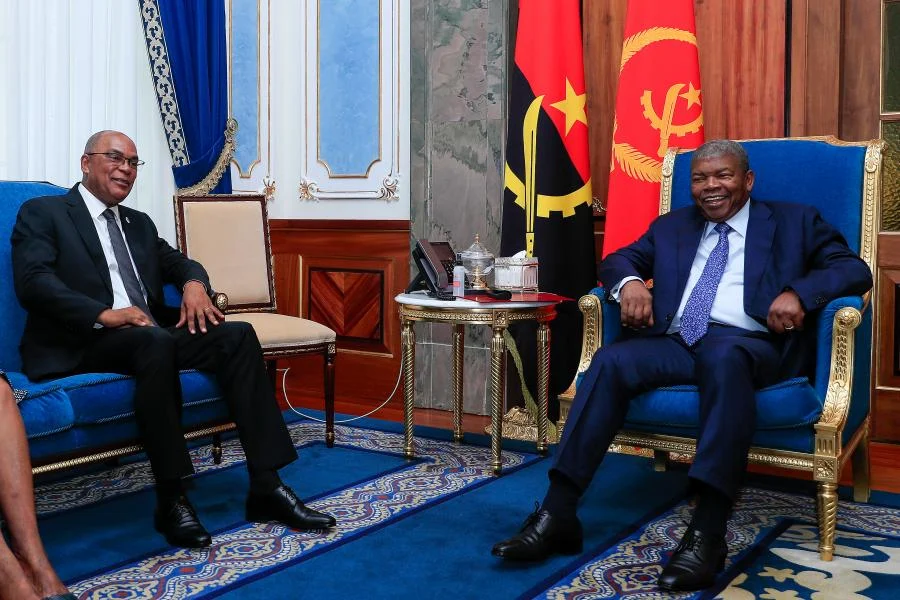
Angolan President João Lourenço has officially decreed a day of national mourning for Friday, May 22, to honor all the victims of the intense political conflicts that occurred in Angola between November 1975 and April 2002, according to a recent presidential decree.
The decree, published on the Angolan presidency’s official Facebook page, dictates that on Friday the national flag will be flown at half-mast across the country. Additionally, it mandates the cancellation of all public shows and demonstrations throughout the national territory, as well as at Angolan diplomatic and consular missions abroad during the mourning period.
The national mourning will last for a single day, spanning from 00:00 to 23:59. The official document invokes “the necessity to honor the memory of all Angolan citizens who lost their lives as a consequence of the political conflicts that devastated the country,” while acknowledging the collective suffering experienced by the Angolan people.
Through this legal diploma, the government seeks to reaffirm the core national values of lasting peace, national reconciliation, and structural unity among all Angolans.
Read more: Angola: foreign investment plunged 59% between 2017 and 2025
The extensive period covered by the presidential decree encompasses the long Angolan civil war, which lasted nearly thirty years and pitted the Popular Movement for the Liberation of Angola (MPLA) against the National Union for the Total Independence of Angola (UNITA). Historians estimate that between 500,000 and one million people lost their lives during this devastating internal conflict.
The war erupted immediately after Angola achieved its independence from Portugal in November 1975, escalating from a local power struggle into a major proxy battleground for rival Cold War superpowers.
The conflict involved active interventions from the Soviet Union, Cuba, South Africa, and the United States of America. A fragile hope for peace emerged in 1991 with the signing of the historic Bicesse Accords, but armed clashes resumed swiftly after multi-party elections granted victory to the ruling MPLA.
The military confrontation finally came to an end in 2002 following the battlefield death of UNITA’s long-time rebel leader, Jonas Savimbi, which paved the way for the signing of a definitive Peace Agreement on April 4, 2002, in Luena.
Read more: Angola: first gold refinery ready by the end of 2026
This national mourning is decreed on the eve of the 49th anniversary of the tragic events of “May 27.” On that date in 1977, an alleged coup attempt led by Nito Alves was violently repressed by the government of Agostinho Neto with the direct military assistance of Cuban troops.
Amnesty International estimates that at least 30,000 people were killed in the subsequent purge, a dark chapter in national history that touched nearly every Angolan family.
To address this heavy historical legacy, President João Lourenço previously created the Commission for the Implementation of the Reconciliation Plan in Memory of Victims. This dedicated commission was tasked with designing a comprehensive master plan to properly honor those who perished in political violence from the day of national independence up until the Luena Peace Accords.
This new day of national mourning represents a significant milestone in the administration’s ongoing efforts to heal historical wounds and foster a shared national identity.
