

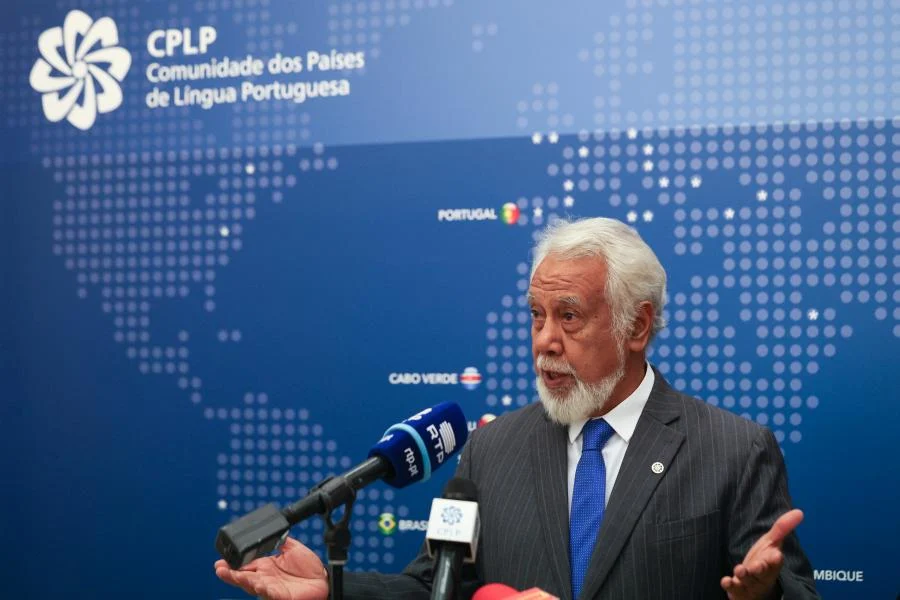
Timorese Prime Minister Xanana Gusmão stated today that the Portuguese language holds a “special place” in the history of his nation’s resistance movement, noting that it was through Portuguese that “East Timor spoke to the world.”
According to his speech, which was made available to the press, the leader emphasized that this specific language carried the Timorese diplomatic cause directly to the United Nations, various international organizations, and friendly nations. Gusmão highlighted that Portuguese transformed into a powerful symbol of identity, resilience, and historical continuity for the Timorese state throughout its long struggle for self-determination.
The Prime Minister spoke during a ceremony marking the upcoming 24th anniversary of the restoration of independence, which is officially celebrated on Wednesday. The event took place at the Timorese Resistance Archive and Museum and featured the inauguration of a historical exhibition and the launch of a new book entitled “Vida da Resistência.”
Gusmão recalled that even when the invading forces prohibited the use of Portuguese, the Timorese population continued to speak it in secret, transforming it into an underground language of active resistance.
Read more: East Timor to pardon priest convicted of child abuse (with video)
During his address at the venue, which he referred to as the “Sacred House,” the Timorese leader stressed that May 20 is more than just a historical calendar date. He framed it as proof that a small nation can achieve monumental victories when it fights with courage, national unity, and a profound love for its homeland.
The prime minister added that the day celebrates the survival of a nation, the victory of memory over forgetting, and the triumph of human dignity over oppression.
Gusmão concluded his address with a forward-looking message directed toward the nation’s youth, who currently represent the vast majority of the country’s population demographic. He noted that while the older generation delivered freedom from the mountains, the current generation must now fight its battles through education, discipline, honesty, and hard work.
The prime minister called for young people to be prepared to defend their cultural identity, historical memory, and resistance values to transform past suffering into a driving force for building a prosperous future.
