

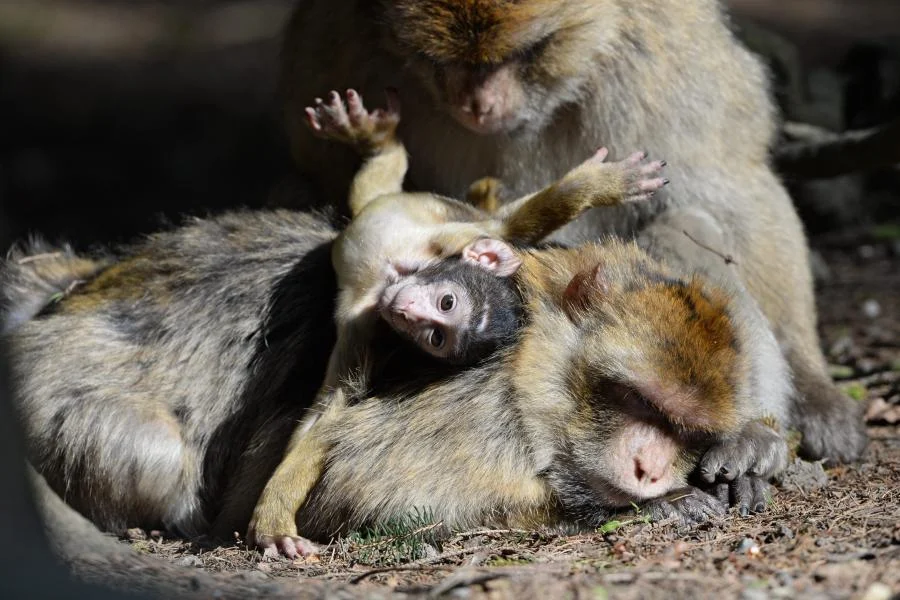
New research from the University of Cambridge has revealed a surprising adaptation among the Barbary macaques of Gibraltar: the primates are intentionally eating soil to soothe their stomachs. According to the study, published in Scientific Reports, the monkeys have turned to “geophagy”—the ingestion of earth—to alleviate gastrointestinal discomfort caused by the processed, high-sugar foods they receive from tourists.
The study, which monitored the macaques on the Rock of Gibraltar between the summer of 2022 and the spring of 2024, found a direct correlation between the consumption of human food and the need to eat dirt.
“During a total of 98 days of observation, scientists recorded 46 ‘events’ of soil ingestion in 44 different animals,” the report states. Researchers specifically noted three instances where macaques turned to geophagy almost immediately after consuming human treats, including ice cream, bread, and cookies.
The primates in Gibraltar frequently access high-calorie, processed foods either fed to them by tourists or stolen by the animals themselves. Sylvain Lemoine, a primatologist at Cambridge’s Department of Archaeology who led the study, explained that this diet is drastically different from their natural sustenance.
Read more: UNESCO: Lusophone countries among prime examples of designated sites
“The food brought by tourists and consumed by Gibraltar’s macaques is extremely rich in calories, sugar, salt, and dairy,” Lemoine noted. “This is completely different from the food typically consumed by the species, such as herbs, leaves, seeds, and occasionally insects.”
According to the study, the soil serves as a medicinal tool. Lemoine explained, “The consumed soil acts as a barrier in the digestive tract, limiting the absorption of harmful compounds. This can alleviate gastrointestinal symptoms, ranging from nausea to diarrhea. The soil may also provide beneficial bacteria that help the intestinal microbiota.”
The research highlights that this behavior is not instinctual but rather a learned cultural practice. The study found that soil consumption was almost non-existent in groups that had no contact with humans. Conversely, groups living at the top of the Rock, which see the highest concentration of tourists, were responsible for over 72% of all observed incidents of geophagy.
The macaques show a clear preference for specific types of soil, with 83% of the incidents involving “terra rossa” or red clay. Because the behavior is often performed in groups, researchers believe it is transmitted socially among the monkeys.
“The emergence of this behavior in monkeys is both functional and cultural,” Lemoine concluded, “only it is driven entirely by proximity to humans.”
