

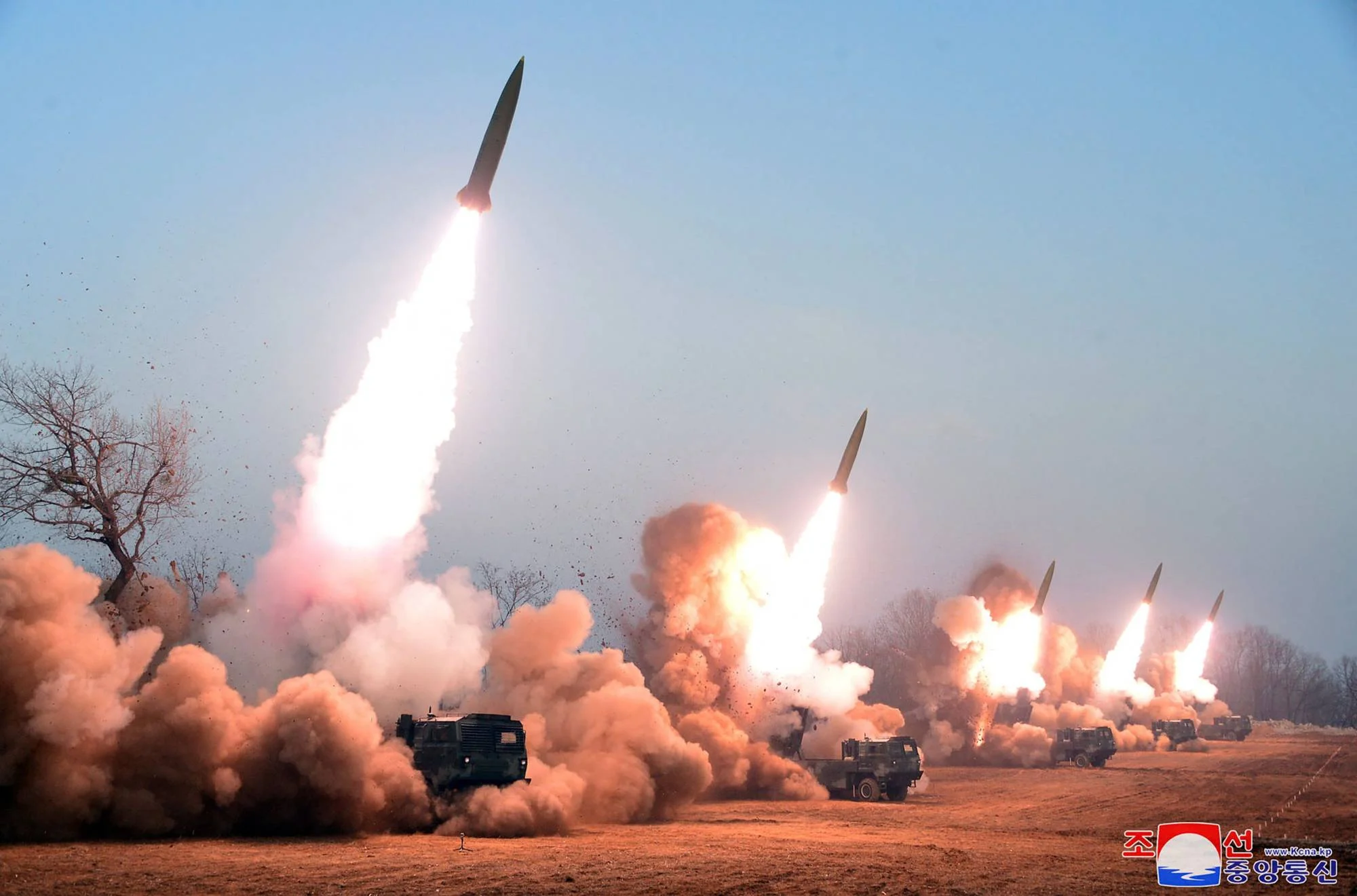
The tests were conducted on April 6, 7, and 8 under the direction of General Kim Jong Sik, deputy department director of the Central Committee of the Workers’ Party of Korea, according to the North Korean state news agency, KCNA.
One of the tests served to “evaluate the combat capabilities” of the Hwasongpho-11 Ka ballistic missile, equipped with a fragmentation warhead.
The weapon “can reduce any target covering an area of 6.5 to 7 hectares to ashes at maximum power,” the North Korean state media reported.
In addition, North Korean regime officials tested an “electromagnetic weapon system and carbon fiber bombs” and a mobile short-range anti-aircraft missile system.
Leia também: Kim Jong-un oficializa Coreia do Sul como “Estado mais hostil”
The South Korean military reported on Wednesday that North Korea had fired several projectiles toward the Sea of Japan, and stated that a launch from the Pyongyang area had also been recorded on Tuesday.
These tests came after North Korea’s First Vice Minister of Foreign Affairs, Jang Kum-chol, downplayed Seoul’s recent optimism, following Pyongyang’s leadership praising South Korean President Lee Jae-myung for his conciliatory remarks regarding South Korean civilian drone incursions into North Korean territory between September 2025 and January 2026.
South Korea had interpreted as a positive sign an unusual message issued this week by Kim Yo-jong, the influential sister of North Korean leader Kim Jong-un, in which she stated that the leader considered Lee to have demonstrated an “honest and open-minded” attitude by expressing regret over the drone incursions.
The North Korean Deputy Foreign Minister emphasized, however, that Kim Yo-jong’s message was not conciliatory, but rather a warning to avoid further provocations. Prior to Tuesday’s test, the last North Korean ballistic missile launch took place on March 14, while joint military exercises between Seoul and Washington were underway.
