

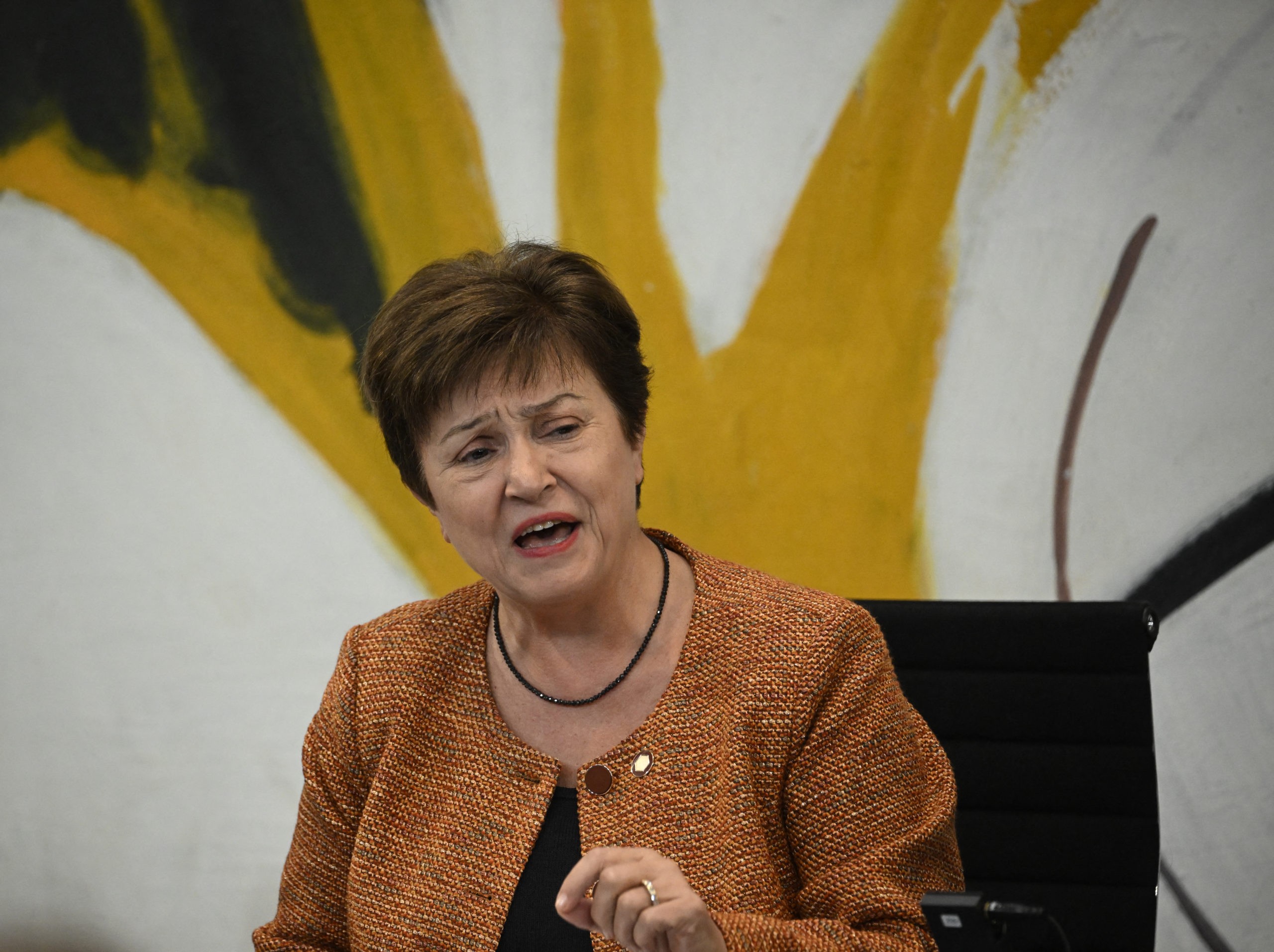
The International Monetary Fund (IMF) has warned that the ongoing conflict in the Middle East poses a serious risk to the global economy, causing a supply shock described as “broad, global, and asymmetric.”
These comments were made by IMF Managing Director Kristalina Georgieva just days ahead of the IMF and World Bank spring meetings, which have already announced downward revisions of growth forecasts.
The conflict is expected to reduce daily oil flows by 13% and liquefied natural gas (LNG) supplies by up to 20%, generating major disruptions worldwide. The effects will be uneven, hitting countries near the conflict zones and those heavily dependent on energy imports the hardest.
“In all scenarios considered by the IMF, the impact will seriously undermine growth expectations for this year,” Georgieva said during her opening speech for the spring meetings. “Even our most optimistic scenario requires a downward revision of growth.”
Read more: Iran War: Trump says NATO “doesn’t understand without pressure” (with video)
The extent of the economic fallout will depend on the evolution of the conflict, including the temporary ceasefire agreed between the United States and Iran. The IMF has already warned that global economies will face higher energy prices, increased inflation uncertainty, and effects on financial market conditions.
Short-term inflation forecasts for both the European Union and the United States have been revised upward, though long-term projections remain largely unchanged. Georgieva emphasized that, over time, a portion of the impact is expected to dissipate, bringing the global economy to a “new equilibrium.”
She also cautioned that the international community will not be able to overcome the current macroeconomic crisis without experiencing some damage and urged governments to coordinate measures to mitigate the consequences.
