

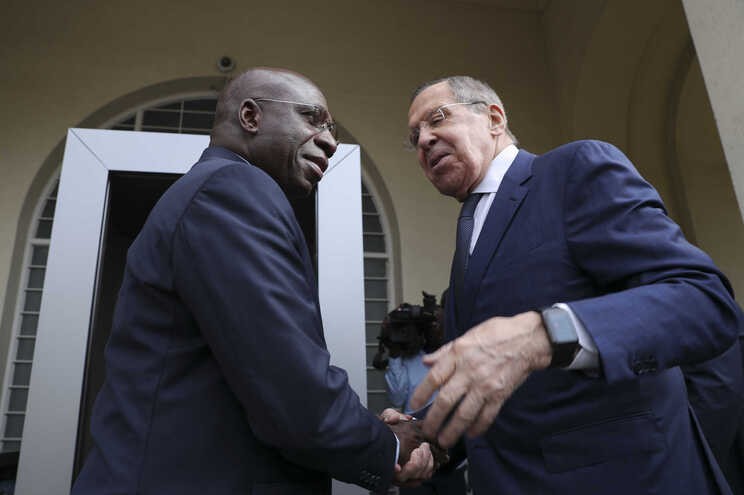
Angola wants to move from an “assertive diplomacy” approach to one of “strategic influence,” taking on a more proactive and transformative role on the global stage, Foreign Minister Téte António said.
Speaking at the opening of a conference marking 50 years of Angola’s presence in the Organization of African Unity / African Union and the United Nations, the minister called for a shift in foreign policy strategy. He said the country should move “from a participatory presence to a proactive, forward-looking and transformative role.”
Téte António framed this ambition within a global context he described as “more fragmented, marked by strategic rivalries, ruptures and polarization,” arguing that Angola “cannot limit itself to reacting” but must position itself as “an active player capable of influencing and shaping” international dynamics.
He highlighted Angola’s role as a “balancing factor, promoter of peace and catalyst for African solutions to African problems,” pointing to the country’s involvement in mediation and regional stabilization efforts, particularly in Central and Southern Africa.
Read more: Iran War: “The world has turned into a jungle.” Angola’s President highlights colonialism as motivation for conflict
On the multilateral front, the minister noted that Angola has served two terms as a non-permanent member of the UN Security Council and has also participated in the Economic and Social Council, the Human Rights Council, and the Peacebuilding Commission.
Looking ahead, Angola aims to play a stronger role in global debates on energy security, climate change, food security, and human mobility. Téte António also emphasized the need to train a new generation of diplomats with strong technical skills and geopolitical awareness.
He recalled that Angolan diplomacy was born out of liberation struggles, contributing to the end of colonialism and apartheid, and said the country now seeks to establish itself as a key player in shaping global solutions.
The two-day conference, held in Luanda, includes thematic panels on Angola’s role in the OAU/AU and the UN, as well as a photographic exhibition highlighting its diplomatic history. A ceremony honoring key figures in Angolan diplomacy is scheduled for Thursday.
