

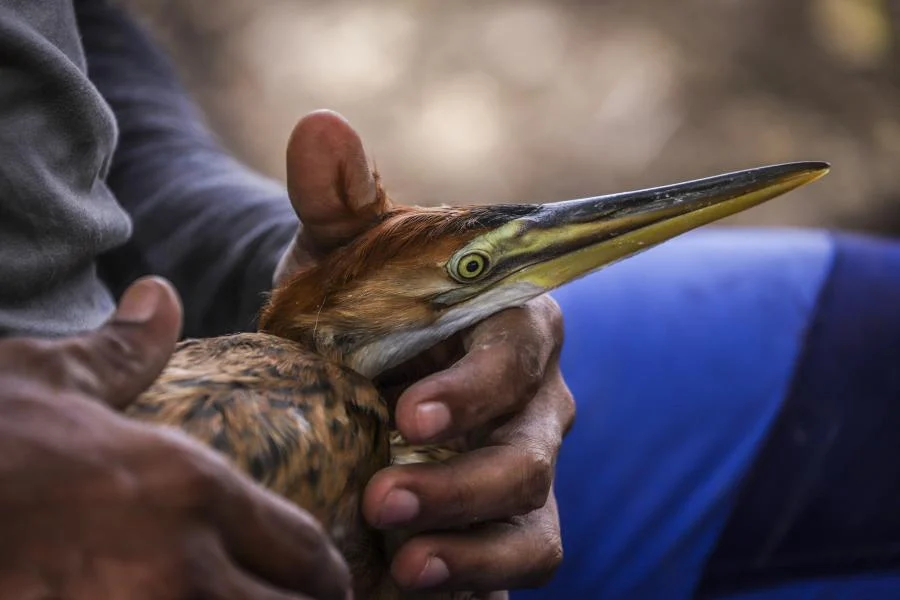
On the island of Santiago in Cape Verde, environmental technicians from Lantuna are trekking across steep slopes and climbing trees to monitor the red heron, a bird species found only in the archipelago and now facing multiple threats.
“It is a species exclusive to Santiago Island. That’s why we sometimes call it the Santiago heron,” environmental technician Samir Martins told Lusa during a visit to one of the colonies in the municipality of São Domingos.
Located just a few kilometers from Praia, the area is accessible only through steep and sometimes slippery paths, surrounded by sparse vegetation and exposed to intense sun.
Technicians are currently monitoring colonies identified last year, tagging chicks and juvenile birds, collecting biometric data, and taking blood samples for genetic studies. They are also installing surveillance cameras and GPS devices on adult birds to track behavior and feeding areas.
Read more: “The sea must be seen as a strategic resource”: Cape Verde’s president launches debate on Santa Luzia (with video)
Unlike other herons that typically inhabit coastal regions, this species prefers more humid and forested inland areas. So far, 23 colonies have been identified across locations such as Rui Vaz, Boa Entrada, Chão da Horta, the Poilão dam, and Tarrafal—though some now have fewer birds than in previous years.
A lack of consistent data makes it difficult to accurately assess the population’s status, something Lantuna aims to address.
Among the main threats are introduced predators like cats, open water reservoirs where birds can fall and die, and the capture of birds and eggs by people for consumption or recreation.
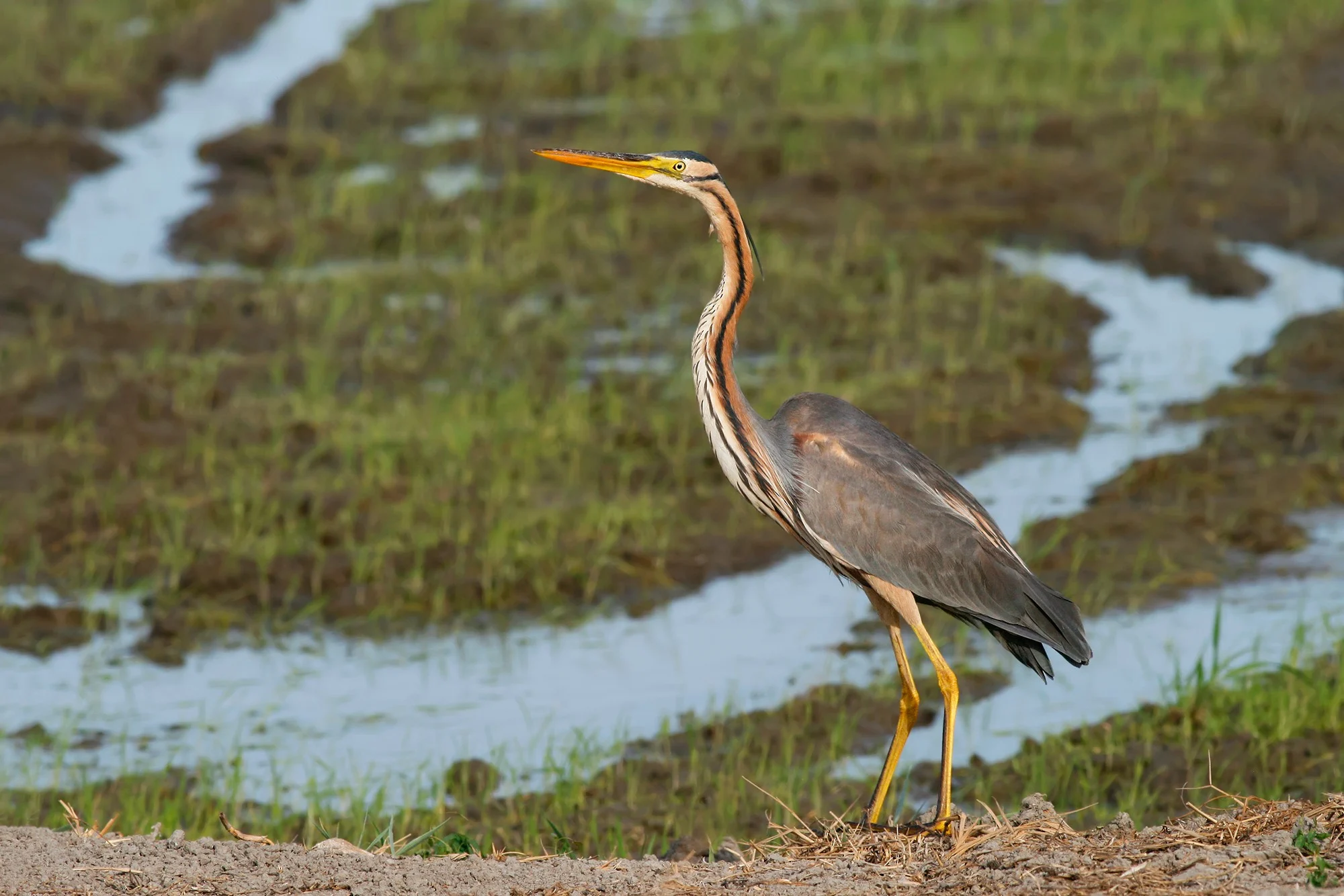
The lack of robust data, combined with ongoing threats, raises concerns about the future of the species—especially as other birds in the archipelago have already declined or disappeared, such as frigatebirds on Boa Vista, as well as species like shearwaters and tropicbirds. Credits: Ivan Sjögren/Macaulay Library
“These are difficult threats to control,” Samir Martins admitted.
To counter this, Lantuna has been working with local communities—including schools, farmers, and residents—to raise awareness about the species’ ecological role, particularly in controlling agricultural pests, as the bird feeds on small rodents and other animals.
Read more: Cape Verde: “There is a domestic travel market with unmet demand”
Another challenge is the difficulty in accessing all colonies. Some trees are too tall to climb, and certain areas are too steep to reach. In such cases, the team relies on binoculars, telescopes, and drones to estimate population numbers.
The lack of robust data, combined with ongoing threats, raises concerns about the future of the species—especially as other birds in the archipelago have already declined or disappeared, such as frigatebirds on Boa Vista, as well as species like shearwaters and tropicbirds.
Nadito Barbosa, who joined the team in 2023, acknowledged that conservation work is not easy and can sometimes be dangerous. Still, he emphasized that passion for the work helps overcome the challenges.
Looking ahead, there are hopes for greater public involvement in protecting the species and increased awareness of local biodiversity. Encouragingly, there are already signs of growing interest, particularly among tour guides who are beginning to identify species and accompany birdwatching visitors.
The São Domingos area remains one of the most accessible and important locations for observing the red heron.
