

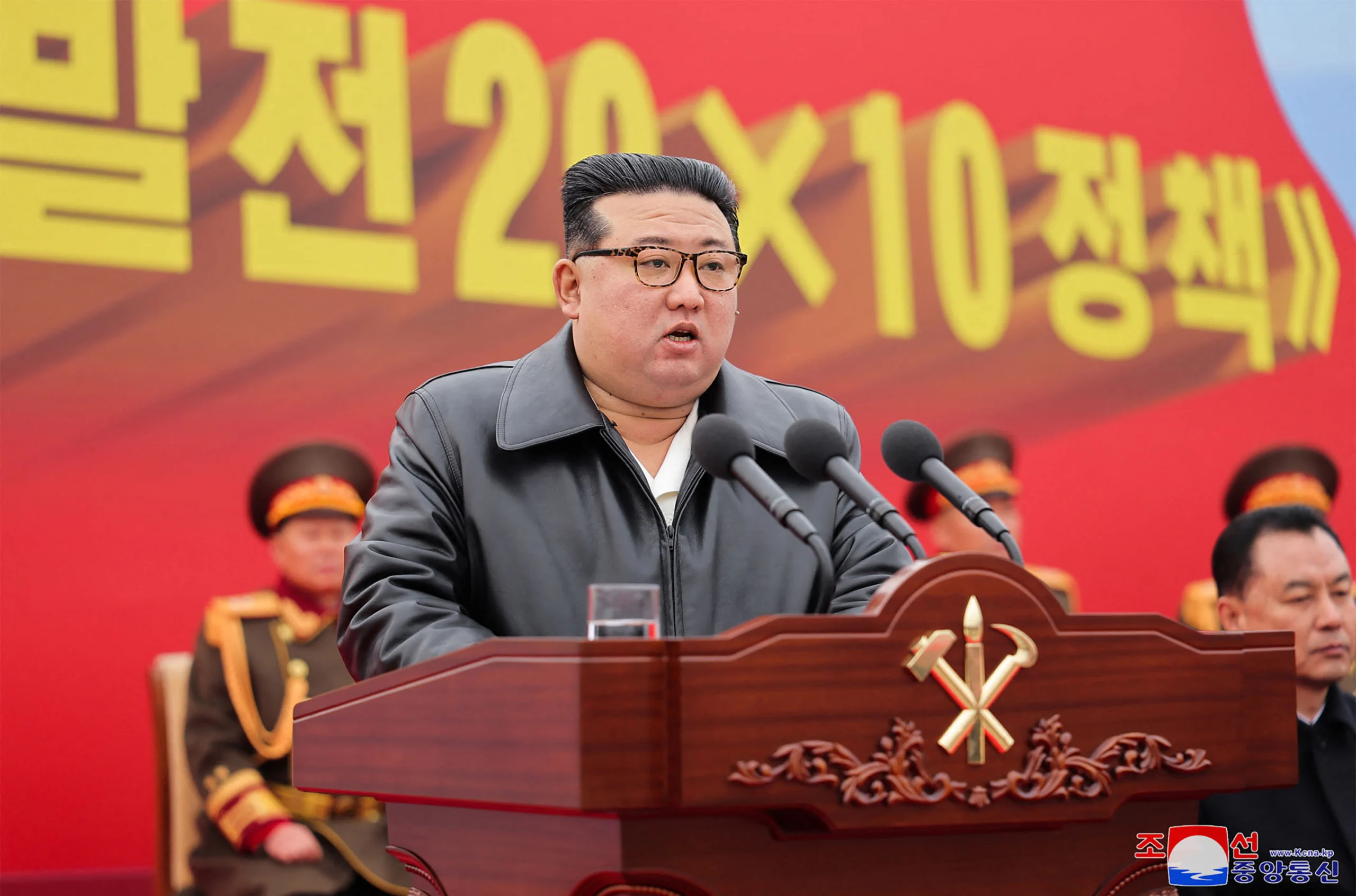
North Korean leader Kim Jong-un labeled South Korea as the “most hostile state” in a speech before the parliament, dampening optimism for a possible resumption of inter-Korean dialogue after conciliatory gestures from Seoul.
“Specifically, we formally recognize South Korea as the most hostile state and will treat it by rejecting and completely ignoring it through clear words and actions,” Kim said on Monday during the second and final day of the first session of the new Supreme People’s Assembly, according to the North Korean state news agency KCNA.
Kim added that any provocation from Seoul would be met with harsh retaliation, emphasizing that Pyongyang will make it pay the price “without mercy” or hesitation.
This rhetoric reinforces the doctrine promoted by Kim in recent years, viewing the two Koreas as “two hostile states toward each other.” In 2024, Kim requested a revision of the constitution to reflect this stance, and state media reported that the amendment had been incorporated.
Read more: North Korea inaugurates new neighborhood for families of soldiers killed in the Ukraine war (with video)
North Korea’s constitution has not been publicly released for years, making it impossible to verify whether the change was formally enacted.
Kim Jong-un’s statements are particularly significant as they were made before the new parliament, a largely ceremonial body that ratifies the decisions of the regime’s leadership.
The reaffirmation of hostile rhetoric toward South Korea responds to a reconciliatory posture taken by the new South Korean government under Lee Jae-myung, which took office last June. The government has made several public gestures of easing tensions, such as suspending propaganda broadcasts across the border via loudspeakers and sending balloons with leaflets into North Korean territory.
During the speech, Kim also reiterated criticisms of the United States, accusing Washington of maintaining a hostile policy toward North Korea, although he did not mention U.S. President Donald Trump.
Additionally, he insisted that North Korea’s status as a nuclear-armed state is irreversible and forms the foundation of its national security strategy.
