

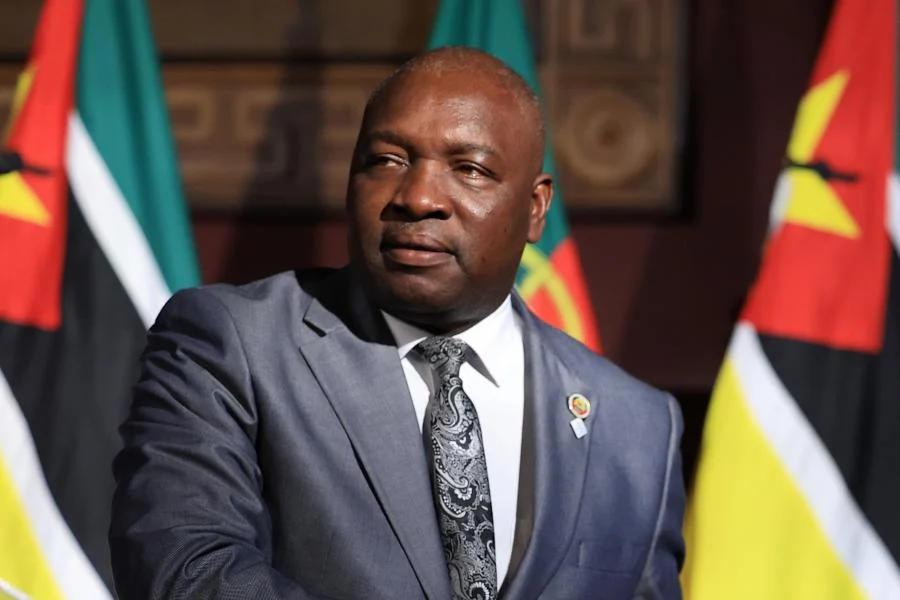
The Mozambican Minister of Justice, Constitutional and Religious Affairs has called on the nation’s legal institutions to actively utilize international legal instruments ratified by the state to combat organized crime. The executive emphasized that integrating these global frameworks is essential to consolidating cross-border cooperation and strengthening judicial security in an era of increasingly sophisticated criminal networks.
Speaking in Maputo at the official launch of a new compendium on international criminal law legislation, Justice Minister Mateus Saize stated that judicial operators must consistently incorporate the principles and norms of international treaties into their daily duties.
Saize argued that grounding judicial decisions in these international frameworks is no longer just an option, but a fundamental requirement for a modern, effective justice system aligned with global standards. He noted that doing so will decisively contribute to harmonizing jurisprudence, boosting international legal cooperation, and fulfilling Mozambique’s global commitments.
The newly launched collection systemizes various international legal instruments adopted under the banners of the United Nations, the African Union, and the Southern African Development Community (SADC). Designed to facilitate easy access and harmonized interpretation for judicial actors, the compendium specifically targets four critical areas: transnational organized crime, terrorism, drug trafficking, and corruption.
Read more: Mozambique: President urges high vigilance to protect “security wall” against kidnappings
The Justice Minister explained that these contemporary security threats demand coordinated, legally sound responses that simultaneously uphold the promotion and protection of human rights.
The publication of the legal compendium was made possible through financial and logistical support from the United Nations Office on Drugs and Crime (UNODC) and the European Union. Representing the EU delegation in Mozambique, Michele Crimella praised the initiative, noting that supporting such projects is crucial at a time when the rule of law faces significant global challenges.
Crimella highlighted that modern security threats transcend national borders and require highly synchronized international strategies, while simultaneously urging Mozambique to continue ratifying additional global treaties to further insulate its justice system against transnational syndicates.
