

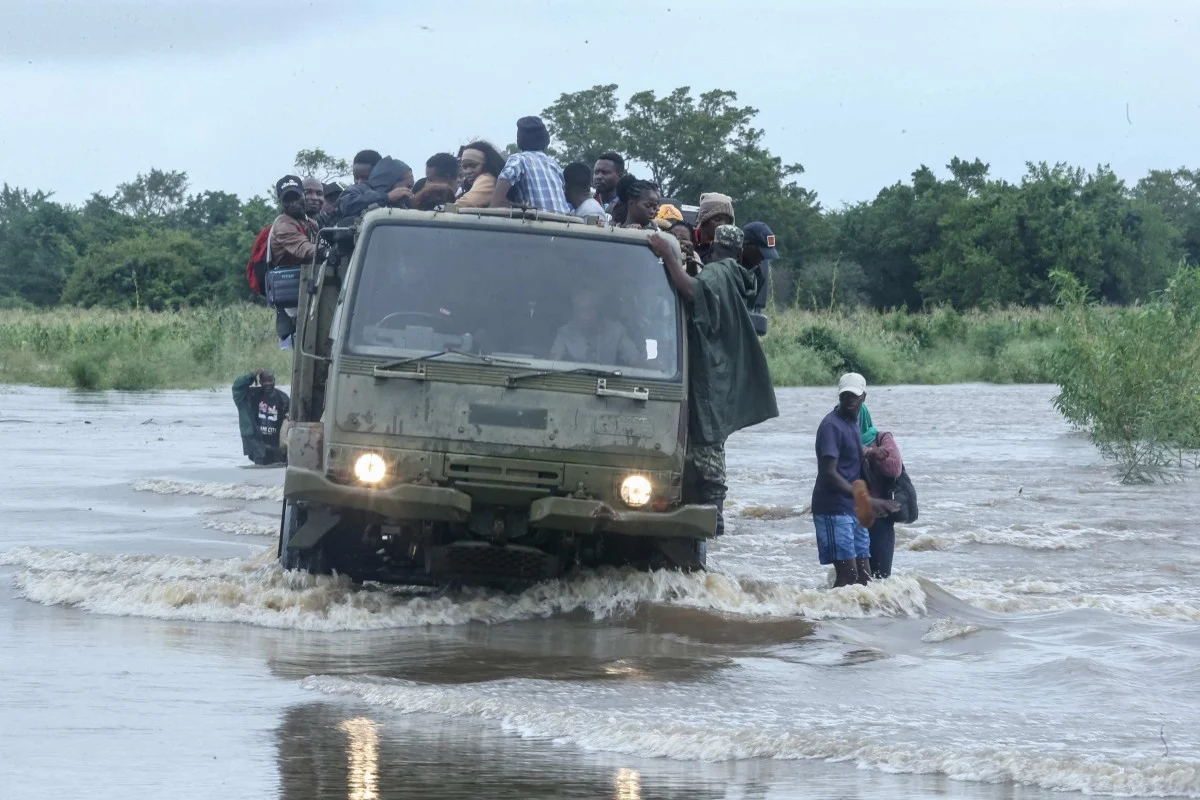
Italy today provided €63.2 million for the construction of a drainage system in the Mozambican capital, to reduce urban flooding and improve living conditions for around 150,000 people.
The fund — comprising €60 million in credit and €3.2 million in grants — is provided through the Italian Agency for Development Cooperation, with the foundation stone laid today by the minister of public works, housing and water resources, Fernando Rafael.
“It is in this framework of friendship and cooperation that today we witness another important milestone: the laying of the foundation stone of the Stormwater Drainage System Project for the City of Maputo,” the minister said.
Read more about this topic: British government to reduce foreign aid to Mozambique
The works will cover neighbourhoods including Maxaquene B, C and D and Polana Caniço A and B, and include around 14 kilometres of drainage network, nine kilometres of paved roads and underground concrete culverts with capacity of up to 30 cubic metres. The project responds to recurring flooding problems caused by heavy rain that affect mobility, damage infrastructure and increase health risks, according to the minister.
The project, expected to be completed within three years, is being carried out by Italian construction company Renco and also includes social mitigation measures, with compensation for 210 affected families and the construction of five homes for 22 households.
Italian ambassador Gabriele Annis described the initiative as a priority for Italian cooperation in the water and sanitation sector. “This is an urban regeneration project that will significantly contribute to reducing the flood vulnerability of several Maputo neighbourhoods,” he said.
Read more more about this topic: Mozambique’s authorities call for evacuation of populations in flood risk zones
Maputo mayor Razaque Manhique called the project a “structural turning point” for a city with drainage coverage estimated at around 40%, falling below 25% in peri-urban areas. The Mozambican government plans to expand sanitation infrastructure across several cities and raise national coverage to 48% by the end of the current five-year period, with further drainage projects planned for Beira, Chimoio and Pemba.
