

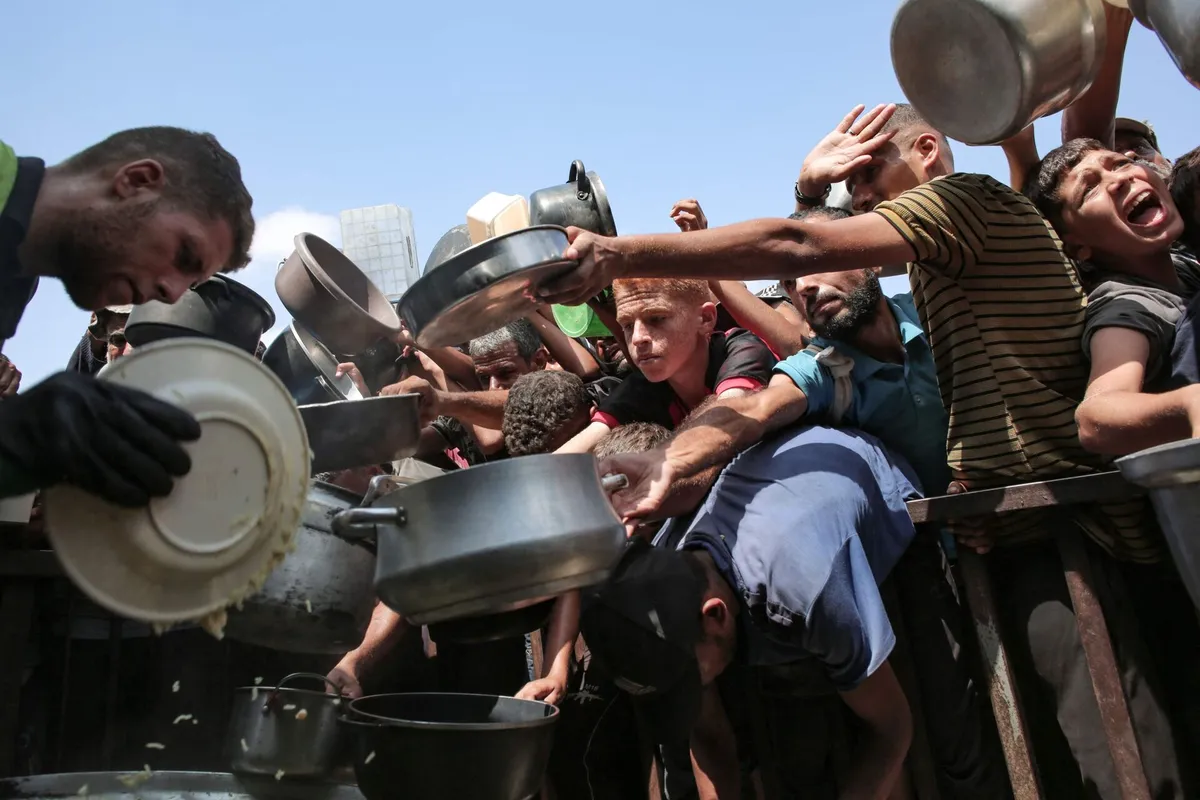
The UN warned today that 45 million additional people — primarily in Asia and Africa — will be pushed into acute food insecurity as a consequence of the war against Iran and its impact on the Middle East, marking a new record.
In an analysis by the UN World Food Programme (WFP), this figure will be reached if hostilities do not cease before mid-year and oil prices remain above $100 per barrel.
“The virtual paralysis of maritime transport in the Strait of Hormuz and growing risks to navigation in the Red Sea are already driving up energy, fuel and fertiliser prices, worsening hunger beyond the Middle East,” the WFP warned. Currently, 318 million people worldwide suffer from food insecurity, and the organisation warns the world risks facing a food security crisis similar to 2022, when the war in Ukraine pushed the number of affected people to a historic high of 349 million.
Read more: Iran War: Donald Trump rules out conflict ending this week (with video)
Although the current conflict is centred on an energy hub rather than an agricultural region, the WFP warns the potential impact is similar due to the correlation between energy and food markets. The most vulnerable regions are sub-Saharan Africa and Asia, due to high dependence on food and fuel imports. Specifically, the WFP projects food insecurity increases of 24% in Asia, 21% in West and Central Africa and 17% in East and Southern Africa.
“Without a humanitarian response with sufficient funding, this could mean catastrophe for millions of people already living on the edge,” warned WFP deputy executive director Carl Skau.
