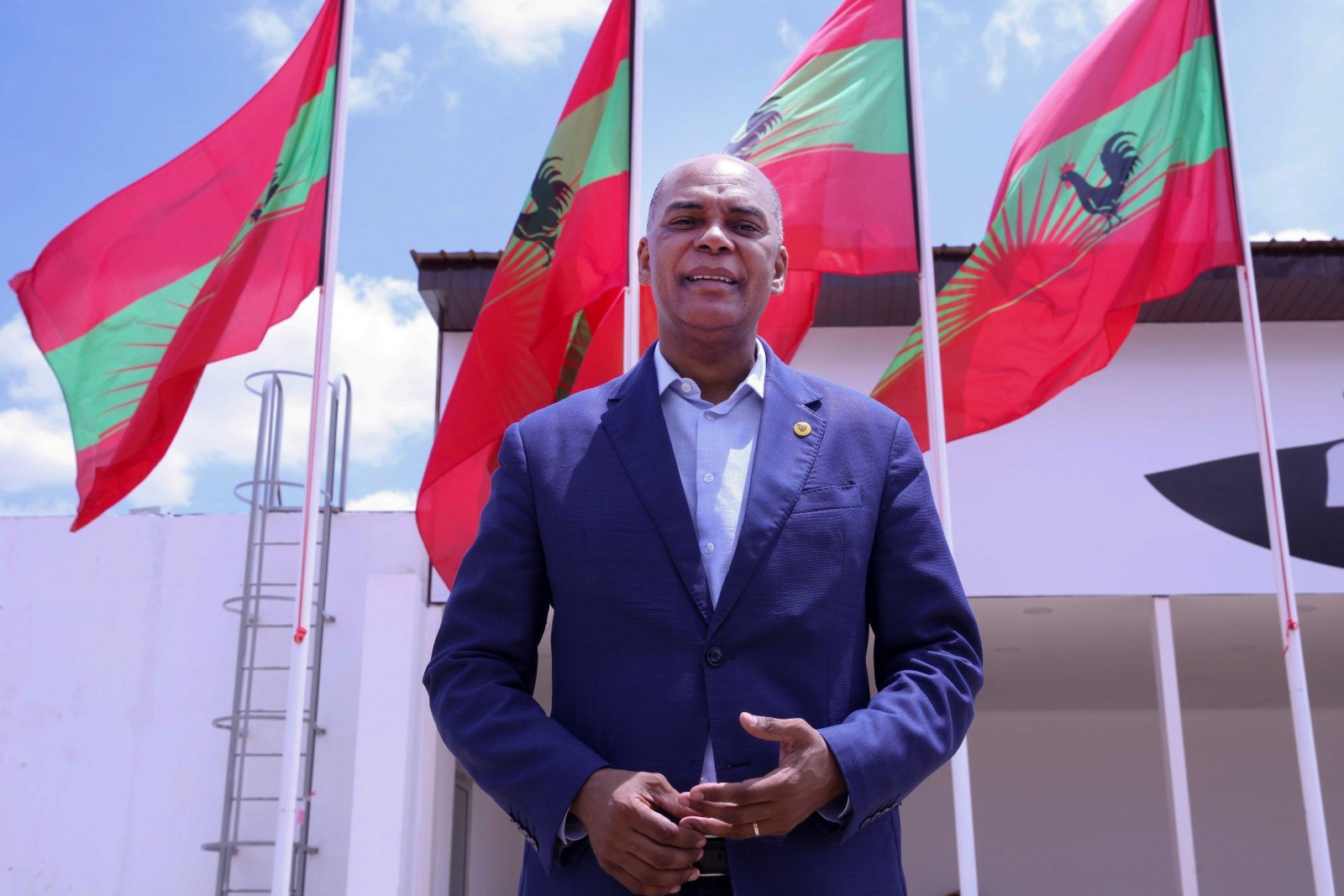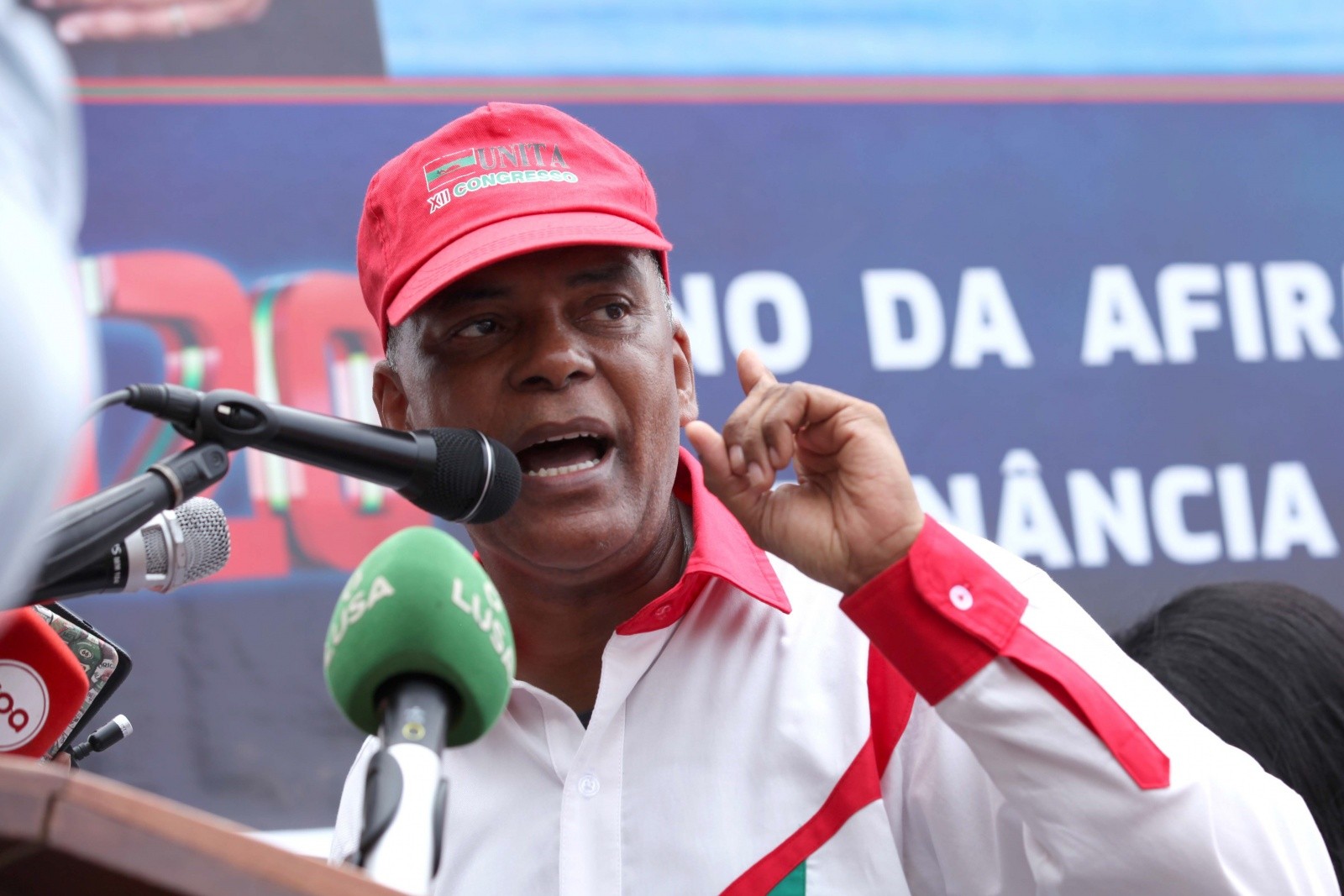
UNITA’s president said today that the party “is alive” and has faced its 60 years of existence with great responsibility and resilience, highlighting the maturity of its grassroots base as the source of the organisation’s strength.
According to the president of the National Union for the Total Independence of Angola (UNITA, the largest opposition party), Adalberto Costa Júnior, the party he leads has followed a path of great responsibility and resilience, having passed through very distinct historical phases — from participation in the anti-colonial struggle and the transition to independence in 1975, through the civil war (which ended in 2002), to the current “attempt” to consolidate a democratic rule-of-law state.
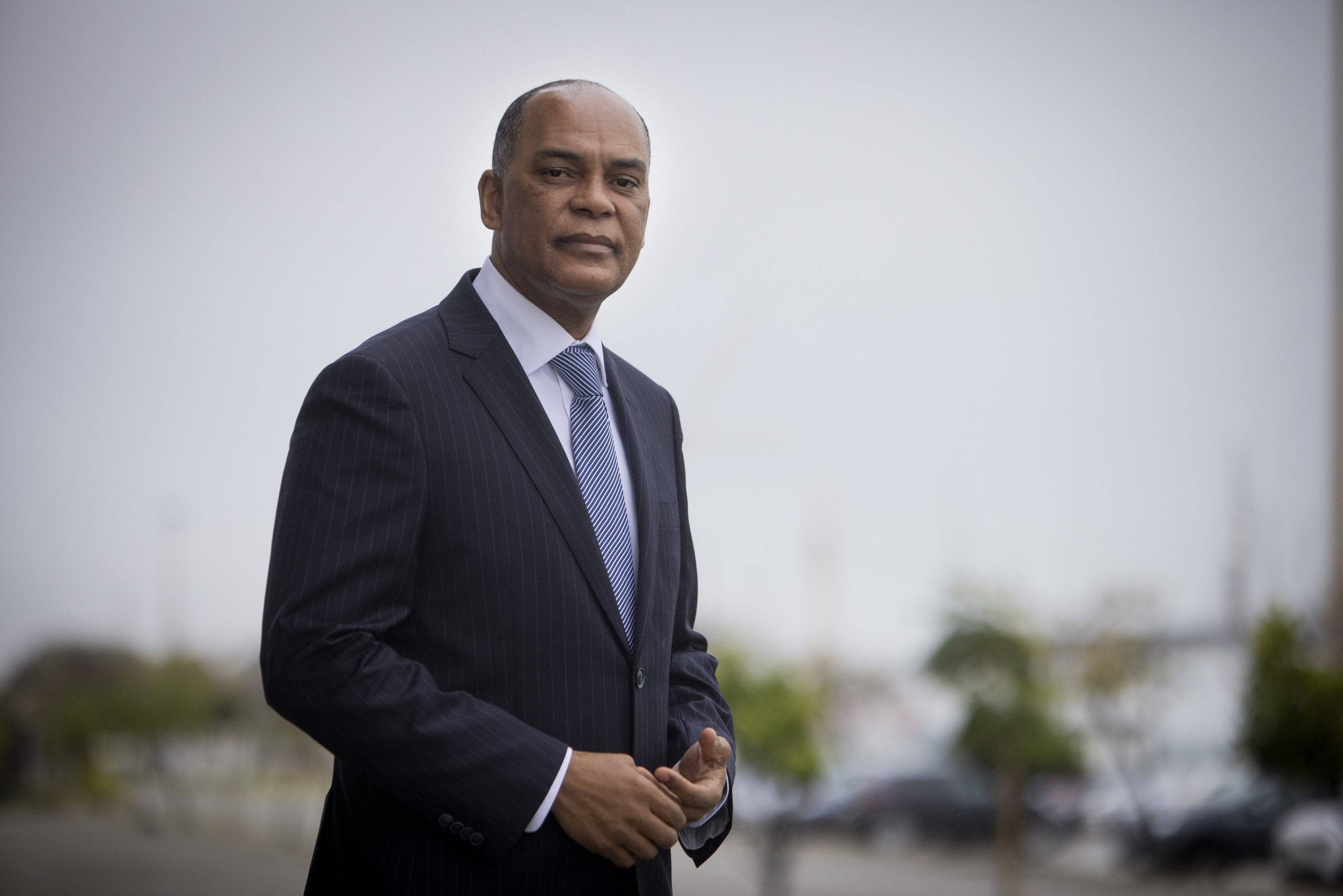
Adalberto da Costa Júnior, president of the National Union for the Total Independence of Angola (UNITA)
“These are very distinct phases. Fortunately, we have historical witnesses of the party’s founding who help us greatly in advising on party management, all the more so because Angola has become a very difficult country,” he said in an interview with Lusa, in the context of celebrations marking UNITA’s 60th anniversary on Friday.
Speaking in Luena, capital of Moxico province — where UNITA was founded on March 13, 1966 — Costa Júnior said that leading the party has been a very great challenge, above all due to the “criminalisation” of citizens’ fundamental rights and freedoms. “Today simple matters have become quite complex, as the right to opposition is criminalised, the right to criticism is criminalised, the right to demonstrate and censorship is institutionalised — and leading in these circumstances is a very great challenge,” he said.
Despite these challenges, his party marks 60 years of existence with a “vitality that deserves a tip of the hat,” particularly when looking across the African continent, he said, praising the robustness and maturity of the party’s grassroots base throughout its history. Previous leaderships of the party — founded by Jonas Savimbi in the Muangai region — were important and played a notable role, but “the power of the base and its maturity” were fundamental.
“Our base is mature, they suffer greatly — intolerance falls upon them in the most remote villages of this country. It is returning, unfortunately, it had disappeared at a certain stage, but today it is coming back with force, many deaths.”
Read more: Angolan opposition party UNITA condemns arbitrary arrest, criminalisation of government critics
He also deplored the resurgence of political intolerance across the country, noting recorded deaths — as recently occurred in Angola’s interior — and saying the country registered “500 incidents with more than 200 deaths” in the first eight years of peace.
Nevertheless, Costa Júnior said UNITA sees a great opportunity to come to power democratically in 2027 and is currently “focused” on organising the party for an electoral campaign while maintaining the project of a “broad front for alternation.”
Celebrating 60 years “is a journey of maturity,” of many challenges and an enormous social burden, he explained, since after the end of the war there were “hundreds of thousands of families that the state did not absorb, that did not have their reforms legitimised” — people who “knock on the party’s door every day” and whom UNITA “does not turn away.”
Costa Júnior assured that UNITA has throughout its history honoured the memory and spirit of struggle of all the party’s founders, many still alive: “It is a great satisfaction to continue drawing on this great maturity.”
A generational transition is under way in the party, with increasing representation of women in its leadership and, above all, young people who are “very demanding within UNITA and who do not and should not be left out.”
Read more: Angola: Pope’s visit will highlight “problems of eastern Angola”
Costa Júnior stated that UNITA “is very much alive” but faces many challenges “associated mainly with a poorly governed country,” adding that if Angola “were a better-governed country we would indeed have far fewer problems.” With the country “without democracy, without rule of law, criminalising constitutional rights in a young nation, with the pressure we face on employment, education, subsistence and widespread hunger, we indeed have a herculean task ahead,” he said.
He also noted that the party is preparing to come to power in 2027, believing “this will be the time,” as he feels UNITA could already have reached power, particularly in 2022, “were it not for electoral fraud.”
UNITA’s leadership, MPs and guests will visit the Muangai locality on Friday to mark the party’s 60th anniversary: “It is a very great symbolism, because we respect those who gave everything, those who had the courage in that period to leave their villages and face colonial power.” Jonas Savimbi and his fellow party members will be honoured at the site, with Costa Júnior noting that his leadership intends to build a facility there for young people and students to visit — “but in a plural and democratic country, which we do not yet have.”