


Experts highlight that, although the US has high budgetary resources, the real challenge is maintaining an inventory of sophisticated weapons, including missile interceptors and attack drones.
Since 2023, the US has spent approximately $21.7 billion on military aid to Israel, plus an additional $9.65 billion to $12.07 billion on operations in Iran, Yemen, and the Middle East, bringing the total to between $31 billion and $34 billion. Just the first phase of Operation Epic Fury cost about $1.4 billion, including mobilization and pre-positioning of forces.
The operation involves more than 20 different weapon systems, including combat aircraft, stealth bombers, drones, rocket artillery, cruise missiles, and anti-missile defense systems such as Patriot and THAAD.
Christopher Preble, senior researcher at Stimson Center explained to Al Jazeera: “The Pentagon did not publish the total cost, so we can only speculate… But there are many moving parts, and we can estimate the cost of individual weapons and naval operations.”
Preble emphasized that the most critical issue is not the financial cost, but the availability of weaponry: “What is more concerning is the actual inventory of weapons, especially interceptors – such as Patriot missiles or SM-6 – used to intercept ballistic missiles. The current pace of operations cannot continue indefinitely.”
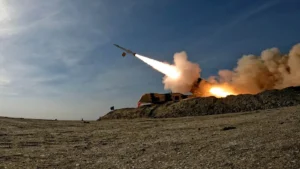
Read more: Trump says Iranians whom the US had in mind to lead the country post-war are dead
He added that during a previous 12-day conflict with Iran last June, there were already speculations about the scarcity of interceptors, which continue to be needed in other theaters, including Ukraine and the Indo-Pacific.
Preble also warns about production: “A Patriot missile or SM-6 is a very complex piece of equipment. They are not manufacturing hundreds or thousands of them per day. This is not the production rate needed for immediate replenishment.”
The strategic dilemma
Experts highlight that, despite the high US defense budget—a trillion dollars, with a proposed increase to 1.5 trillion dollars—the real challenge lies in operational and logistical sustainability rather than in direct costs.
Kevin Donegan, former deputy commander of CENTCOM, emphasized: “The focus for the US and Israel is to quickly neutralize Iran’s offensive capabilities. We want to stop or at least reduce their attacks as much as possible.”
The conflict continues to expand and highlights the complexity of modern warfare, where the financial cost and wear on advanced weapons inventory can be just as decisive as military strategy on the ground.
