


The World Meteorological Organization (WMO) has warned that the climate phenomenon El Niño may return in the summer, following the weakening of the current episode of La Niña. If confirmed, the world could see a significant increase in temperatures and an intensification of extreme weather events.
According to the WMO, the transition should occur gradually: the current cooling pattern associated with La Niña is expected to shift to neutral conditions in the coming months, followed by a new warming event in the equatorial Pacific, which is characteristic of El Niño.
What is El Niño
El Niño is a natural phenomenon that results from the abnormal warming of the surface waters of the central and eastern equatorial Pacific Ocean. This warming alters the tropical atmospheric circulation, affecting winds, rainfall, and the global distribution of heat. It represents the warm phase of the climate cycle known as ENSO (El Niño–Southern Oscillation), whose opposite is La Niña, which is associated with the cooling of these same waters.
When El Niño sets in, the ocean releases large amounts of accumulated heat to the atmosphere. This process contributes to an increase in global average temperatures, which is why years with El Niño tend to be particularly warm. The last major episode, in 2023/2024, was among the most intense ever recorded and was one of the main factors behind the temperature records observed in 2024.
In addition to global average warming, the phenomenon alters regional patterns of precipitation, favoring more frequent, prolonged, and intense heat waves in various parts of the world.
Global climate impacts
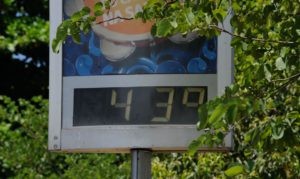
The effects of El Niño are not the same in all regions. Generally, the phenomenon is associated with severe droughts in areas such as Australia, Southeast Asia, and parts of Africa, while it causes intense rainfall and flooding on the west coast of the Americas. In Europe, the impacts may include warmer and drier summers in the south and more unstable weather patterns in the north.
In Latin America, El Niño tends to affect agriculture and water resources, while on coastal regions it may increase the risk of storms and erosion. In South Asia, the phenomenon can interfere with the monsoons, with direct consequences for food security.
Read more: World should prepare for El Nino, new record temperatures
However, the impacts of El Niño extend beyond the climate. Prolonged droughts, sudden floods, and extreme heat waves affect agricultural production, raise food prices, strain energy systems, and put public health at risk, particularly among more vulnerable populations.
AOMMIt underlines that these natural phenomena are occurring today in a context of climate changes caused by human action. Long-term global warming intensifies the effects of El Niño, making its impacts more severe than in the past.
Monitoring and alert
The organization guarantees that it will continue to closely monitor the evolution of ocean temperatures and atmospheric circulation in the coming months. If El Niño is confirmed, national meteorological services will be called upon to strengthen early warning systems and adaptation measures, in a scenario where extreme heat may once again mark the summer in several regions of the planet.
The potential return of El Niño thus reinforces the scientists’ warnings about the world’s growing vulnerability to extreme weather events and the need for coordinated preparation and response at the global level.
