

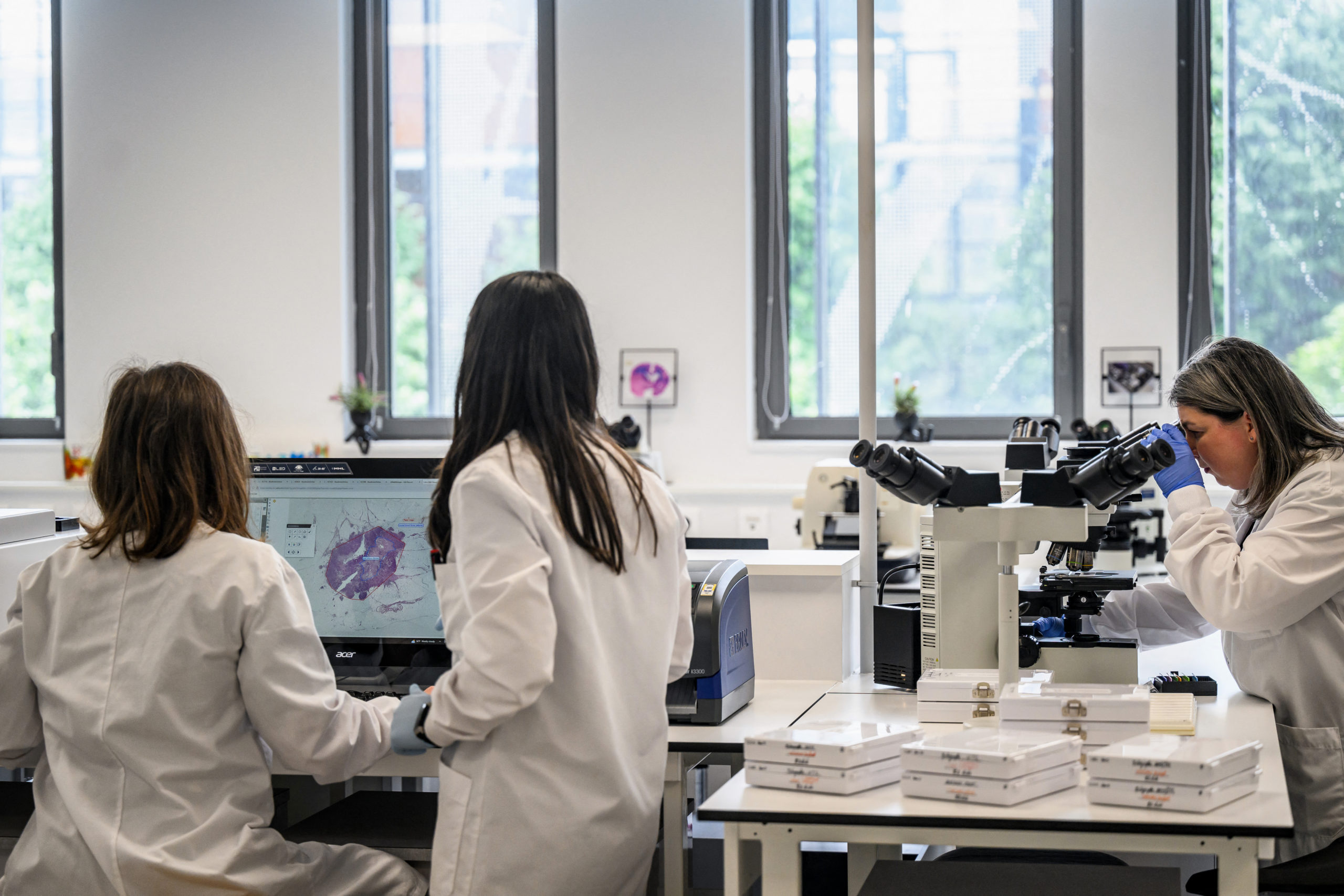
An international team of scientists, including Portuguese researcher Fernando Schmitt, professor at the Faculty of Medicine of the University of Porto (FMUP), has developed a method that uses artificial intelligence and 3D technology to improve the detection of cancer cells, it was announced on Thursday.
“The use of artificial intelligence in clinical practice allows the evaluation of cellular characteristics and their classification as normal or abnormal,” Fernando Schmitt explained, quoted in a statement from the Faculty of Medicine of the University of Porto sent to the Lusa news agency.
In its summary, FMUP states that the development of this new method, reported in the scientific journal Nature, “promises to revolutionize the diagnosis of cervical cancer with an innovative approach compared to cervical cytology, better known as the Pap smear test.”
Also read: Telix Submits European Marketing Authorization Application for TLX101-Px for Brain Cancer Imaging
The study, published last week, demonstrated the advantages of a new form of automated analysis of cervical cell samples using artificial intelligence, compared with the traditional method of clinical cytology.
“The goal is to move earlier toward life-saving treatments,” the summary notes. The research also involved scientists, hospitals, and companies from Japan, China, and the United States.
According to the FMUP professor, who is also director of the RISE-Health Research Unit, the automation of this screening process accelerates the diagnosis of cervical cancer, a disease mainly caused by infection with the human papillomavirus (HPV), which is sexually transmitted and accounts for about 10% of cancers in women.
Currently, collected cells are evaluated under a microscope by trained professionals. However, this process has several drawbacks, including subjective interpretation and variability in results.
This new artificial intelligence system applied to traditional cytology is, according to FMUP, “the first that is able to autonomously screen abnormal cells, enabling faster, more accurate, and more objective diagnosis.”
“The automation of cytopathology can also detect early lesions, accelerating and improving cancer diagnosis,” Fernando Schmitt added.
The new method scans cells and reconstructs a real-time 3D image, allowing better visualization of their characteristics. The platform then uses advanced algorithms to group similar profiles and identify abnormal cells with greater accuracy, reducing the risk of human error.
This AI-based approach may assist professionals and pathology laboratories by providing a “visual map” of cell classification, offering a clear advantage over conventional methods.
“It is expected that this technology will become accessible in several countries, serving as an important tool in the fight against cervical cancer, which continues to affect women worldwide,” FMUP concludes, noting that warning symptoms include abnormal vaginal bleeding, increased vaginal discharge, pelvic pain, and pain during sexual intercourse.
