

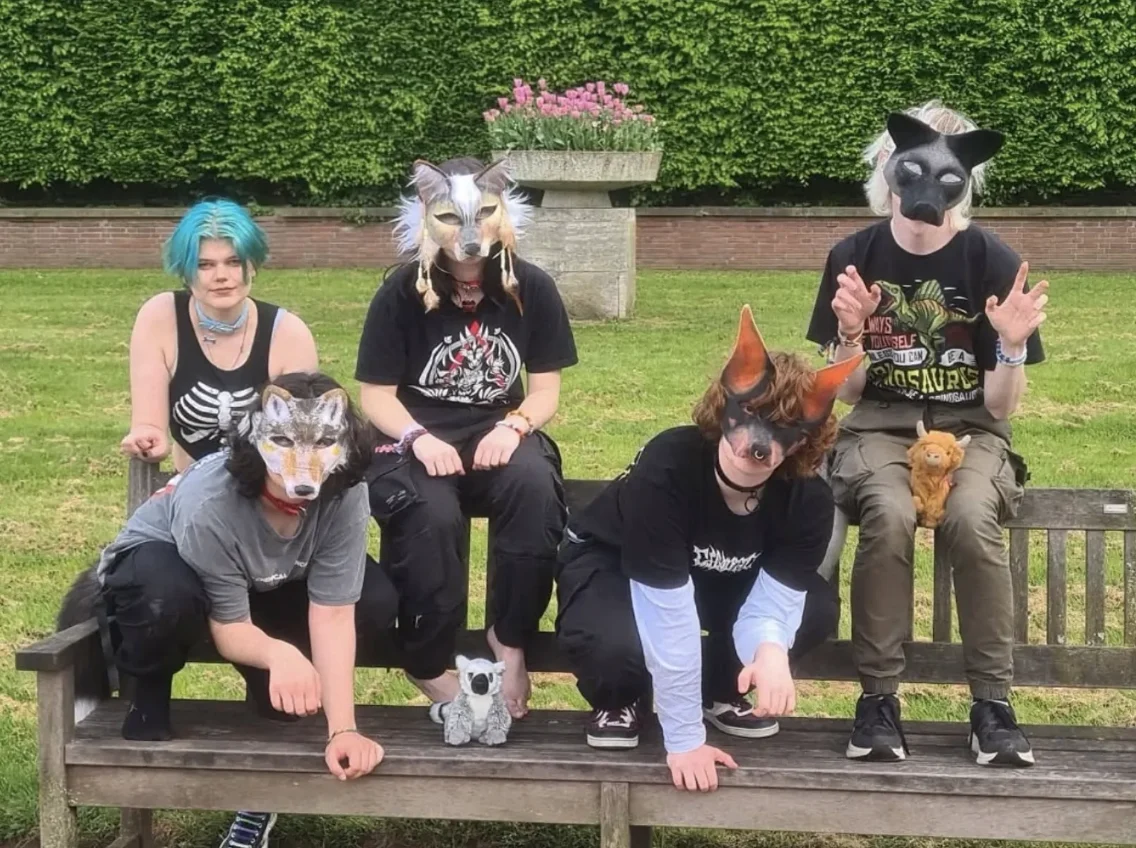
The phenomenon began to gain attention in Latin America, with incidents reported in Argentina and Mexico, where media outlets and figures from the far-right associated therians with “moral degeneration” and so-called excesses of identity politics. In Argentina, for example, the alleged presence of young people who identify with animals in schools sparked rumors that reinforced anti-LGBTQI+ narratives and alarmist discourse about the decline of society.
In Spain, the situation repeated itself: cities like Madrid, Barcelona, Zaragoza, and others registered gatherings of curious individuals looking for therians. Despite the media hype and calls on social networks, the number of actual participants was minimal. In many cases, the young people who showed up became targets of ridicule and insults, being used to fuel online hate speech.
Experts in cybersecurity and digital sociology warn that the phenomenon reveals the way in which social network algorithms amplify shocking content, even when it barely or hardly reflects reality. “Therians provide a perfect pretext for far-right groups and alarmist influencers to attack gender identities and diversity, transforming an innocuous phenomenon into a moral threat,” explains Marcelino Madrigal, an expert in networks and cybersecurity.
The impact of the phenomenon exceeds borders: fake videos show supposed animal attacks on humans or people on all fours, while rumors about fictional economic support linked to identifying as an animal spread from Spain to Latin America. These contents have been used to misinform, generate moral panic, and reinforce stereotypes against transgender people and the LGBTQI+ community.
Analysts emphasize that the identification of person-animal in the therian context is, in most cases, a hobby or form of personal expression, unrelated to identity crises or psychological problems. What makes this phenomenon go viral is precisely its unusual and visually striking nature, which social media exploits and amplifies.
Also read: Portuguese parliament to debate banning far-right Chega Party
“More and more, we see how the internet creates cultural bubbles that are then manipulated politically,” says Adrián Juste, a researcher at the Al Descubierto ideas laboratory. “What was once a marginal subculture has become a symbol of a supposed moral collapse, used to legitimize hate speech and alarmism.”
While virality continues to drive debates and memes, therians remain, in reality, a small and discreet group. The case, however, serves as a global warning about the dangers of disinformation, digital manipulation, and the political use of harmless cultural phenomena.
