

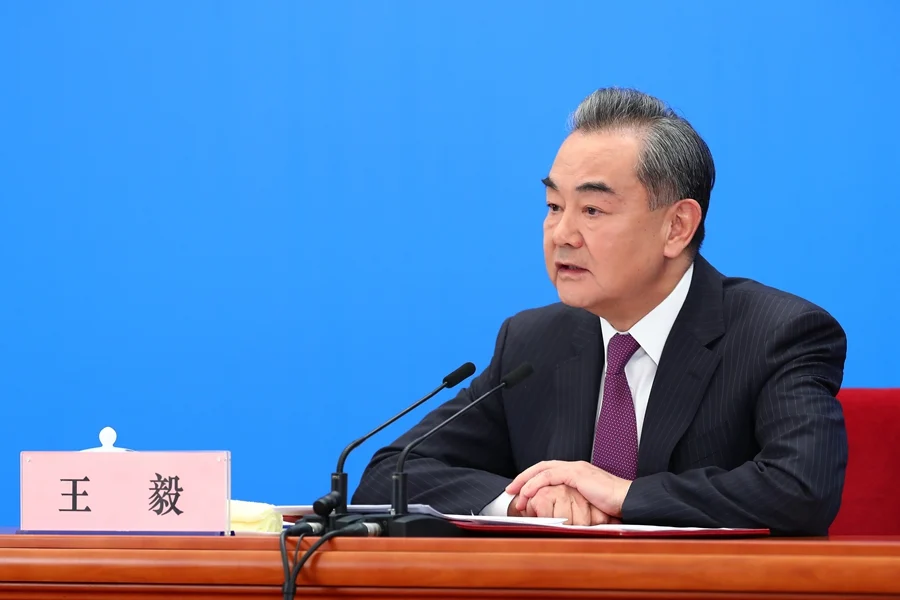
Wang noted that the past year has seen global instability and a rise in unilateralism, placing human development at a new crossroads. He emphasized that President Xi Jinping’s global governance initiative, which advocates five principles including sovereign equality and the rule of international law, provides a “Chinese compass” for constructing a more just and equitable system, gaining broad international support.
He asserted that in the face of challenges, countries must work together to reform and improve global governance to ensure the stability and long-term progress of history. He proposed four recommendations: first, to revitalize the United Nations, which serves as the foundation for peace since World War II; countries have a responsibility to maintain and enhance its effectiveness rather than dismantle it, to prevent a return to a jungle-law environment.
Second, he called for strengthening coordination and cooperation. Nations should abandon confrontational camp mentalities and adopt a “harmony in diversity” approach to seek common ground while reserving differences, achieving win-win outcomes through dialogue.
Third, he stressed the importance of practicing true multilateralism. Countries should adhere to unified rules based on the UN Charter, with major powers setting examples in cooperation, rule-following, equality, and openness while enhancing the representation of the “Global South” in governance systems.


