

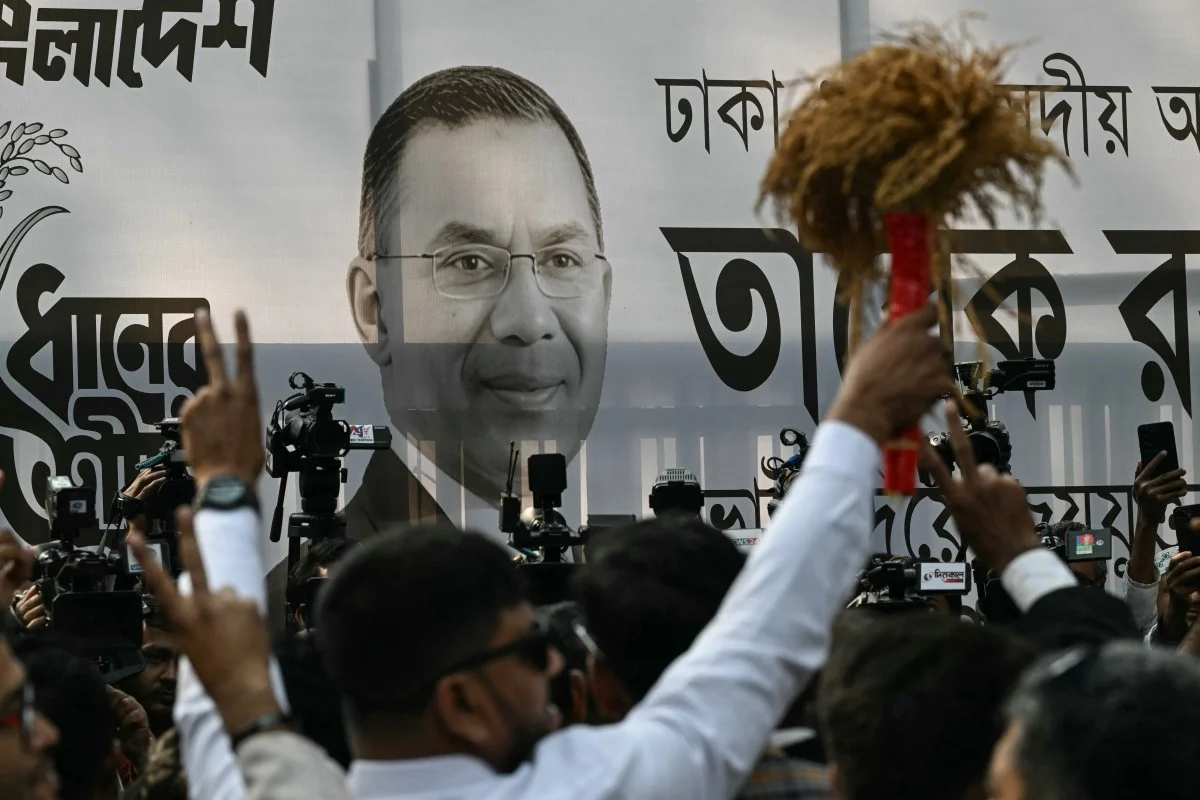
BNP leader Tarique Rahman is set to become the next prime minister, facing the dual challenge of reviving a fragile economy and rebuilding democratic institutions after 15 years of authoritarian rule. Speaking in Dhaka after Friday prayers, Rahman thanked supporters but urged them to avoid celebrations, citing respect for his late mother, former prime minister Khaleda Zia, who died in December.
The election marked several firsts. Hasina’s Awami League was banned from contesting, while the Islamist Jamaat emerged as the second-largest force in parliament. A student-led National Citizen Party, born out of the 2024 protests, also won seats as part of a Jamaat-led alliance.
Rahman, who spent 17 years in self-imposed exile in London, is entering parliament for the first time after winning seats in Dhaka-17 and Bogra-6. His party secured 212 seats, with voter turnout recorded at 59.44%. Despite the scale of the victory, Rahman is widely seen as politically untested and will face close scrutiny.
Key priorities for the new government include controlling rising food prices, creating jobs for Bangladesh’s youthful population and repairing strained ties with India. While the BNP has pledged reform, it also faces criticism over allegations of corruption and human rights abuses during its previous time in power, making the transition a moment of both opportunity and risk for the country.
