

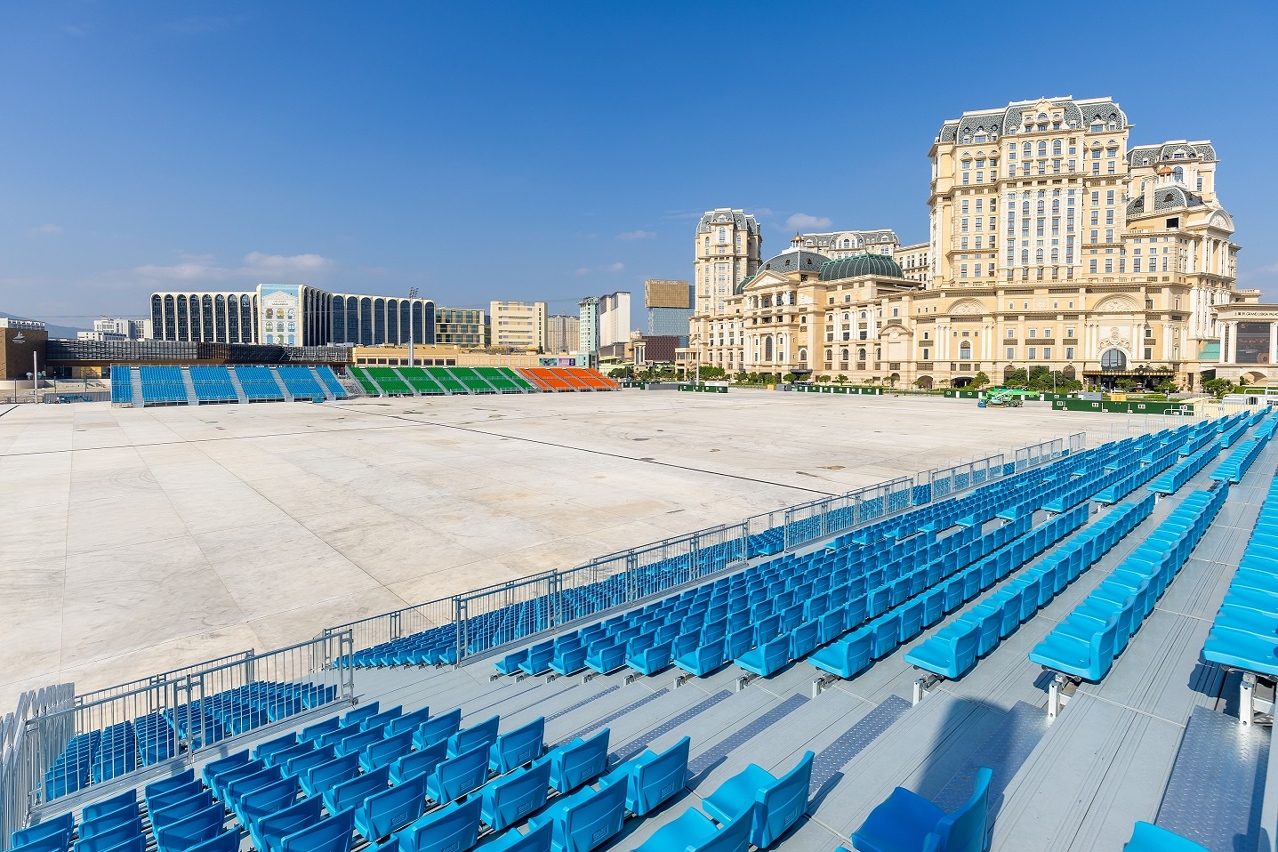
Speaking in response to a Legislative Assembly inquiry on the venue’s trial operations and future development, O Lam said the measures follow a review of the pilot phase and consultations with the performing arts industry. Under the new arrangement, the venue will be made available on a monthly basis, while non-event periods may be converted into simple three-on-three basketball courts or family-oriented sports spaces for public use, with the aim of improving overall utilisation.
Since the venue began operating, the government has hosted one large-scale performance, followed by four commercial events organised by the performing arts sector, O Lam said. A further four projects scheduled for the first quarter of this year have already paid venue deposits, with preparations progressing as planned.
To support the coordination and management of major events, the government has established an interdepartmental task force involving multiple public bodies. The mechanism is intended to strengthen communication, set operational standards and develop contingency plans. The Cultural Affairs Bureau serves as a single point of contact for applications, coordination and approvals from industry operators. Relevant approval criteria and requirements have been published on the official website, covering areas such as stage design, fire safety, venue layout and performance effects.
During the trial period, audience capacity was gradually increased in line with the task force’s arrangements, rising from just over 10,000 spectators to nearly 30,000. The process allowed authorities to test venue facilities, crowd management, safety measures and transport capacity. O Lam said the experience provides practical reference points for further optimisation of venue operations and management.
On future arrangements, O Lam said the monthly rental model was developed after market research and an assessment of industry demand. Longer rental periods are expected to help organisers manage the costs of large-scale productions, while supporting the industrialisation of performances and longer-term planning. Suggestions to introduce diversified activities such as cultural and creative markets will be considered on a case-by-case basis, depending on the nature of each proposal, she added.
Responding to calls for publicly funded events to test the venue’s maximum capacity of 50,000 people, O Lam said such proposals would require careful assessment, taking into account the scale of public expenditure involved, the attractiveness of the event and its overall cost-effectiveness. As for the venue’s impact on Macau’s economy and tourism, she said evaluations are still underway. Preliminary observations suggest a generally positive effect, though detailed data has yet to be consolidated.
