

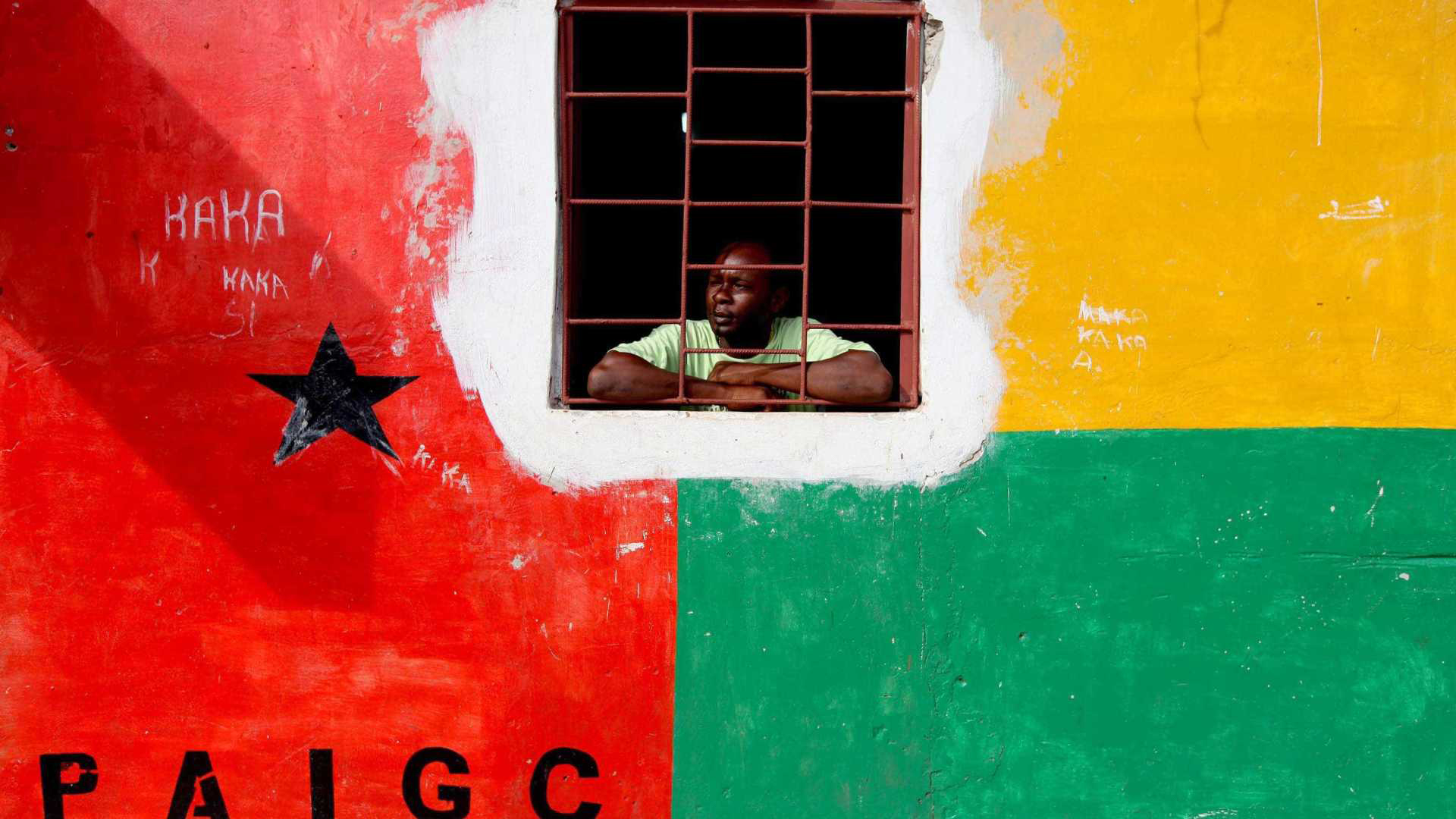
Asked about the situation of Fernando Dias da Costa, presidential candidate in Guinea-Bissau supported by the Pai Terra Ranka coalition, of which the PAIGC is a member, Iafai Sani said: “Fernando Dias da Costa is still at the Nigerian embassy, and we hope he will leave quickly to take office, because he is an elected president; the people did not vote for the military, the people voted for the candidates.”
Sani criticised the military, which seized power and called itself the High Military Command, stating that they should return to their barracks and relinquish power, handing it over to civilians and restoring normality. Expressing confidence in the international community, he said that Guineans are counting on it to restore order and reaffirmed his conviction that the deposed President, Umaro Sissoco Embaló, is governing from afar.
“I have said several times that Embaló simulated his own dismissal, putting in his place the military and civilians from his circle, while he begins to travel around the world to try to convince the international community of the authenticity of this coup d’état (…) and is guiding the country from a distance,” he said.
“Now is the time for the international community to show Umaro Sissoco Embaló that he is not the manager of the international community,” he added. Sani considers the coup d’état unconstitutional, as it is not “in any part of the Constitution of the Republic” of Guinea-Bissau, and stressed that the country is experiencing a turbulent period “of kidnappings and beatings”.
On 26 November, one day before the announcement of the provisional results of the presidential and legislative elections in Guinea-Bissau, the military deposed Umaro Sissoco Embaló, who had been in power since 2020, and suspended the ongoing electoral process.
Opposition candidate Fernando Dias da Costa, who claims victory, took refuge in the Nigerian Embassy in Bissau, which granted him asylum. The leader of the historic African Party for the Independence of Guinea and Cabo Verde (PAIGC), Domingos Simões Pereira, was arrested on the day of the coup, along with other opposition figures.
On the night of 23 December, six of those detained were released, but Simões Pereira remains in custody. Initially detained by the military during the coup, President Umaro Sissoco Embaló fled the country. The junta appointed General Horta Inta-A, a close ally of Embaló, as President of a transitional government with a planned one-year term.
The country has been suspended from the Economic Community of West African States (ECOWAS), the African Union and the Community of Portuguese Language Countries (CPLP), an organisation in which it held the rotating presidency.
