

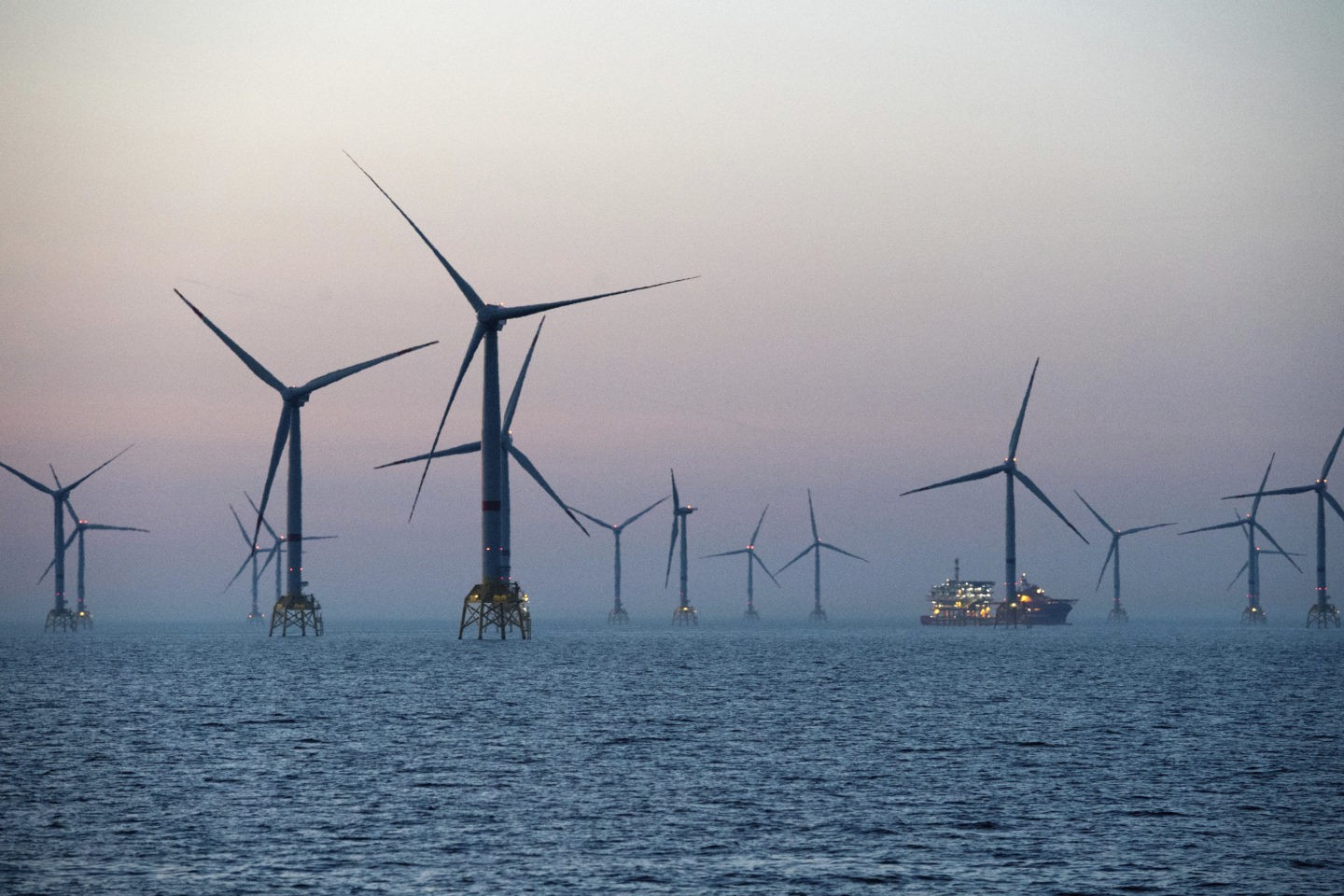
“This project marks a strategic milestone in the consolidation of the country’s energy transition, reaffirming Cape Verde’s commitment to sustainability, innovation, and the production of clean energy,” announced the government in a statement.
The expansion on the island of Santiago represents an increase of about 13.5 megawatts, which amounts to an additional 50% of the installed wind energy capacity in Cape Verde, thanks to new turbines installed since August that are five times more powerful than the existing ones.
The new turbines will be “the tallest structures in the country,” reaching a height of 180 meters, said Valdemar Lopes, the technical director of Cabeólica, during the installation operations.
The project, which includes battery energy storage systems, will allow the country to reduce emissions by more than 50,000 tons of CO2 per year. In 2024, Cabeólica was responsible for approximately 14% of the electricity consumed in the country, according to the company’s financial report.
In addition to the Santiago wind farm, the company operates three others on the islands of São Vicente, Sal, and Boa Vista.
Cabeólica is the result of a public-private partnership (PPP) agreement signed in 2008 and is currently 50% owned by Africa Finance Corporation (AFC), a pan-African multilateral financial institution comprising sovereign states, including Cape Verde as a member.
Another 44% belongs to African Energy Transition Holding (part of the AP Moller group) through a fund created to invest in infrastructure on the African continent, with the remaining shares held by the state of Cape Verde and the public electricity company (Electra).
The European Investment Bank (EIB) and the African Development Bank (AfDB) are the main long-term financiers of Cabeólica.
Platform with Lusa
