In its early years, safety consisted of little more than strawbales and minimal barriers. The serious incidents recorded in the early 1970s – particularly in 1974 – prompted greater involvement from the International Automobile Federation (FIA), which began sending inspectors and safety specialists to Macau in the mid-1970s. Since then, a continuous programme of technical upgrades has been implemented in close cooperation with international officials.
Modernisation included the gradual introduction of triple-layer steel guardrails, high-resistance safety fencing, and structural reinforcements in critical areas of the circuit such as Lisboa Bend, Melco Hairpin, and Mandarin Bend.
Throughout the 1980s and 1990s, the Guia Circuit became a testing platform for new safety solutions used in world-class events. Impact-absorbing systems similar to those in Formula 1 replaced traditional tyre stacks, and run-off areas were redesigned to meet the technical demands of different racing categories.
One of the landmark moments in FIA technical collaboration came when Macau was used to test new race-start procedures. The starting-light system now used in Formula 1 – five red lights turning off simultaneously to signal the beginning of the race – was first trialled at the Guia Circuit in an experimental phase before its official adoption in Grand Prix in the late 1990s.
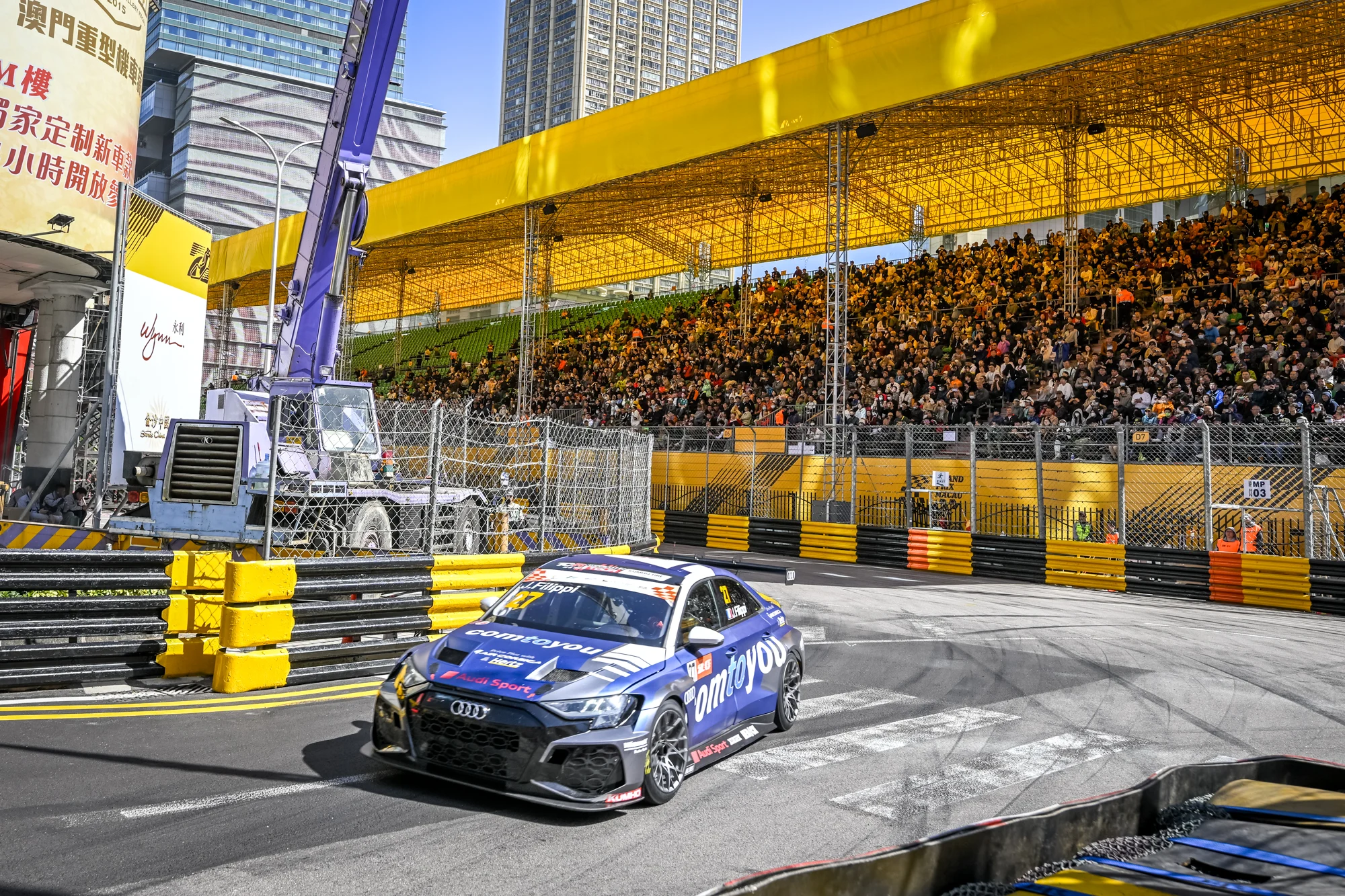
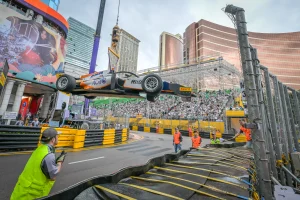
Another major advancement took place in medical response. Since the 1990s, doctors, nurses, and firefighters in Macau have received specialised training administered by FIA-affiliated experts. This includes rapid extrication techniques, on-track medical response, and safe transport of injured drivers. Today, emergency crews can extract and stabilise a driver within seconds, achieving standards aligned with the world’s top circuits. In the narrowest sections of the track, crashed vehicles are removed using cranes – an essential procedure in urban circuits where rescue maneuver space is limited.
The hospital infrastructure is one of Macau’s defining features: the circuit includes a fully equipped hospital within its perimeter – the Conde de São Januário Hospital. This proximity eliminates the need for air evacuation and dramatically reduces response times in critical situations. Each ambulance and medical car is strategically positioned along the circuit, ensuring rapid access to any point on the track.
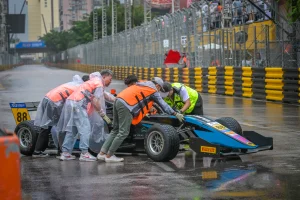
Training for marshals, controllers, and track technicians has also advanced systematically, transforming the Grand Prix into a true training ground. The operational team, which began with a few dozen members from Hong Kong and Portugal, now comprises several hundred highly trained personnel.
Cooperation with the FIA strengthened further in recent decades, culminating in the awarding of Grade 2 homologation in 2019 – a requirement for hosting high-performance international competitions. This classification reflects not only the physical conditions of the circuit but also its organisational capacity and the medical and technical protocols in place.
Public safety has evolved in parallel. Restricted-access areas, reinforced signage, and coordinated work between police, firefighters, and civilian crews ensure effective crowd management around the Guia Circuit each year.
Today, the Macau Grand Prix blends tradition and modernity: a historic circuit that preserves its original layout, while incorporating technology and procedures comparable to those used on the most advanced stages of global motorsport.
PLATAFORMA has prepared a Special Report on the 72nd Macau Grand Prix. Click here to access the stories.