

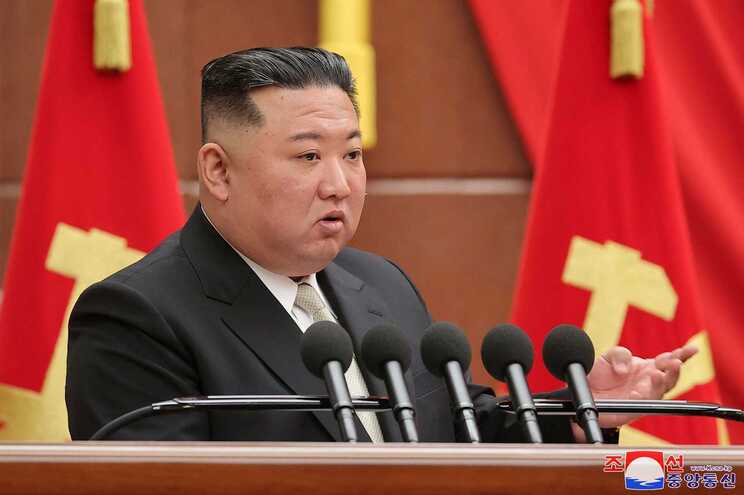
The news of Kim Jong-un’s arrival in China was reported by South Korea’s Yonhap news agency, citing North Korea’s state broadcaster.
This rare overseas trip aims to allow the North Korean leader to attend the military parade marking Japan’s surrender in World War II on Wednesday, and opens the possibility of meetings with Chinese President Xi Jinping and Russian President Vladimir Putin.
After this journey, which takes between 20 and 24 hours to reach the Chinese capital, Kim is expected to make his debut on the multilateral diplomatic stage, after strengthening ties with Putin in recent years.
Kim is among the leaders of 26 countries expected to attend the parade commemorating the end of World War II, in which Beijing places special emphasis on Japan’s surrender, marking the end of the conflict in the Pacific theater and the close of Japan’s colonization of neighboring territories, including China.
This will be the first time since he came to power in 2011, following the death of his father Kim Jong-il, that the current North Korean leader takes part in a multilateral event of this kind.
His grandfather and North Korea’s founder, Kim Il-sung, attended a military parade in Beijing in 1959.
Kim’s presence in Beijing could pave the way for a possible and unprecedented trilateral meeting with Xi and Putin, sending a powerful message from the three allies critical of the United States.
Kim also traveled by train on his last visit to China in 2019, amid rumors that the North Korean leader has an aversion to flying due to security concerns.
Ties between Beijing and Pyongyang have deteriorated in recent times, in contrast to North Korea’s deepening cooperation with Russia, materialized in an agreement that includes a clause on mutual military assistance in case of aggression, and the deployment of North Korean troops to participate in the invasion of Ukraine.
Beyond offering China a chance to harden its stance against the United States, for Kim this is a golden opportunity to return to the spotlight after the isolation he imposed on the country due to the COVID-19 pandemic and following his last overseas trip, to Russia in September 2023, when both countries were finalizing their strategic partnership pact.
